Bank Negara Malaysia (BNM) has decided to maintain the Overnight Policy Rate (OPR) at 3% following the latest meeting of its Monetary Policy Committee (MPC).
The central bank stated that at the current OPR level, monetary policy remains consistent with inflation and growth expectations. According to the committee, it will also continue to monitor economic developments to ensure that monetary policy remains conducive to sustainable growth and price stability.
The global economy is expected to continue expanding in 2025, supported by resilient domestic demand and global trade. Labour market conditions remain positive, while inflation is projected to moderate due to easing commodity prices and the fading effects of past monetary tightening. Meanwhile, the global technology sector is anticipated to support trade, though uncertainties surrounding trade policies, geopolitical developments, and financial market volatility remain key risks.
Malaysia’s economy recorded a 5.1% growth in 2024, driven by stronger domestic demand and a rebound in exports. Economic activity is expected to remain stable in 2025, supported by household spending, wage growth, and policy measures such as the upward revision of the minimum wage and civil servant salaries.
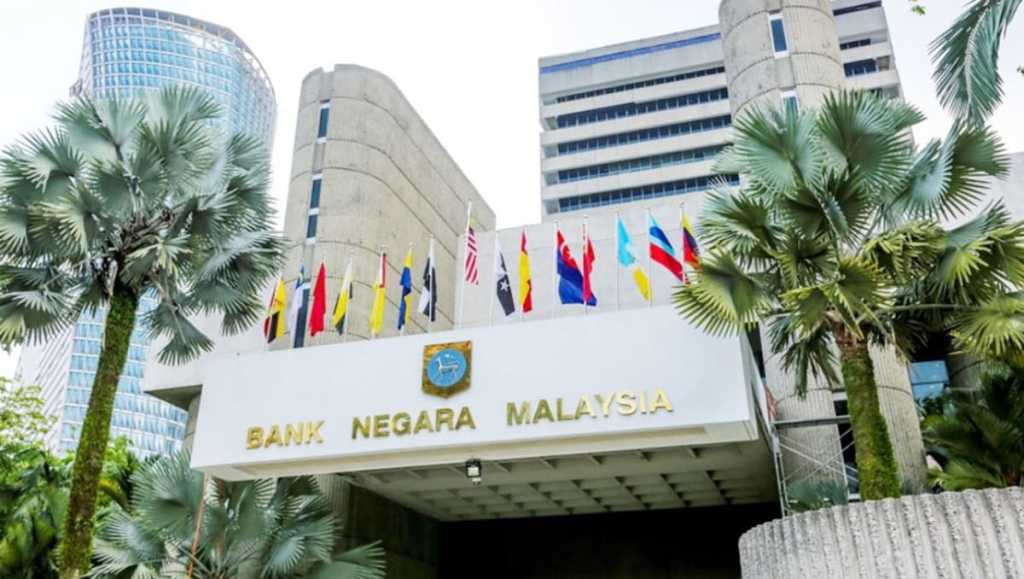
(Image: Samsul Said/Bloomberg)
Investment activity is projected to remain robust, with progress in both private and public sector projects, strong realisation of approved investments, and ongoing implementation of national master plan initiatives. While external uncertainties persist, exports are expected to expand at a more moderate pace, supported by the global technology upcycle, growth in non-electrical and electronics sectors, and higher tourist spending.
However, the growth outlook is subject to downside risks from an economic slowdown in major trading partners following significant uncertainties surrounding trade policies and lower-than-expected commodity production. Growth could also be supported by greater spillovers from the global technology sector, stronger tourism activity, and faster implementation of investment projects.
Inflation stood at 1.7% in January 2025, with core inflation at 1.8%. Inflationary pressures are expected to remain manageable throughout the year, aided by easing global cost conditions and stable domestic demand. Global commodity prices are forecast to trend lower, limiting cost pressures. Recent wage-related policies are expected to support demand, though their impact on inflation is anticipated to be minimal. Risks to inflation remain, particularly from external factors such as global commodity price fluctuations, financial market conditions, and trade policies.
BNM also stated that the ringgit’s performance continues to be influenced by external developments. The narrowing interest rate differentials between Malaysia and advanced economies are seen as positive for the currency, though global policy uncertainties could contribute to financial market volatility. Malaysia’s economic prospects and ongoing structural reforms are expected to provide continued support for the ringgit.
Samuel writes about personal finance and financial news, focusing on how banking updates, policies, and promotions affect everyday money decisions. He enjoys making complicated financial topics easier to follow. Outside of writing, he spends his time watching TV shows and occasionally convincing himself he will only watch one episode.
Samuel writes about personal finance and financial news, focusing on how banking updates, policies, and promotions affect everyday money decisions. He enjoys making complicated financial topics easier to follow. Outside of writing, he spends his time watching TV shows and occasionally convincing himself he will only watch one episode.
We provide monthly updates on the best fixed deposit promotions in Malaysia with tables showing the top 5 board rates for the duration of 1, 3, 6, 9, and 12 months.







Comments (0)