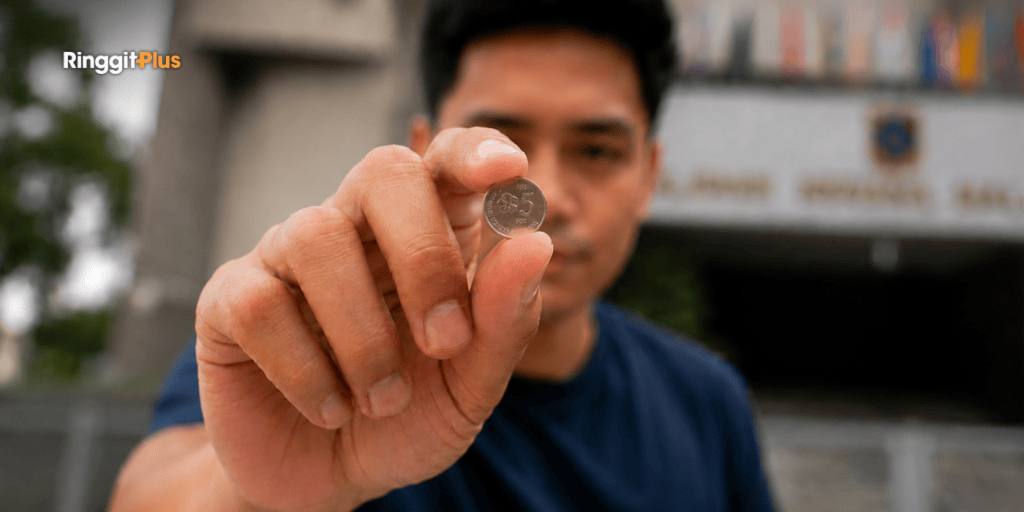
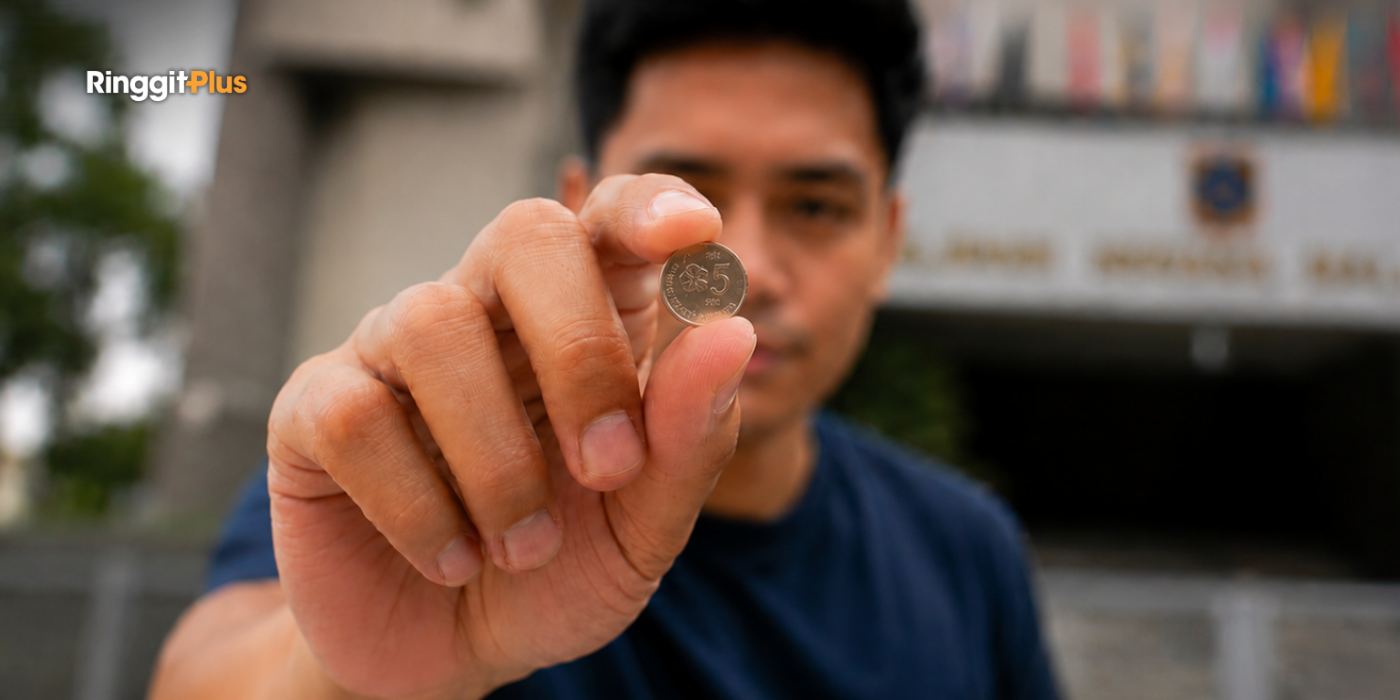
Bank Negara Malaysia (BNM) will carry on issuing the 5 sen coin, even as fewer people use it.
Governor Datuk Seri Abdul Rasheed Ghaffour said that use of the coin has fallen, though shops still ask for it. He said BNM wants to stay inclusive and will keep meeting that demand while watching what the economy needs.
Retailers Want The 5 Sen Coin Kept, Economists Do Not
Malaysia Retailers Association (MRA) president Datuk Andrew Lim Tatt Keong is worried that pulling the 5 sen coin out of circulation would push the price of goods up. He asked whether the 20 sen coin would go next, then the 50 sen, until only ringgit are left. Without small denominations, he said, costs tend to drift upwards.
Prof Chung Tin Fah of HELP University takes a different view. Shops can still price things in 5 sen steps without anyone holding the physical coin, he said, and he does not expect any effect on inflation because e-wallet payments go through to the exact sen anyway.
He also believes it costs more to make a 5 sen coin than the coin is worth. BNM has not published a production cost per coin, so treat that as his assessment rather than an official one.
How Malaysia Decides What A Coin Is Worth
The value of a 5 sen coin is set by law rather than by the metal in it. Under the Currency Act 2020, BNM is the only body allowed to issue ringgit, and only notes and coins issued by BNM count as legal tender at their face value.
The same law sets out how a denomination disappears. BNM can call in any currency by giving at least one month’s notice in the Federal Gazette, and once that notice runs out, the money stops being legal tender. The Act also lets anyone refuse a payment made with more than 25 coins of any denomination, so a shop does not have to accept a RM50 bill paid entirely in 20 sen coins. Melting coins down for profit is an offence.
What Happened When The 1 Sen Coin Was Retired
After the 1 sen coin was withdrawn, a rounding mechanism took effect on 1 April 2008, rounding cash bills to the nearest 5 sen. It applies to the total on your receipt, never to individual item prices.
Totals ending in 1, 2, 6 or 7 sen round down, while totals ending in 3, 4, 8 or 9 sen round up. A bill of RM10.02 becomes RM10.00, and RM10.03 becomes RM10.05. The RM1 coin stopped being legal tender on 7 December 2005, and the current third coin series, issued from 16 January 2012, comes in four denominations of 5, 10, 20 and 50 sen. The first two series had six.
The Coins In Your Jar Are Still Money
The 5 sen coin is still being minted, still legal tender, and still accepted at the counter, so the ones piling up in your coin jar are worth exactly what they say. BNM’s numismatic gallery curator Wan Muhammad Danial Wan Omar points out that each new series has been smaller and lighter than the last, partly to bring down the cost of making them.
For now, the 5 sen is staying put. But do you think it still has a place in everyday spending, or would you be happy to see it go the way of the 1 sen coin? And if BNM ever introduced a new coin or note, what would you want to see printed on it? Tell us in the comments.
Follow us on our official WhatsApp channel for the latest money tips and updates.
As a creative content writer, Eloise has covered finance, business, lifestyle topics, and even moonlights as a singer-songwriter outside of RinggitPlus. Her current interests are learning the best ways to optimise spending and credit card hacks to gain more airline miles.
00votes
Article Rating
SHARE
About THE AUTHOR
Eloise Lau
Eloise Lau
As a creative content writer, Eloise has covered finance, business, lifestyle topics, and even moonlights as a singer-songwriter outside of RinggitPlus. Her current interests are learning the best ways to optimise spending and credit card hacks to gain more airline miles.
We provide weekly updates on every Friday at 5pm on the prices of RON95, RON97 and Diesel in Malaysia and a chart that shows the movement of fuel prices across a 6-week period. Bookmark this page now!



Comments (0)