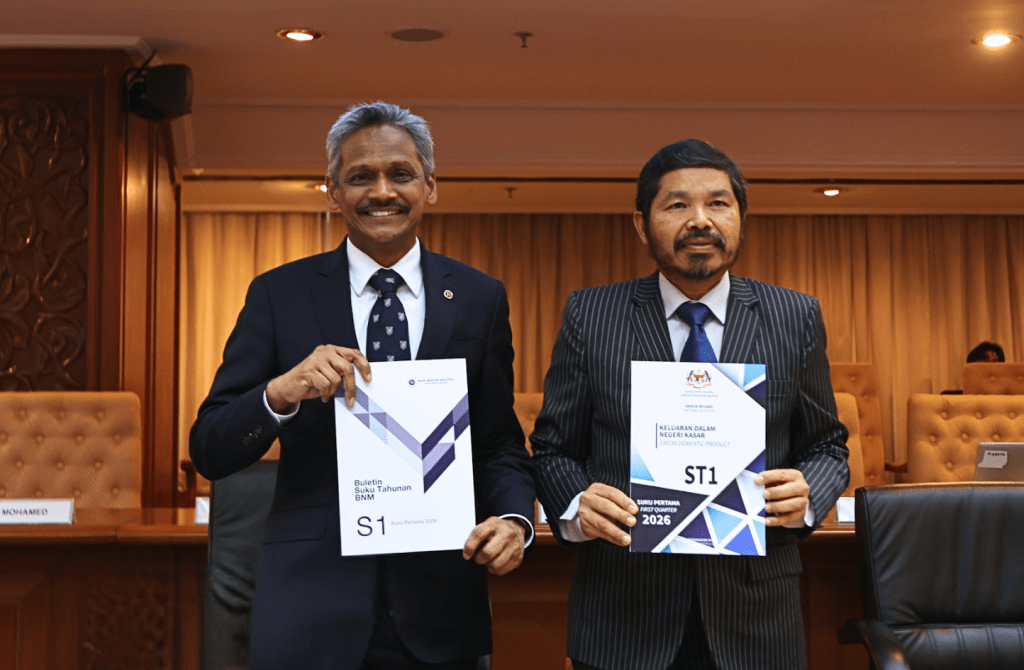
The economy expanded 5.4% year-on-year in the first quarter of 2026, according to data released by the Department of Statistics Malaysia (DOSM) on 15 May 2026. At constant 2015 prices, gross domestic product (GDP) stood at RM437.7 billion, up from RM415.4 billion in the same period last year.
The result is down from the 6.2% recorded in the fourth quarter of 2025, but remains broadly in line with the pace seen across much of last year.
The Sectors Driving Growth
Services and manufacturing were the main contributors to first-quarter growth. The services sector expanded 5.6% year-on-year, though motor vehicle sales moderated as buyers had front-loaded purchases in the fourth quarter ahead of the expiration of import duty waivers for electric vehicles. Manufacturing grew 5.9%, while construction posted the strongest growth among all sectors at 7.7%, continuing a run of sustained expansion seen throughout 2024 and 2025.
Agriculture grew 2.6%, while mining and quarrying contracted 2.1%, dragged by weaker crude oil and natural gas production.
Household Spending Held Up
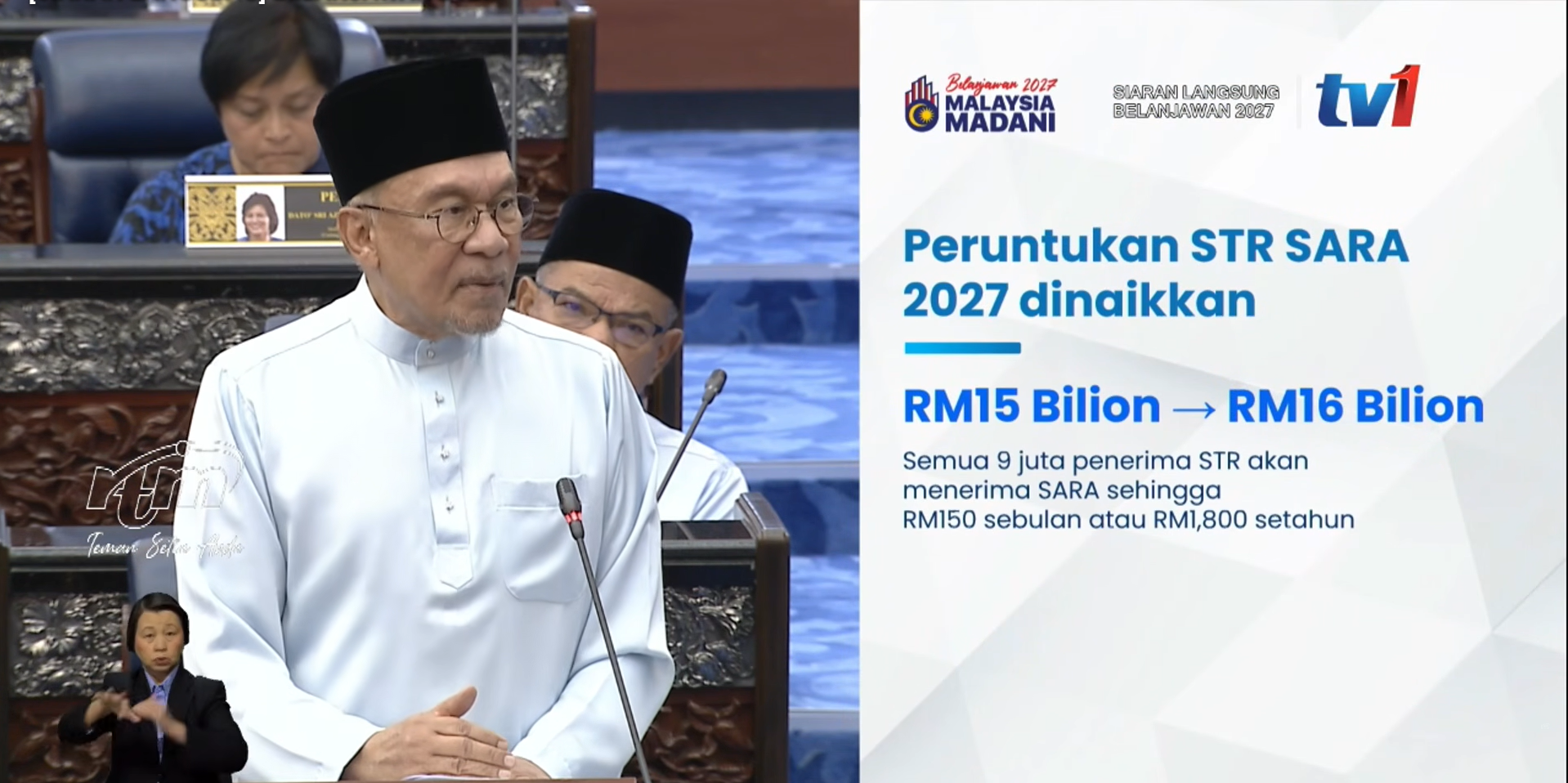
Private final consumption expenditure, which accounted for 61.6% of GDP, grew 4.7% year-on-year, a slight step down from 5.6% in the preceding quarter. Spending on restaurants and hotels rose 12.9%, while transport spending climbed 9.2%. DOSM Chief Statistician Dato’ Sri Dr. Mohd Uzir Mahidin attributed the spending momentum to a combination of factors. “The disbursement of cash assistance programmes, including Sumbangan Tunai Rahmah, Sumbangan Asas Rahmah, and Bantuan Awal Persekolahan, as well as the second phase salary increment for civil servants, enhanced household disposable income and improved spending capacity. Festive-related spending particularly during Chinese New Year, Ramadan, and Hari Raya Aidilfitri further stimulated consumption activities, benefiting retail trade, food and beverages, and accommodation,” he said.
Investment activity held steady, with gross fixed capital formation rising 7.3%. Private sector investment grew 7.8% to RM80.6 billion, while public sector investment grew 5.3% to RM19.8 billion, supported by continued progress on multi-year infrastructure projects.
Exports Rose, Unemployment Eased
Exports grew 5.2% year-on-year to RM426.5 billion, driven mainly by continued expansion in electrical and electronics exports, while imports grew 4.6% to RM363.3 billion. The trade balance widened to RM63.2 billion, up from RM41.0 billion in the same quarter last year.
On the labour market, the unemployment rate edged down to 2.9% from 3.1% in the same period last year, with the labour force standing at 17.2 million persons.
What This Means For Everyday Costs
Consumer price inflation held steady at 1.6% year-on-year in the first quarter, up from 1.3% in the fourth quarter of 2025, partly reflecting cost pressures from the Middle East conflict. Electricity charges and fuel prices increased during the quarter, though core inflation moderated to 2.1%, with softer inflation in food away from home and rental costs.
The ringgit also strengthened during the quarter, appreciating 0.5% against the US dollar and 3.3% year-to-date as of 13 May 2026. For households with overseas education payments, foreign currency loans, or regular spending on imported goods, a stronger ringgit generally reduces the ringgit cost of those commitments, though the benefit depends on timing and the specific currencies involved.
The Outlook For 2026
BNM Governor Dato’ Sri Abdul Rasheed Ghaffour noted that as a small and open economy, Malaysia will face both direct and indirect impact from the ongoing Middle East conflict, with higher energy prices, supply chain disruptions, and heightened uncertainty weighing on the external environment. Despite this, the economy is expected to remain resilient, with growth projected within a range of 4% to 5% for the full year.
Headline inflation is projected to average between 1.5% and 2.5% in 2026. Existing policy measures, including targeted fuel subsidies, are expected to help limit near-term spillovers to broader inflation. Businesses affected by the conflict can also apply for the SME Stabilisation Relief Facility, a RM5 billion working capital facility that opened for applications today.
Follow us on our official WhatsApp channel for the latest money tips and updates.
Iman writes about personal finance with curiosity. She is interested in the stories behind money, the hesitation around big decisions, and the small habits that shape financial futures. Off the clock, she is either dissecting a film or climbing her way up the leaderboard in her favourite games.
52votes
Article Rating
SHARE
About THE AUTHOR
Iman Aminuddin
Iman Aminuddin
Iman writes about personal finance with curiosity. She is interested in the stories behind money, the hesitation around big decisions, and the small habits that shape financial futures. Off the clock, she is either dissecting a film or climbing her way up the leaderboard in her favourite games.






Comments (0)