If you’re raising children or helping to care for ageing parents, chances are you’ve already spent money on healthcare this year. By the time tax filing season comes around, many of those healthcare receipts have been forgotten, making it easy to miss out on relief you’re entitled to.
That’s partly because medical spending is spread across several relief categories, each with its own claim limit, and some even have smaller sub-limits that are easy to overlook.
The figures below apply to the Year of Assessment (YA) 2026, covering qualifying expenses incurred between 1 January and 31 December 2026.
The Medical Categories You Can Claim Against
Medical-related tax relief is spread across three main categories, with a fourth covering insurance premiums rather than treatment itself.
Relief Category
Maximum Claim (RM)
Medical expenses for self, spouse, or child
10,000
Medical treatment and care for parents and grandparents
8,000
Basic supporting equipment for a disabled individual
6,000
Education and medical insurance premiums
4,000
For most parents, the RM10,000 category is likely to be the one you’ll use most. It covers treatment for serious illnesses, fertility treatment, vaccinations, dental examination and treatment, and medical examinations for you, your spouse, and your children.
Several of these expenses carry their own smaller limits inside the RM10,000 category, which is where many claims go wrong.
The RM8,000 category covers medical treatment, special needs care, and nursing home care for your parents or grandparents. They do not need to be taxpayers themselves for you to claim, but they must be residents in Malaysia, and the claim needs to be certified by a registered medical practitioner.
Dental work for parents is narrower than dental treatment covered under the RM10,000 category for yourself, your spouse, and your children. Only basic dental treatment qualifies, including extraction, filling, scaling, and cleaning. Cosmetic and orthodontic treatment does not qualify, so expenses such as crowns or braces would not be claimable under this relief.
The RM6,000 relief for supporting equipment covers items such as wheelchairs, hearing aids, dialysis machines, and artificial limbs. The disabled individual must be registered with the Department of Social Welfare, so complete that registration well before tax filing season.
Where The Sub-Limits Catch You Out
Sitting inside those main categories are several smaller limits. Even if you have not used up the overall relief, these individual caps still apply.
Expense Type
Maximum Claim (RM)
Relief Category
Vaccinations
1,000
RM10,000 medical relief
Dental examination and treatment, non-cosmetic
1,000
RM10,000 medical relief
Complete medical examinations, mental health consultations, COVID-19 tests, and disease screenings
1,000
RM10,000 medical relief
Assessment, diagnosis, early intervention, and rehabilitation for a child aged 18 and below with a learning disability
10,000
RM10,000 medical relief
Complete medical examinations and vaccinations for parents and grandparents
1,000
RM8,000 parents relief
If your household spends RM1,600 on non-cosmetic dental examination and treatment across four family members, you can only claim RM1,000. The remaining RM600 cannot be claimed, even if your total medical expenses for the year are well below the RM10,000 cap.
The RM1,000 examination sub-limit is the one that surprises many households because it covers more than an annual check-up. Mental health examinations and consultations with a registered psychiatrist, clinical psychologist, or counsellor share this same RM1,000 limit with COVID-19 tests, disease screenings, and complete medical examinations.
If you spend RM2,000 on qualifying mental health consultations for your child over the year, only RM1,000 can be claimed under this sub-limit.
The learning disability allowance covers assessment, diagnosis, early intervention, and rehabilitation for a child aged 18 and below with a condition such as autism, ADHD, or Down syndrome. Unlike the other sub-limits, this allowance can use up the full RM10,000 medical relief limit on its own.
Vaccinations cover any vaccine registered with the National Pharmaceutical Regulatory Agency (NPRA), including routine childhood vaccinations alongside vaccines such as influenza, pneumococcal, and HPV. The RM1,000 ceiling applies to the household claim rather than per child, so a family vaccinating multiple children can reach the limit faster.
How Much Your Medical Relief Could Save You
Tax relief reduces your chargeable income rather than your final tax bill directly, so the value of your claim depends on your tax bracket.
For example, RM3,900 of qualifying relief could reduce your tax by roughly RM936 if you are taxed at 24%, and by roughly RM312 if you are taxed at 8%.
Working out whether you still have room left is a matter of adding up by category rather than looking at your total spending. Say your household spends RM900 across dental visits, vaccinations, and a medical check-up, along with RM3,000 on an early intervention programme. The full RM3,900 qualifies because the RM900 falls within the relevant RM1,000 sub-limits, while the RM3,000 falls within the learning disability allowance.
Keep the smaller receipts too. A RM120 vaccination receipt may not seem important on its own, especially if it’s one of several from your children’s routine jabs, but a few of them over the year can add up to a large portion of the RM1,000 vaccination limit.
Insurance Premiums Are Not Medical Expenses
The premiums you pay for your own medical card or your child’s medical plan do not fall under the RM10,000 medical expenses category. Instead, they are claimed under the education and medical insurance relief, which has a separate limit of RM4,000. Life insurance is claimed elsewhere again, together with EPF contributions under its own relief category.
The RM4,000 insurance relief covers a wider range than the name suggests. It includes medical cards, hospitalisation plans, critical illness plans for you, your spouse, or your children, as well as takaful contributions and conventional insurance premiums. Group medical cover can also qualify if you are the one paying for it.
If a critical illness rider is bundled together with a life insurance policy, the premium is claimable in full under life insurance relief. The 60% rule applies to standalone critical illness plans or riders attached to personal accident policies claimed under medical insurance relief.
To sort your receipts, look at who you paid. Bills you pay to hospitals and clinics fall under medical expenses, while payments made to an insurance company belong under insurance premiums. Relief is based on what you paid, not on how much protection your policy provides. A medical plan offering RM200,000 in coverage with an annual premium of RM1,800 only gives you RM1,800 in tax relief.
Medical tax relief generally covers expenses for yourself, your spouse, and your children. Treatment for your parents and grandparents is claimable under the separate RM8,000 relief instead.
Expenses paid for a sibling, cousin, or in-law do not qualify, even if you covered the cost yourself.
The same expense also cannot be claimed twice. For example, if you’ve claimed a medical check-up under medical expenses, you cannot claim the same amount again under another relief category.
LHDN requires taxpayers to keep supporting documents for seven years from the end of the relevant year of assessment. If you’re unable to produce them during a review, the relief may be disallowed, and you could face a penalty of up to 100% of the tax underpaid.
Sorting This Out Before You File
Rather than leaving everything until tax filing season, sort your receipts into the correct relief category as you go. If a receipt does not clearly describe the treatment provided, ask the clinic or hospital to issue one with more detailed information. A detailed receipt helps support your claim if LHDN ever asks for it.
Give your details at the point of payment where your healthcare provider issues e-Invoices. It is simpler than trying to obtain one afterwards and leaves you with a record that matches your payment details.
If you’ve already reached the RM1,000 limit for dental examination and treatment this year, another routine appointment in December will not qualify for additional relief. Scheduling the same appointment in January instead means it falls into a new year of assessment with the limit reset, and the same applies to vaccinations and complete medical examinations.
Before booking non-urgent appointments towards the end of the year, take a look at how much of each relief you’ve already used. Moving an appointment by a few weeks could mean claiming the full amount instead of running into a sub-limit you’ve already reached.
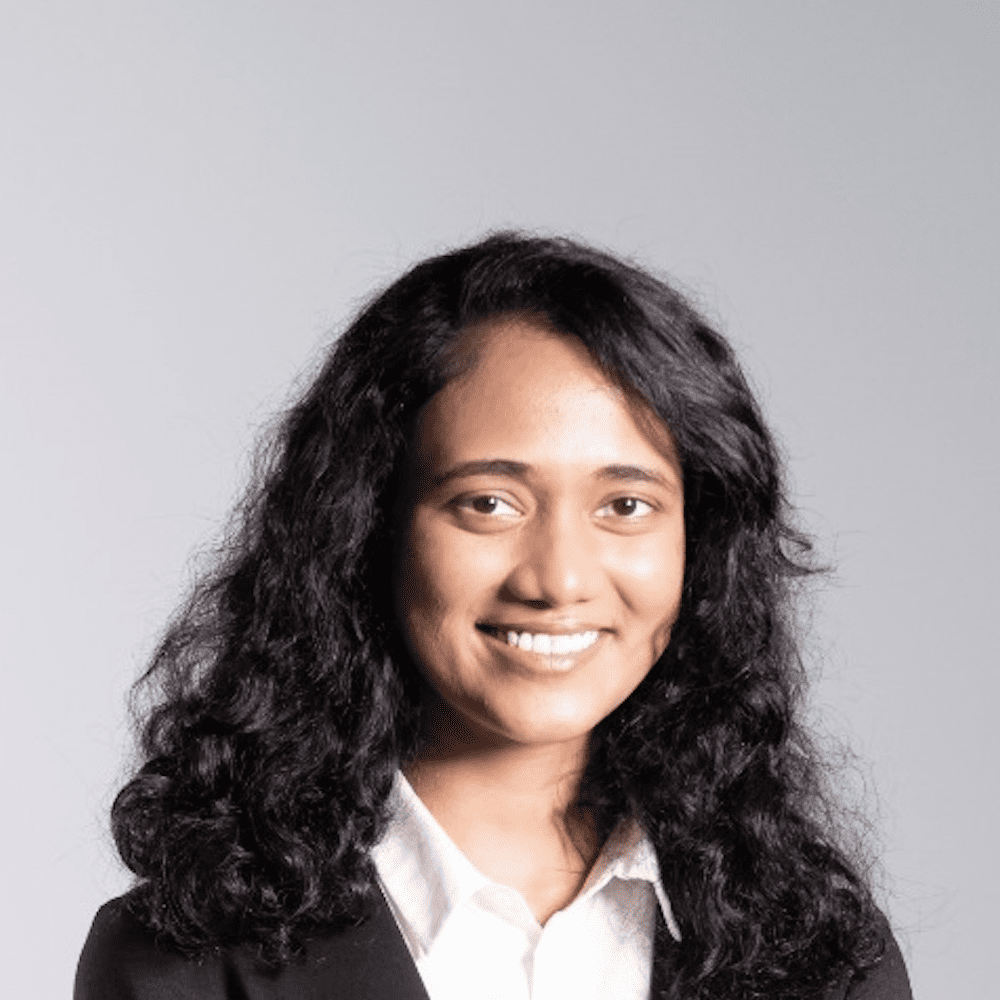
Steffi Manisha Arokiam is a Tax Director at ThinkTX Consultants, where she leads the firm’s Transfer Pricing and e-Invoicing practice. She advises both individuals and corporations across a wide range of tax matters, including Real Property Gains Tax (RPGT), stamp duty, estate tax, and global mobility for expatriates. Recognised for combining strong technical expertise with a practical, solutions-driven approach, Steffi helps clients navigate complex tax issues with clarity and confidence.
A respected thought leader in taxation, Steffi has authored numerous technical articles and professional newsletters. Her work has been published by the International Bureau of Fiscal Documentation (IBFD) and Wolters Kluwer (CCH), and she has been featured on BFM 89.9 discussing crypto taxation.
Professional Affiliations
Member of the Malaysian Institute of Accountants (MIA)
Member of the Chartered Tax Institute of Malaysia (CTIM)
ASEAN Chartered Professional Accountant (ASEAN CPA)
Member of the International Fiscal Association (IFA)
Professional Trainer certified by HRD Corp
As a trusted tax partner of RinggitPlus, Steffi reviews and verifies all content relating to Malaysian taxation to ensure it is accurate, up to date, and practical — helping readers better understand the tax system and make the most of their tax position.
52votes
Article Rating
SHARE
About THE AUTHOR
Steffi Manisha Arokiam
Steffi Manisha Arokiam
Steffi Manisha Arokiam is a Tax Director at ThinkTX Consultants, where she leads the firm's Transfer Pricing and e-Invoicing practice. She advises both individuals and corporations across a wide range of tax matters, including Real Property Gains Tax (RPGT), stamp duty, estate tax, and global mobility for expatriates. Recognised for combining strong technical expertise with a practical, solutions-driven approach, Steffi helps clients navigate complex tax issues with clarity and confidence.
A respected thought leader in taxation, Steffi has authored numerous technical articles and professional newsletters. Her work has been published by the International Bureau of Fiscal Documentation (IBFD) and Wolters Kluwer (CCH), and she has been featured on BFM 89.9 discussing crypto taxation.
Professional Affiliations
Member of the Malaysian Institute of Accountants (MIA)
Member of the Chartered Tax Institute of Malaysia (CTIM)
ASEAN Chartered Professional Accountant (ASEAN CPA)
Member of the International Fiscal Association (IFA)
Professional Trainer certified by HRD Corp
As a trusted tax partner of RinggitPlus, Steffi reviews and verifies all content relating to Malaysian taxation to ensure it is accurate, up to date, and practical — helping readers better understand the tax system and make the most of their tax position.









Comments (0)