Alex Cheong Pui Yin
Previously covered recruitment-related stories and had a short stint as a copywriter for the property industry. She subsequently developed an interest in investment and robo-advisors.

22nd September 2022 - 2 min read
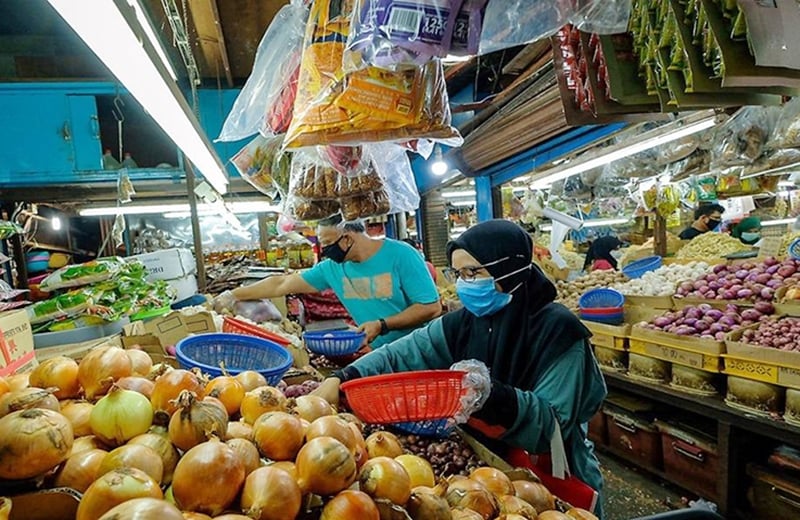
Food price inflation in the ASEAN+3 region is expected to peak at the end of this year, said the regional macroeconomic surveillance organisation, Asean+3 Macroeconomic Research Office (AMRO). This encompasses the ten ASEAN countries – including Malaysia – as well as China, Japan, and Korea.
In an analytical note, AMRO explained that global food prices have climbed steadily since the middle of 2020, peaking in March 2022 and staying high since. The impact of this is transmitted to the ASEAN+3 region with a lag, and as such, people in these countries can expect to experience the peak effects of food price inflation and headline inflation towards the end of 2022 instead.
The organisation also noted that as a net food commodity exporter, Malaysia may be in a better position to withstand global food price shocks, as local supplies can sustain domestic needs. It also remarked that Malaysia’s notable food commodity exports are edible oils. However, the country’s food price inflation is still driven to its highest rate in a decade thus far because of the elevated prices for meat, fish, and seafood – as these items are mostly imported.
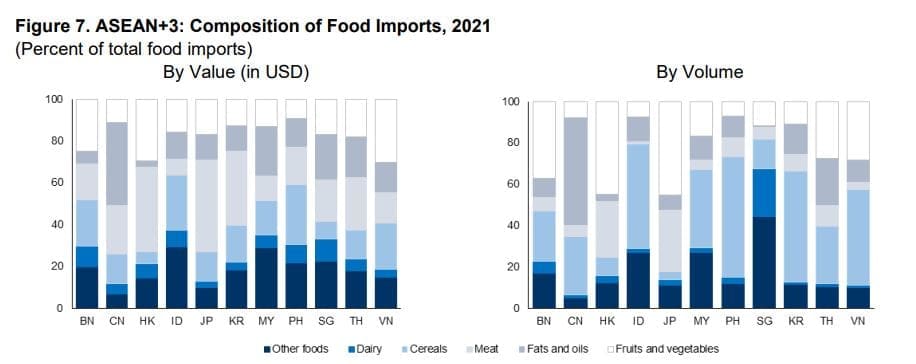
“In Malaysia, prices of domestic chicken (46% of total meat consumption), have gone up due to higher prices of imported feedstock, as well as labour shortages at poultry farms,” the organisation highlighted in its report.
AMRO also said that it will take a while before global food prices start to ease, especially since some supply pressures will remain, with sanctions on Russia still enforced due to its conflict with Ukraine. Other factors contributing to elevated global food prices include the ever-present risks of unfavourable weather and livestock diseases.
In the meantime, some economies have implemented temporary policy interventions, such as price controls, to maintain the stability of food prices. AMRO also urged governments to discourage hoarding behaviour among the public and to provide targeted support to needy households to alleviate the situation. These include aids such as temporary cash transfers or subsidies.
“Over the longer term, efforts could focus on enhancing social assistance schemes and increasing the food supply by supporting domestic production and improving food distribution efficiency,” said AMRO.
(Source: AMRO)
Previously covered recruitment-related stories and had a short stint as a copywriter for the property industry. She subsequently developed an interest in investment and robo-advisors.





Comments (0)