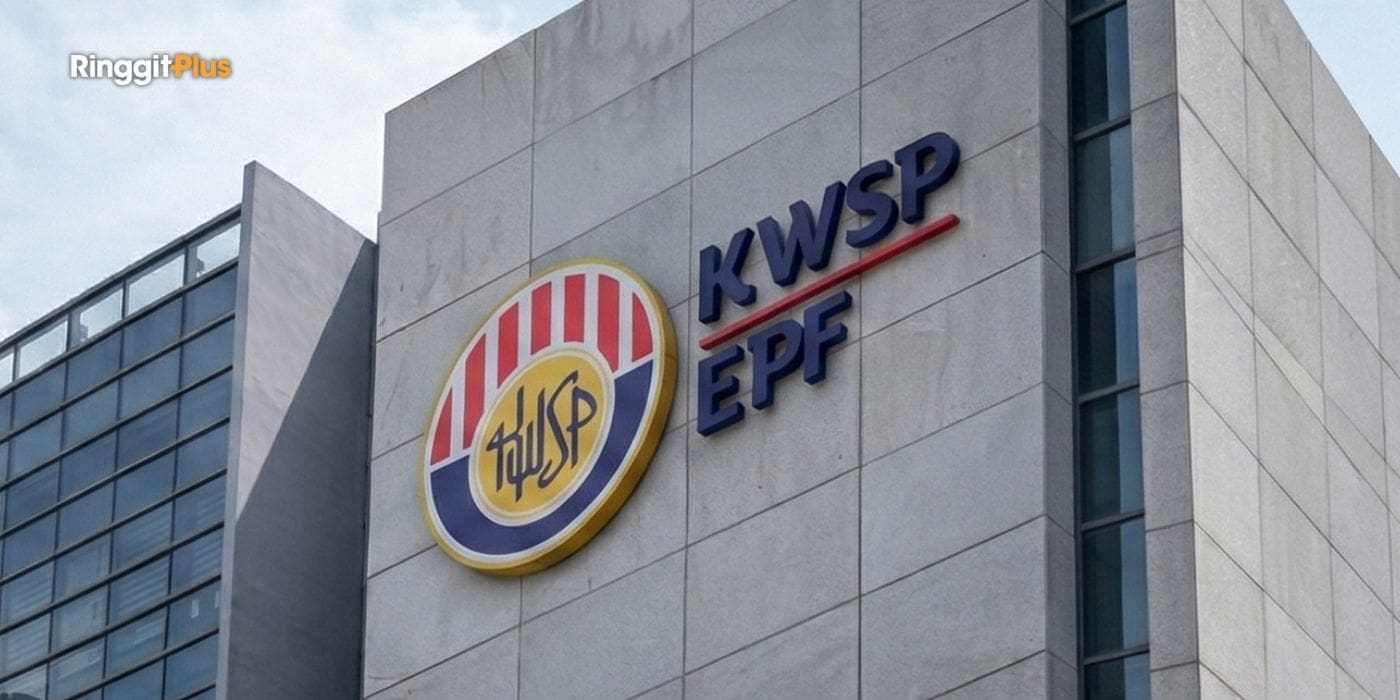
The Employees Provident Fund has declared a dividend rate of 6.15% for both Simpanan Konvensional and Simpanan Shariah for the financial year ended 31 December 2025.
The payout amounts to RM67.1 billion for Conventional savings and RM12.5 billion for Shariah savings, bringing the total distribution to RM79.6 billion. Dividends will be credited to members’ accounts on 1 March 2026.
EPF chief executive officer Ahmad Zulqarnain Onn said the moderation in this year’s dividend was mainly due to softer performance in the Malaysian equity market.
Last year’s total payout amounted to RM63.05 billion for Conventional accounts and RM10.19 billion for Shariah accounts. Although this year’s rate is marginally lower, the overall payout is higher because the fund has grown in size and earned more investment income.
In simple terms, members are receiving a larger total distribution, even with a slightly lower rate.
Long-Term Performance Remains Stable
Looking beyond a single year, EPF’s dividend remains in line with its longer-term track record.
Over the past five years, Simpanan Konvensional delivered an average annual dividend of 5.88%, while Simpanan Shariah recorded 5.65%. Over ten years, Conventional savings averaged 5.88%, and Shariah savings averaged 5.60%.
For Conventional accounts, the 15-year average stands at 6.03%, while the 20-year average is 5.87%.
This means the 6.15% declared for 2025 is above the five-year and ten-year averages for both savings categories.
Investment Income And Fund Size Increased
In 2025, EPF earned RM82.7 billion from its investments, compared with RM75.5 billion in 2024. The total amount of money managed by the fund grew to RM1.409 trillion.
Most of the income came from investments in shares listed on stock markets, followed by bonds and other fixed income assets. Together, these two areas contributed the majority of EPF’s earnings.
EPF said it remains focused on careful risk management and long-term investing, especially during periods of global uncertainty.
Diversification Helps Reduce Risk
EPF spreads its investments across different types of assets and different countries to reduce risk.
As at December 2025, about 45% of the fund was invested in bonds and fixed income assets, which are generally more stable. Around 42% was invested in shares, while the rest was placed in private investments and short-term instruments.
Roughly 62% of EPF’s investments were in Malaysia, with 38% invested overseas. Overseas markets performed better than Malaysia’s stock market in 2025, which helped support overall returns.
By investing across multiple sectors and regions, EPF aims to balance stability with long-term growth.
Membership And Contributions Continue To Rise
EPF membership rose to 18.1 million in 2025, with active members increasing to 10.6 million. The number of active employers grew to 640,000.
Total contributions reached RM130.2 billion, while withdrawals stood at RM63.8 billion, resulting in net contributions of RM66.5 billion. Higher net contributions strengthened the fund’s overall asset base.
Voluntary contributions increased to RM19.2 billion, up from RM13.7 billion in 2024. The number of voluntary contributors grew to 1.4 million, while 364,000 members made additional contributions through i-Topup.
This suggests that more members are taking steps to increase their retirement savings beyond the minimum required amount.
Retirement Savings Show Gradual Improvement
Savings levels among members improved during the year. For the first time, more than 40% of active Malaysian formal sector members aged 55 and below achieved the Basic Savings threshold of RM240,000.
EPF coverage of the labour force stood at 59% as at December 2025. The fund also recorded a customer satisfaction index of 97% and a trust score of 85%.
While these figures indicate progress, a majority of members have yet to reach the Basic Savings benchmark. This suggests that many contributors may still face challenges in building sufficient retirement funds, particularly those with irregular income or lower monthly wages. Continued contributions and long-term compounding remain key factors in improving retirement readiness.
What The 6.15% Dividend Means For Members
The dividend rate determines how much a member’s savings grow each year. For instance, a member with RM100,000 in their EPF account would receive RM6,150 at a 6.15% rate, with the amount credited into Account 1 and Account 2 based on the balance in each account. Future dividends are calculated on the new total, enabling savings to compound over time.
Although the 2025 rate is slightly lower than last year’s 6.3%, the difference of 0.15 percentage points has a limited short-term impact for most members. Over longer periods, consistent monthly contributions and avoiding unnecessary withdrawals typically have a greater effect on final retirement savings than small year-to-year changes in dividend rates.
At the same time, dividend growth must be viewed alongside broader factors such as inflation and rising living costs, which influence how far retirement savings will stretch. For contributors, steady savings behaviour combined with sustainable long-term returns remains central to building adequate retirement funds.
Follow us on our official WhatsApp channel for the latest money tips and updates.
Samuel writes about personal finance and financial news, focusing on how banking updates, policies, and promotions affect everyday money decisions. He enjoys making complicated financial topics easier to follow. Outside of writing, he spends his time watching TV shows and occasionally convincing himself he will only watch one episode.
51vote
Article Rating
SHARE
About THE AUTHOR
Samuel Chua
Samuel Chua
Samuel writes about personal finance and financial news, focusing on how banking updates, policies, and promotions affect everyday money decisions. He enjoys making complicated financial topics easier to follow. Outside of writing, he spends his time watching TV shows and occasionally convincing himself he will only watch one episode.








Comments (0)