Understanding investment options is an important step towards financial planning. ASNB funds offer various choices for Malaysians seeking to grow their wealth. This guide provides an overview of ASNB funds, including their types, how they work, and how to begin investing.
What Does ASNB Stand For, And What Does It Do?
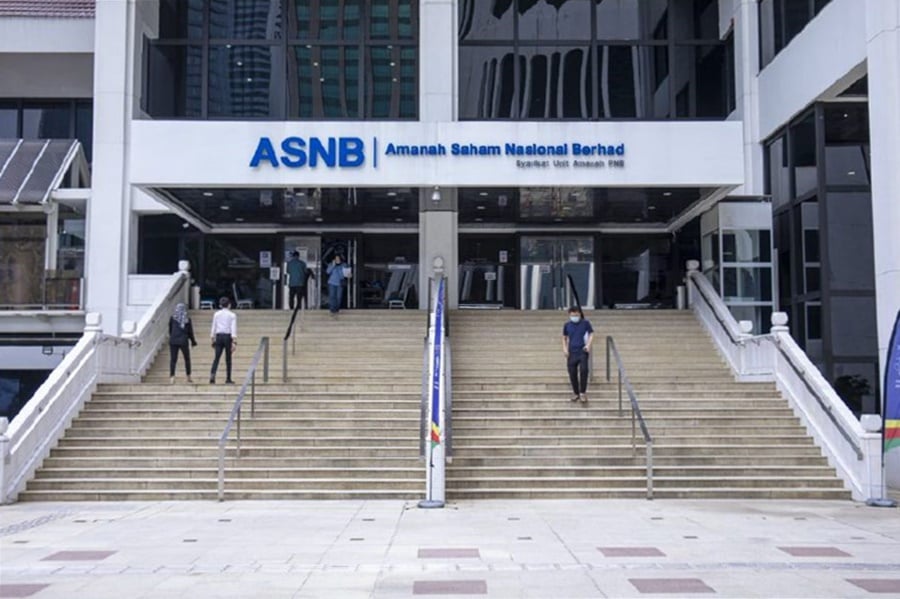
ASNB stands for Amanah Saham Nasional Berhad. It is a wholly owned subsidiary of Permodalan Nasional Berhad (PNB), which is Malaysia’s largest fund management company and a government-linked investment company.
ASNB’s main role is to manage unit trust funds with the aim of helping Malaysians increase their wealth safely and accessibly.
What Types Of Funds Does ASNB Offer?
ASNB offers various types of unit trust funds, which can be broadly categorised into two groups:
Fixed-Price Funds
The price for these funds is actively managed by Amanah Saham Nasional Berhad (ASNB) with the objective of maintaining a stable Net Asset Value (NAV) of RM1.00 per unit. This means that while the value of the fund’s underlying assets does fluctuate daily with the market, the price at which you, as an investor, buy or sell your units is kept fixed at RM1.00. It is important to note that these are not capital guaranteed funds.
Examples of ASNB’s fixed-price funds include both Bumiputera-specific and all-Malaysian accessible options:
ASB (Amanah Saham Bumiputera): This fund is available exclusively to Bumiputera investors.
ASB 2 (Amanah Saham Bumiputera 2): Also for Bumiputera investors.
ASB 3 Didik (Amanah Saham Bumiputera 3 Didik): Another fund for Bumiputera investors.
ASM (Amanah Saham Malaysia): This fund is open to all Malaysian citizens.
ASM 2 Wawasan (Amanah Saham Malaysia 2 Wawasan): This fund was formerly known as Amanah Saham Wawasan 2020 (ASW 2020) before its renaming in October 2018. It is open to all Malaysians.
ASM 3 (Amanah Saham Malaysia 3): Open to all Malaysians.
Variable-Price Funds
The unit price of these funds fluctuates daily based on the market performance of their underlying assets. Unlike fixed-price funds, they do not have a capital preservation objective, so your initial investment is directly exposed to market risk. This means, they carry a higher risk profile which also creates the potential for both higher returns and the risk of capital loss.
Examples of ASNB’s variable-price funds, drawn from various series, include:
ASN (Amanah Saham Nasional)
ASN Equity 2
ASN Equity 3
ASN Equity 5
ASN Equity Global
ASN Imbang 1
ASN Imbang 2
ASN Imbang 3 Global
ASN Sara 1
ASN Sara 2
ASN Sukuk
ASN Equity Malaysia
Are ASNB Funds Safe To Invest In?
Fixed-price ASNB funds aim for capital preservation by having the fund manager maintain a stable unit price of RM1.00. While not officially guaranteed, the security of these funds is supported by their manager, Permodalan Nasional Berhad (PNB). The objective is to protect your initial investment from day-to-day market volatility.
While ASNB funds are not insured by Perbadanan Insurans Deposit Malaysia (PIDM)—which primarily covers deposits in banks—they have demonstrated historical stability. This historical stability refers to their consistent ability to maintain the fixed unit price and provide regular annual dividends, without investors losing their initial capital. Fixed-price funds have not lost value in terms of their unit price; any returns come in the form of declared dividends, not through changes in the unit’s capital value. All ASNB funds are regulated by the Securities Commission Malaysia.
Who Is Eligible To Invest In ASNB Funds?
Generally, Malaysian citizens are eligible to invest in ASNB funds. For individuals wishing to open an account directly, the minimum age is 18 years. For minors, parents or guardians can open accounts on their behalf. It is important to note that some funds, such as ASB, are designated only for Bumiputera investors, while others, like ASM, are open to all Malaysians regardless of their ethnic background.
What Is The Difference Between Fixed-Price And Variable-Price Funds?
The main difference is the pricing structure. Fixed-price funds are managed with the objective of maintaining a constant unit price of RM1. This generally means lower risk and a focus on stable returns.
In contrast, variable-price funds have unit prices that fluctuate according to market performance. This means they carry a higher risk but also have the potential for higher returns linked to market movements.
How Do Returns And Dividends Work?
Investors purchase units in ASNB funds. ASNB then pools these funds from various investors and invests them in a range of Malaysian and international assets. Dividends, if declared, are typically announced annually. For most accounts, these dividends are automatically reinvested into additional units. Historically, annual dividends have generally ranged from approximately 3.75% to 7% depending on the specific fund and market conditions. For example, ASB declared a 5.75% income distribution in 2024, while ASM declared 4.75% in the same year. It is important to remember that these returns are not guaranteed and are based on the fund’s performance
Can Non-Bumiputeras Invest In ASNB Funds?
Yes, non-Bumiputeras can invest in certain ASNB funds. While some funds, such as ASB, are specifically for Bumiputera investors, other funds like ASM (Amanah Saham Malaysia) and ASM 2 Wawasan (formerly ASW 2020) are open to all Malaysian citizens, regardless of their ethnic background.
How Do I Open An ASNB Account And Start Investing?
To begin investing in ASNB funds, you first need to open an ASNB account. This can be done through:
In-person: At ASNB branches, participating agent banks, or Pos Malaysia branches.
The required documents for opening an account typically include your MyKad, bank account details, and a valid email address and mobile number.
Once your account is open, you can invest via:
The myASNB platform
Internet banking platforms such as Maybank2u, CIMB Clicks, or RHB Now
ATMs and bank branches
Are ASNB Funds Shariah-Compliant?
Most ASNB funds are Shariah-compliant. To confirm the Shariah compliance status of a specific fund, you can check the ASNB website or refer to the individual fund’s fact sheet.
Common Misconceptions About ASNB Funds
It is common for individuals to hold certain misunderstandings regarding ASNB funds. Addressing these can provide a clearer picture of how these investments operate.
One common belief is that all ASNB funds are exclusively for Bumiputeras. This is not accurate, as funds such as Amanah Saham Malaysia (ASM) and ASM 2 Wawasan are open to all Malaysian citizens, irrespective of their ethnicity.
Another misconception is that the returns from ASNB funds are fixed. In reality, returns for ASNB funds can vary annually. While they have shown historical stability, the dividends are not guaranteed to remain constant and are dependent on the fund’s performance each year.
Some investors may also assume that units for popular funds are always readily available. However, certain funds, particularly those with high demand like ASM, may experience rapid sell-outs of units shortly after they are released. This requires investors to be aware of unit availability.
Finally, a common simplification is to equate ASNB solely with ASB. It is important to remember that ASNB is the overarching entity that manages a diverse portfolio of unit trust funds, of which ASB is just one offering among many others.
For further insights into managing your investments or exploring other financial products, check out our blog.
Iman writes about personal finance with curiosity. She is interested in the stories behind money, the hesitation around big decisions, and the small habits that shape financial futures. Off the clock, she is either dissecting a film or climbing her way up the leaderboard in her favourite games.
Iman writes about personal finance with curiosity. She is interested in the stories behind money, the hesitation around big decisions, and the small habits that shape financial futures. Off the clock, she is either dissecting a film or climbing her way up the leaderboard in her favourite games.






Comments (0)