Malaysia’s labour demand continued to expand at the end of 2025, reaching 9.21 million jobs in the fourth quarter.
According to the Department of Statistics Malaysia, labour demand grew 1.8% year on year in the fourth quarter of 2025, the fastest pace recorded since the first quarter of 2024. The figures are based on the Employment Survey conducted among registered private sector businesses and cover total jobs, filled jobs, vacancies, and newly created roles across sectors and skill levels.
Filled Jobs Reach Record High Of 9.02 Million
Out of 9.21 million jobs, 9.02 million were filled in the fourth quarter of 2025, representing 97.8% of total jobs and leaving 2.2%, or 198,100 positions, vacant.
The number of filled jobs rose 1.8% compared with the same period in 2024, marking the highest level recorded in the series. This indicates that most available positions are being taken up even as employers continue to hire.
Services Sector Accounts For More Than Half Of All Jobs
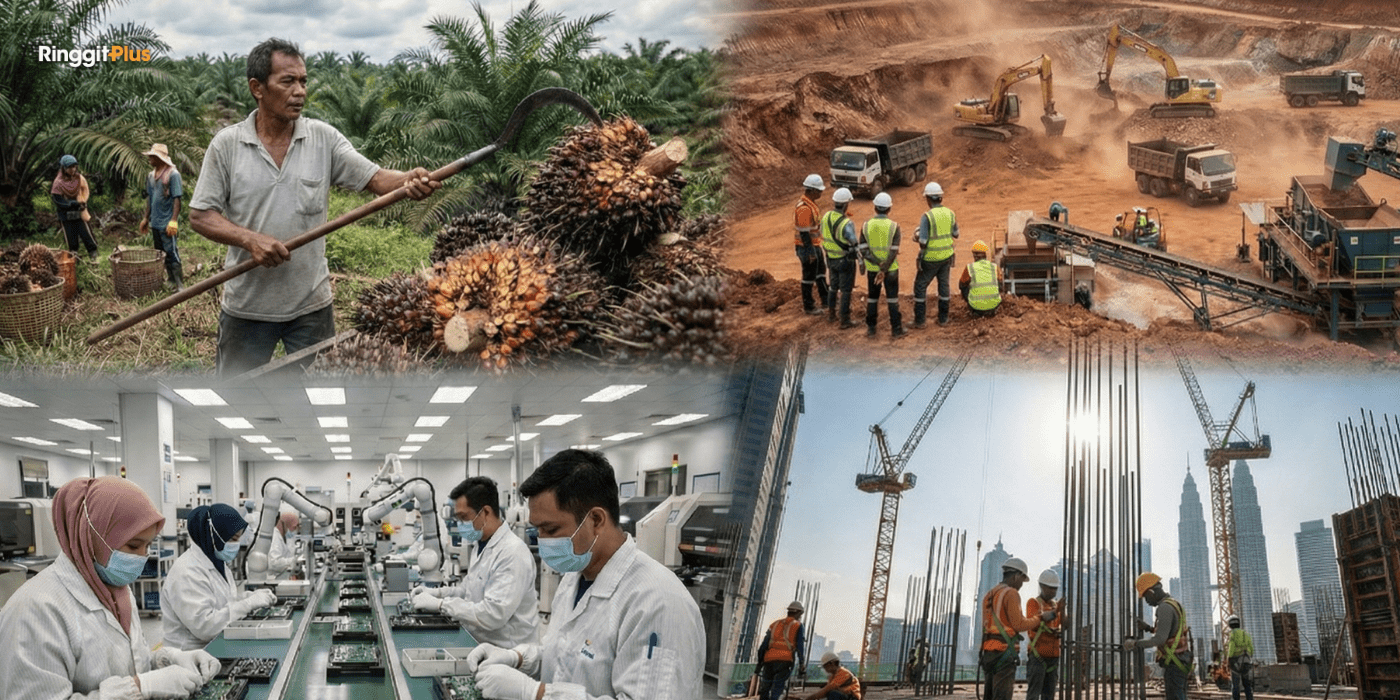
The services sector remained the largest contributor to employment, accounting for 53.1% of filled jobs, or 4.80 million positions. Manufacturing followed with 26.9%, or 2.42 million filled jobs, while construction made up 13.9%, or 1.25 million.
During the quarter, 32,100 new jobs were created, up 2.2% year on year. Nearly half of these, 15,400 jobs, came from the services sector. Manufacturing contributed 12,100 new jobs, while construction added 3,100. Within services, wholesale and retail trade was a key driver, generating 9,300 new jobs during the quarter.
Manufacturing Records The Highest Number Of Vacancies
Although services dominate overall employment, manufacturing recorded the highest number of job vacancies.
There were 198,100 vacancies in total in the fourth quarter, an increase of 2.4% from a year earlier. Of these, 115,800 vacancies were in manufacturing, accounting for 58.4% of all open positions. A large share of these vacancies was concentrated in electrical, electronic, and optical products, as well as petroleum, chemical, rubber, and plastic products.
This suggests that industrial and production related roles remain in demand, particularly in export oriented and resource based industries.
Semi Skilled Roles Make Up The Majority Of Employment
By skill level, semi skilled roles made up the largest share of employment, accounting for 62.3% of filled jobs, equivalent to 5.62 million positions. Skilled roles represented 25.3%, or 2.27 million, while low skilled roles made up 12.4%, or 1.12 million.
The same pattern appears in new job creation. Of the 32,100 jobs created in the fourth quarter, 64.5% were semi skilled, 25.1% were skilled, and 10.4% were low skilled. For 2025 as a whole, 129,600 new jobs were created, slightly higher than the 127,200 recorded in 2024.
What The Latest Labour Demand Trends Show
The fourth quarter data points to steady and broad based labour demand growth across key sectors, with total jobs, filled positions, and vacancies all increasing year on year.
The high filled job rate of 97.8% indicates that most available positions are occupied, which reflects a relatively tight labour market. At the same time, the presence of nearly 200,000 vacancies, particularly in manufacturing, shows that employers are still actively looking to hire, especially for semi skilled roles.
The concentration of new jobs in services, alongside strong vacancy numbers in manufacturing, suggests that Malaysia’s labour market remains supported by both domestic consumption activities, such as wholesale and retail trade, and industrial production. The dominance of semi skilled roles in both filled jobs and newly created positions highlights the continued importance of vocational, technical, and mid level skills in the current employment landscape.
Overall, the figures reflect gradual but consistent expansion in private sector labour demand at the end of 2025, with opportunities concentrated in services and manufacturing, and with semi skilled workers forming the backbone of the job market.
Follow us on our official WhatsApp channel for the latest money tips and updates.
Samuel writes about personal finance and financial news, focusing on how banking updates, policies, and promotions affect everyday money decisions. He enjoys making complicated financial topics easier to follow. Outside of writing, he spends his time watching TV shows and occasionally convincing himself he will only watch one episode.
51vote
Article Rating
SHARE
About THE AUTHOR
Samuel Chua
Samuel Chua
Samuel writes about personal finance and financial news, focusing on how banking updates, policies, and promotions affect everyday money decisions. He enjoys making complicated financial topics easier to follow. Outside of writing, he spends his time watching TV shows and occasionally convincing himself he will only watch one episode.
We provide weekly updates on every Friday at 5pm on the prices of RON95, RON97 and Diesel in Malaysia and a chart that shows the movement of fuel prices across a 6-week period. Bookmark this page now!








Comments (0)