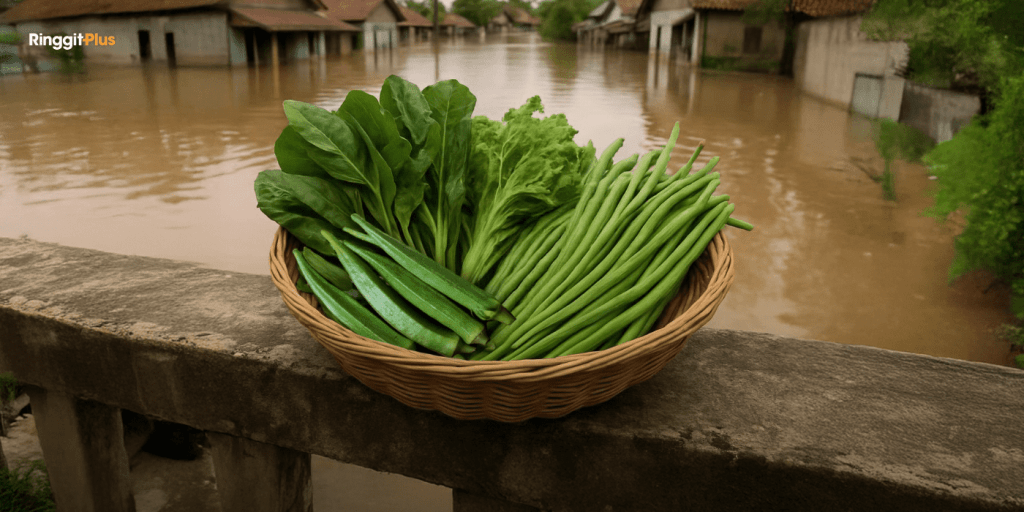
Emergency measures have been activated to stabilise vegetable prices following sharp increases in several states. The Agriculture and Food Security Ministry confirmed that prices for some vegetables have risen threefold in recent weeks.
Floods Damage Crops Across Key Farming Areas
Extreme weather and flooding in key farming areas have caused a significant drop in vegetable output, with heavy rainfall damaging crops and slowing growth cycles. Farming supplies including seeds, fertiliser, and pesticides were also destroyed.
The supply disruption extends beyond Malaysia. Major regional producers such as Thailand and Vietnam are also experiencing reduced yields due to monsoon-related flooding, which has affected the broader Southeast Asian supply chain.
Many farmers also scaled down planting ahead of the northeast monsoon to avoid losses, a pattern mirrored in neighbouring countries facing similar weather impacts.
Leafy vegetables and legumes have been the worst affected. Spinach, kangkung, mustard greens, okra, and long beans have all seen estimated yield reductions of between 40% and 50%.
Major producing areas experiencing flood damage include Tumpat and Pasir Mas in Kelantan, Lenggeng and Kampung Inas in Negeri Sembilan, and several zones in Padang Besar, Perlis. Other affected locations include Manjung, Hilir Perak, and Bagan Datuk in Perak; Sabak Bernam in Selangor; Kubang Pasu in Kedah; Besut and Marang in Terengganu; Seberang Perai Tengah in Penang; and Raub and Lipis in Pahang.
Fama Activates Emergency Supply Plan
To cushion the impact, the Federal Agricultural Marketing Authority (Fama) has activated its Food Supply Emergency Management Plan through 15 state-level operations centres.
Fama is preparing selected stockpile commodities, including chicken, pumpkin, carrots, tomatoes, round cabbage, and sweet corn. The authority is also monitoring daily supplies and prices, activating alternative supply chains from non-affected zones, and coordinating with agricultural and logistics agencies to maintain produce distribution.
Fama is running market intervention programmes such as Pasar Tani, MyRakyat, and Jualan Agro Madani to offer more affordable options for consumers. The authority is working with local growers and importers to ensure continuity of supply, particularly for weather-sensitive leafy vegetables.
Prices Expected To Remain High Into Early 2026
The Malaysian Meteorological Department expects the northeast monsoon, which began on 13 November, to continue until March. The ministry warned that supply disruptions and elevated prices are likely to persist into early next year, consistent with trends from previous monsoon seasons.
Follow us on our official WhatsApp channel for the latest money tips and updates.
Christina writes about personal finance with an eye for making the complicated feel straightforward. She is drawn to the everyday money decisions people face and genuinely enjoys finding the clearest way to explain them. Between articles, she is probably napping, on a hiking trail, or terrorising her sister’s cats.
00votes
Article Rating
SHARE
About THE AUTHOR
Christina Chandra
Christina Chandra
Christina writes about personal finance with an eye for making the complicated feel straightforward. She is drawn to the everyday money decisions people face and genuinely enjoys finding the clearest way to explain them. Between articles, she is probably napping, on a hiking trail, or terrorising her sister's cats.
We provide weekly updates on every Friday at 5pm on the prices of RON95, RON97 and Diesel in Malaysia and a chart that shows the movement of fuel prices across a 6-week period. Bookmark this page now!







Comments (0)