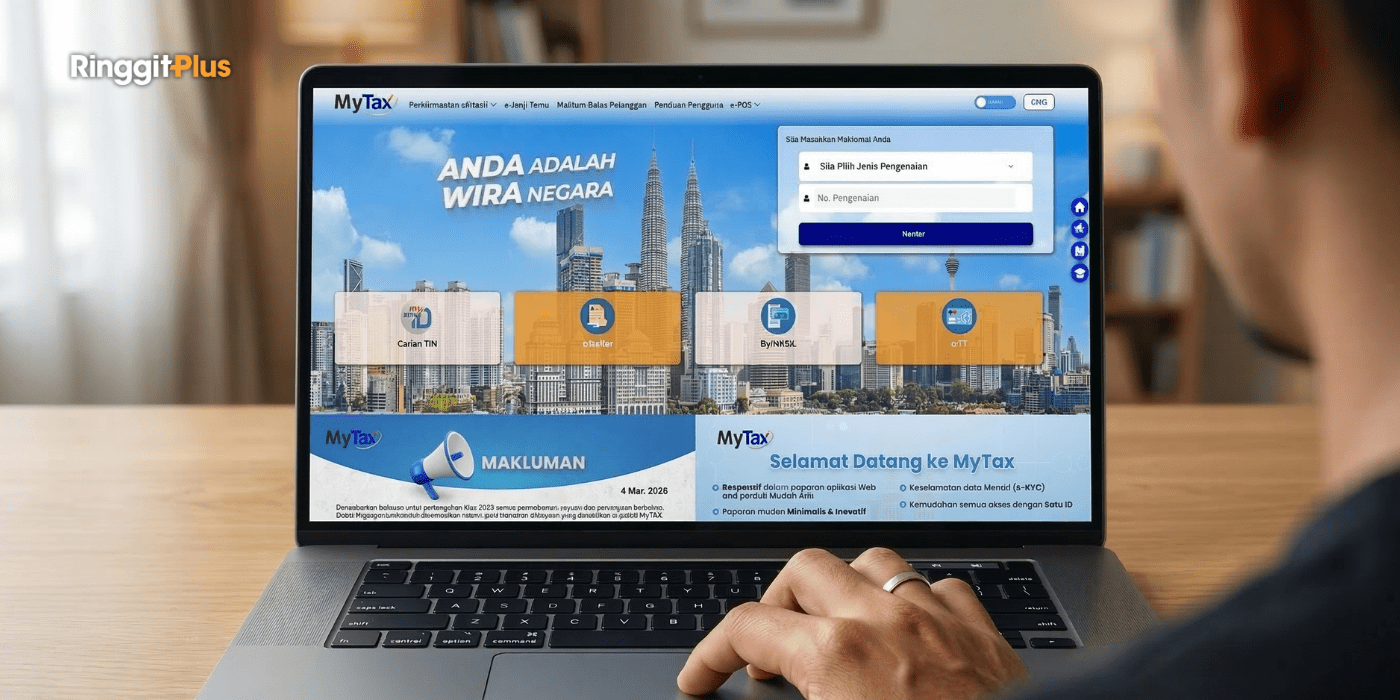
Every March, thousands of people sit down to file their taxes and realise they cannot even log in. The problem is often not the tax form itself but a forgotten password or a reset link sent to an email account they no longer use.
Login issues remain one of the most common mistakes taxpayers encounter when submitting income tax returns through Malaysia’s e-Filing system, according to the Inland Revenue Board.
Once-A-Year Logins Often Lead To Account Access Problems
Malaysia’s e-Filing system opens on 1 March each year, allowing taxpayers to submit returns for the previous assessment year.
Because many people only access the system during the filing period, it is easy to forget passwords or security details. Muhammad Hafiz Halily Aisa from the Inland Revenue Board’s Corporate Services Department said password related issues account for a large share of support calls received during tax season.
In many cases, the difficulty arises during the password reset process. Taxpayers who have not updated their registered email address or phone number may not receive the reset link required to regain access to their account.
Work Email Addresses Can Prevent Password Recovery
Account recovery problems frequently occur when taxpayers register their tax account using a work email address.
If they later change jobs or leave the organisation, they may lose access to that inbox. When password reset instructions are sent to the old work email, the taxpayer cannot retrieve them.
Using a personal email address and keeping contact details updated reduces this risk. Accurate contact information also ensures that tax related notifications from the Inland Revenue Board reach the correct recipient.
The agency also sends certain official notices through physical mail, which means residential address records should be kept current.
Incomplete Income Reporting Can Trigger Audit Checks
Income reporting mistakes are another issue that appears during the filing process.
Taxpayers are required to declare the total income earned throughout the entire year of assessment. For example, the 2025 assessment year covers income received between January and December 2025.
Problems often arise when someone changes jobs during the year. Some taxpayers declare income from only one employer or a short employment period instead of combining earnings from all employments.
Because employer submissions are cross checked against individual tax filings, incomplete declarations can attract audit attention. Obtaining EA or EC forms from each employer before submitting an e-Filing return helps ensure the correct annual income is reported.
Tax Relief Claims Must Reflect Actual Spending
Errors may also occur when taxpayers claim reliefs without confirming whether the expense qualifies under current rules.
Tax reliefs are only allowed when the taxpayer has actually incurred the relevant expense and the claim falls within the permitted limits. The list of available reliefs may also change each year following announcements made during the national budget.
Supporting documents such as receipts, bills, or online transaction records must be kept to substantiate these claims. Under the Income Tax Act 1967, taxpayers are required to retain these records for seven years in case verification is requested.
Preparation Before Filing Reduces Common Mistakes
Many e-Filing issues arise before the tax form itself is completed. Forgotten login credentials delay access to the system, outdated contact details prevent account recovery, and incomplete income records lead to inaccurate declarations.
Checking account access early, updating personal contact information, collecting EA forms from all employers, and keeping receipts for tax relief claims can make the filing process significantly smoother when it is time to submit an e-Filing return.
Using a password manager can also reduce the risk of being locked out of important accounts. For example, Google Password Manager built into the Chrome browser can securely store login details and autofill them when needed, allowing users to retrieve saved credentials if they forget them during tax season.
Follow us on our official WhatsApp channel for the latest money tips and updates.
Samuel writes about personal finance and financial news, focusing on how banking updates, policies, and promotions affect everyday money decisions. He enjoys making complicated financial topics easier to follow. Outside of writing, he spends his time watching TV shows and occasionally convincing himself he will only watch one episode.
00votes
Article Rating
SHARE
About THE AUTHOR
Samuel Chua
Samuel Chua
Samuel writes about personal finance and financial news, focusing on how banking updates, policies, and promotions affect everyday money decisions. He enjoys making complicated financial topics easier to follow. Outside of writing, he spends his time watching TV shows and occasionally convincing himself he will only watch one episode.








Comments (0)