Freelancing is now one of the most common ways Malaysians earn, or supplement a living. Whether it’s designing logos, selling on Shopee, creating content, or driving for e-hailing platforms, more people are earning income outside of a traditional 9-to-5 than ever before.
But when tax season rolls around, the process looks a little different without an employer handling things for you. Once you know which form to use and where to declare your income, the rest is fairly straightforward.
Who Counts As A Freelancer For Tax Purposes
For tax purposes, freelancers are classified as self-employed individuals, meaning your income is directly tied to the profits of your work. This covers content creators, e-hailing drivers, delivery riders, online sellers, independent consultants, and anyone else earning income outside of traditional employment.
The Gig Workers Act 2025 (Act 872) comes into full force on 31 March 2026, and under the Act, platform providers like e-hailing and delivery companies will be required to deduct SOCSO contributions from gig workers’ income. If you’re a platform-based freelancer, those deductions should show up as new deductible amounts when you file. For non-platform freelancers, you can still contribute voluntarily through the Self-Employment Social Security Scheme (SESSS), which we’ll cover further down.
Do You Need To File Taxes As A Freelancer
Yes. All individuals are required to file their taxes if they already have a registered tax file, or if their annual chargeable income exceeds RM34,000 (after EPF deductions). For salaried employees, this works out to roughly RM37,333 in gross annual income before EPF is deducted. For freelancers and self-employed individuals, there is no fixed minimum threshold. If you have business income, you’re expected to file using Form B regardless of the amount earned. Either way, if your income can be taxed, you need to file.
From 1 March 2026, your MyKad number now serves as your single Tax Identification Number (TIN). This means LHDN has been automatically assigning TINs to all Malaysian citizens aged 18 and above, so even if you’ve never filed taxes before, you may already be in the system.
How Tax Filing Differs For Freelancers
The tax filing process for freelancers isn’t drastically different from that of salaried employees, but there are a few extra steps to be aware of.
No EA Form
If you’re employed, your employer provides an EA form at the start of the year. This document summarises your annual earnings, EPF contributions, and SOCSO deductions. Everything is calculated for you, and you simply transfer the figures into your tax return.
Freelancers don’t get an EA form. Instead, you’ll need to tabulate your own income by going through your invoices, payment records, and expenses for the year. This can be tedious if you haven’t been keeping track, which is why good bookkeeping throughout the year makes a real difference when tax season arrives.
No Monthly Tax Deduction (MTD)
Salaried employees have a portion of their salary deducted each month through the MTD (also known as PCB) programme. These deductions serve as advance tax payments spread across the year, so by the time tax filing comes around, most of the tax has already been paid. Some employees even receive a refund if they’ve overpaid.
Freelancers aren’t enrolled in the MTD programme. That means any tax you owe will need to be paid in a lump sum when you file. To put this in perspective: a freelancer earning RM60,000 in annual income, after claiming the RM9,000 personal relief, would have a chargeable income of RM51,000. The tax on that works out to roughly RM1,600.
With additional reliefs like lifestyle, medical insurance, and i-Saraan contributions, that figure could drop to around RM1,000-RM1,400. Either way, it’s a lump sum you need to have ready. Setting aside 10-15% of your monthly freelance income throughout the year for tax is a practical way to avoid the shock.
Which Form Should You Use
This depends on whether you’ve registered your freelance work as a business.
Your Situation
Form To Use
e-Filing Deadline
Freelancing without SSM business registration
Form BE
15 May 2026
Freelancing with SSM business registration
Form B
15 July 2026
If you haven’t registered your freelance work as a business with Suruhanjaya Syarikat Malaysia (SSM), you’ll use Form BE, the same form used by salaried employees.
If you have registered as a business (such as a sole proprietorship), you’ll use Form B, which includes sections for declaring business income and claiming business expenses.
Where To Declare Your Freelance Income
Assuming you’re using Form BE, where you declare your freelance income depends on whether you’re freelancing full-time or on the side.
If you’re a part-time freelancer (still employed with a day job), your salary goes under “Statutory income from employment” as usual. Your freelance earnings go separately under “Statutory income from interest, discounts, royalties, pensions, annuities, other periodical payments, and other gains and profits.”
If you’re a full-time freelancer with no employer, all your income goes under that same “other gains and profits” field.
This is one of the sections that trips people up, so take your time and make sure you’re putting the right figures in the right fields.
Tax Exemptions For Freelancers
Most of your freelance earnings will be taxable, but there are some specific exemptions that freelancers can take advantage of, especially if your work involves creative or intellectual output:
Up to RM10,000 exemption for royalties from publication of artistic works, recording discs, or tapes
Up to RM12,000 exemption for royalties from translation of books and literary works
Up to RM20,000 exemption for royalties from publication of literary works, original paintings, or musical compositions
50% exemption on statutory income derived from research findings that have been commercialised
These are on top of the standard personal tax reliefs available to all taxpayers for YA 2025, including lifestyle relief, medical insurance relief, EPF contributions, and others. Be sure to check the full list of available reliefs when filing.
Full-time freelancers should also look into the Self-Employment Social Security Scheme (SESSS) and the EPF Voluntary Contribution (i-Saraan) programme. Contributions to both schemes can reduce your taxable income. They function similarly to SOCSO and EPF for salaried workers, and they also help build your retirement savings and social security coverage over time.
What About Freelance Income From Overseas
Under Budget 2025, the government extended the exemption on foreign-sourced income for resident individuals until 31 December 2036, up from the previous deadline of December 2026.
To qualify for this exemption, two conditions apply:
The income must have been taxed in the country where it was earned.
You must be able to prove that the income comes from business operations conducted outside Malaysia.
Keep documentation such as invoices, payment records, and any proof of foreign tax paid. If you can’t demonstrate that the income was earned from overseas operations, LHDN may treat it as Malaysian-derived income, and it will be taxable.
Do note that this exemption does not apply to income received through a partnership business in Malaysia. If you’re unsure whether your arrangement qualifies, it’s worth checking LHDN’s guidelines on taxation of e-commerce transactions [PDF] or consulting a tax professional.
Registering As A Business For More Tax Benefits
Even if you’re only freelancing as a side gig, it may be worth registering your work as a business with SSM. The reason is straightforward: registered businesses can claim certain expenses as business operating costs, which reduces your taxable income.
For example, a freelance videographer could list camera equipment and editing software as business expenses. A freelance graphic designer could claim their laptop and Adobe subscription. These deductions aren’t available to you if you file as a non-business taxpayer using Form BE.
You can register as a sole proprietor with SSM through the EzBiz portal under a personal name (RM30) or a trade name (RM60) for a period of one to five years. If you’re spending RM5,000 a year on equipment, software, and other work-related costs, claiming those as business expenses could save you several hundred ringgit in tax, depending on your income bracket.
Filing Your Taxes
All tax filing for YA 2025 is done online through the MyTax portal. If you’re filing for the first time, you’ll need to activate your Digital Certificate through the portal before you can access e-Filing.
Once you’re logged in, select the correct form (Form BE or Form B), fill in your income details, claim your reliefs, and submit. The system will calculate your tax payable automatically. Keep all supporting documents, including receipts, invoices, and payment records, for at least seven years in case LHDN requests them during an audit.
If you have a mix of employment income, freelance income from multiple sources, and overseas earnings, it might be worth engaging a professional tax consultant. They can help you identify deductions you might have missed and ensure everything is filed correctly.
Filing taxes as a freelancer does take more effort than it does for salaried employees, especially the first time. But after that first filing, you’ll know exactly what LHDN expects and what records to keep. The freelancers who find tax season painless are usually the ones who track their income and expenses throughout the year rather than scrambling to reconstruct twelve months of invoices in April.
Even if your income falls below the taxable threshold in a given year, filing a nil return keeps your tax file active and clean. Banks and lenders look at your tax filing history when you apply for a personal loan or home loan, so a consistent record works in your favour.
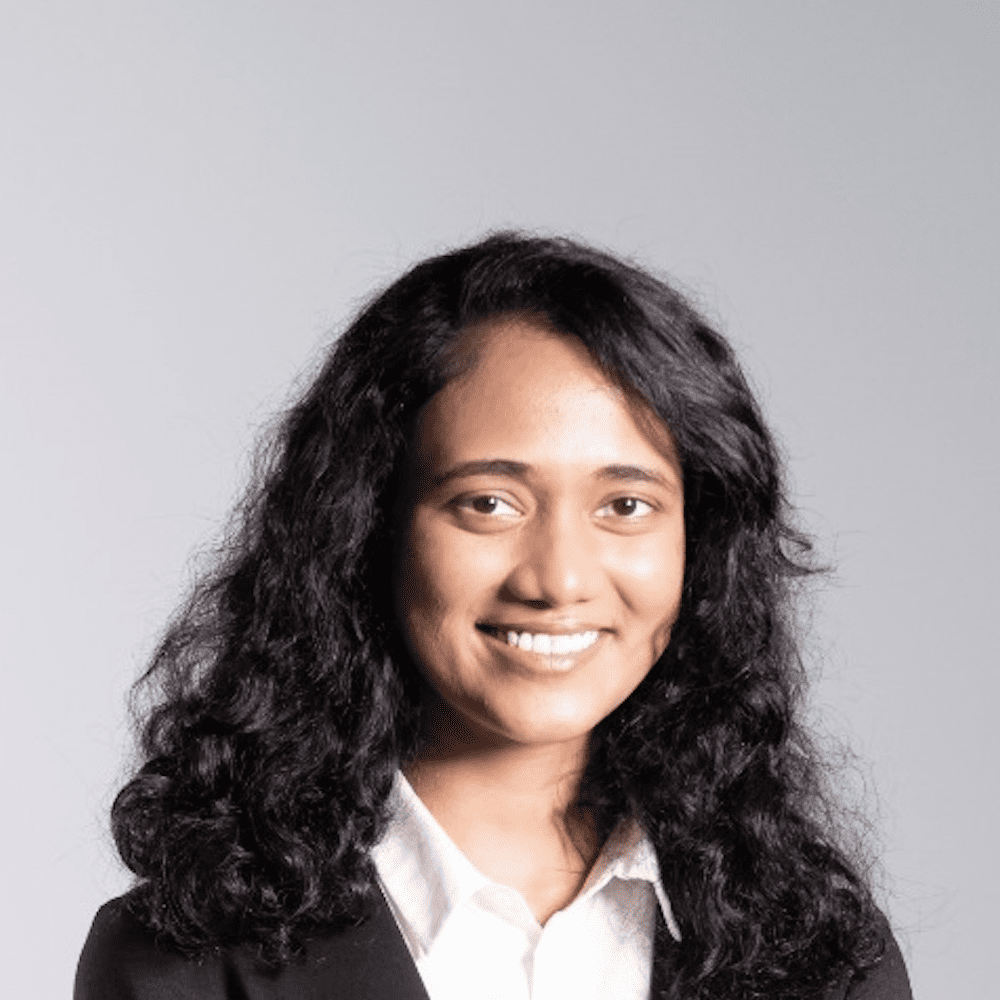
Steffi Manisha Arokiam is a Tax Director at ThinkTX Consultants, where she leads the firm’s Transfer Pricing and e-Invoicing practice. She advises both individuals and corporations across a wide range of tax matters, including Real Property Gains Tax (RPGT), stamp duty, estate tax, and global mobility for expatriates. Recognised for combining strong technical expertise with a practical, solutions-driven approach, Steffi helps clients navigate complex tax issues with clarity and confidence.
A respected thought leader in taxation, Steffi has authored numerous technical articles and professional newsletters. Her work has been published by the International Bureau of Fiscal Documentation (IBFD) and Wolters Kluwer (CCH), and she has been featured on BFM 89.9 discussing crypto taxation.
Professional Affiliations
Member of the Malaysian Institute of Accountants (MIA)
Member of the Chartered Tax Institute of Malaysia (CTIM)
ASEAN Chartered Professional Accountant (ASEAN CPA)
Member of the International Fiscal Association (IFA)
Professional Trainer certified by HRD Corp
As a trusted tax partner of RinggitPlus, Steffi reviews and verifies all content relating to Malaysian taxation to ensure it is accurate, up to date, and practical — helping readers better understand the tax system and make the most of their tax position.
00votes
Article Rating
SHARE
About THE AUTHOR
Steffi Manisha Arokiam
Steffi Manisha Arokiam
Steffi Manisha Arokiam is a Tax Director at ThinkTX Consultants, where she leads the firm's Transfer Pricing and e-Invoicing practice. She advises both individuals and corporations across a wide range of tax matters, including Real Property Gains Tax (RPGT), stamp duty, estate tax, and global mobility for expatriates. Recognised for combining strong technical expertise with a practical, solutions-driven approach, Steffi helps clients navigate complex tax issues with clarity and confidence.
A respected thought leader in taxation, Steffi has authored numerous technical articles and professional newsletters. Her work has been published by the International Bureau of Fiscal Documentation (IBFD) and Wolters Kluwer (CCH), and she has been featured on BFM 89.9 discussing crypto taxation.
Professional Affiliations
Member of the Malaysian Institute of Accountants (MIA)
Member of the Chartered Tax Institute of Malaysia (CTIM)
ASEAN Chartered Professional Accountant (ASEAN CPA)
Member of the International Fiscal Association (IFA)
Professional Trainer certified by HRD Corp
As a trusted tax partner of RinggitPlus, Steffi reviews and verifies all content relating to Malaysian taxation to ensure it is accurate, up to date, and practical — helping readers better understand the tax system and make the most of their tax position.









Comments (0)