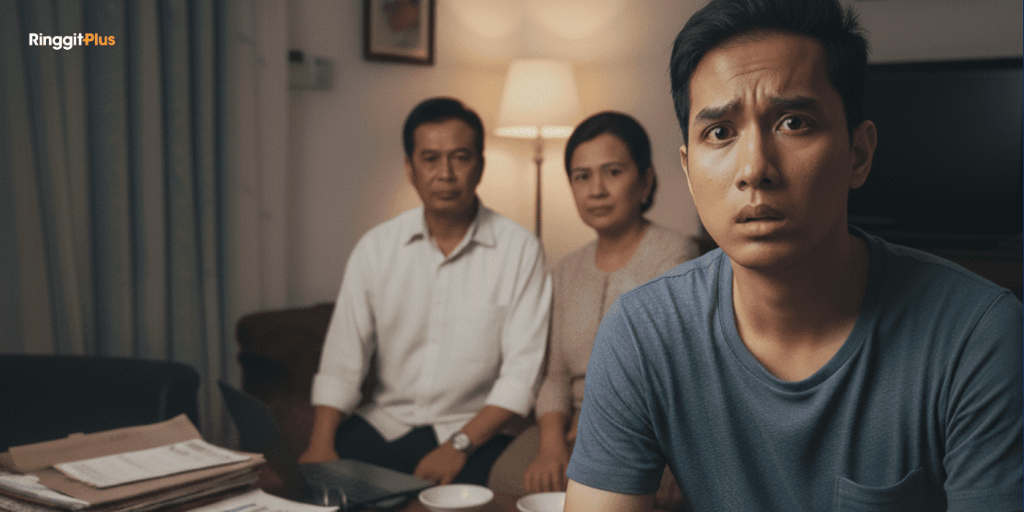
Last week, I tried talking to my parents about getting health insurance. Again.
Mum just waved her hand dismissively. “We have the government hospital. We’ll be fine.”
Dad added, “Insurance is a waste of money. We’ve been healthy our whole lives.”
I wanted to scream. I’ve seen the hospital bills. I know what happens to families when someone gets seriously ill without coverage. And I’m terrified that one day, their “we’ll be fine” attitude will bankrupt all of us.
If you’re nodding along, feeling that same knot of anxiety in your stomach, you’re not alone. Millions of Malaysian millennials and Gen Z are watching their parents age without protection, and we’re all scared.
The Numbers That Keep Me Up At Night
A heart bypass costs between RM60,000 and RM120,000 at a private hospital. Cancer treatment? Anywhere from tens of thousands to hundreds of thousands depending on the type and stage. A single chemotherapy cycle can run up to RM10,000.
My parents think the government hospital will handle everything. Yes, they could get that bypass for significantly less in a public facility. But they’d be waiting weeks or months for the surgery while their condition worsens, recovering in overcrowded wards where wait times can stretch extensively.
The scale of Malaysia’s insurance problem is staggering. I read a report from RinggitPlus’s 2025 Malaysian Financial Literacy Survey, where 43% of Malaysians have no medical insurance coverage at all. Another 15% rely solely on company-provided medical cards, coverage that vanishes the moment they lose their job. For life insurance, less than half of Malaysians (48%) have any policy.
My parents have maybe RM50,000 in their EPF. One serious illness would wipe that out and leave us drowning in debt.
Why Our Parents Think Differently
Our parents grew up in a different Malaysia where healthcare was cheaper and extended families shared financial burdens. Many older Malaysians view insurance with deep suspicion, some see it as gambling that conflicts with religious beliefs, others remember stories of rejected claims or disappeared agents.
But medical costs have exploded. Medical inflation runs at 15% annually, nearly five times regular inflation. Insurance premiums are rising accordingly, RinggitPlus’s 2025 survey found that 22% of policyholders had to switch to cheaper plans, reduce coverage, or cancel policies entirely because they couldn’t afford the premiums. What worked for their generation doesn’t work anymore.
Recent research shows that fewer than half of Malaysians hold life insurance, and as few as 4% of lower‑income families are covered. Moreover, among those insured, a large majority are likely under‑protected and may struggle to meet today’s medical‑cost demands.
The Reality Of “We’ll Use Government Hospitals”
Malaysia’s public healthcare saves lives and prevents catastrophe. But it’s groaning under strain.
Public hospitals face lengthy wait times for appointments and surgeries, aging infrastructure, and overworked staff. My friend’s mother waited nine months for knee replacement surgery, nine months of pain and immobility. A private hospital could have done it within weeks, but the cost? RM35,000 to RM50,000.
That’s the impossible choice: endure suffering in public facilities, or risk financial ruin in private ones.
What Happens When The Bill Comes
Medical debt is shockingly common in Malaysia. Watson Nyambek, once known as ‘the fastest man in Malaysia,’ was declared bankrupt after borrowing RM80,000 to fund his father’s cancer treatment. While the Sarawak state government eventually settled his debt in 2016, not every family has that lifeline.
Hospital bills can be devastating. Private hospitals can charge significant amounts for supplies and services, with costs often unregulated. For chronic conditions, it becomes a life sentence of expenses requiring thousands monthly for ongoing treatment.
The Sandwich Generation Squeeze
I’m trying to build my own life while knowing that when my parents get sick, I’ll be paying the bills. That’s just reality.
Malaysian culture beautifully emphasises caring for parents. But it’s financially crushing when they refuse to protect themselves. Many Malaysians already support their parents’ monthly costs while helping other family members. When an uninsured parent faces a medical emergency, these obligations explode into catastrophic debt.
Women bear even more burden, often leaving the workforce to become caregivers. My aunt quit her job when her mother-in-law developed dementia, sacrificing her career and retirement savings.
Most medical insurance policies have maximum entry ages of 60-70 years. My parents are 58 and 61, the window is closing. Every month they delay means higher premiums, more health conditions making coverage harder, and fewer options.
What I’m Doing Now (And What You Can Do Too)
I’m not waiting for my parents to suddenly see the light about insurance. Here’s what’s actually working for me:
Start with government schemes: I registered my parents for MySalam since they qualify, it’s free coverage with RM8,000 for critical illness and RM50 daily hospitalisation income. PeKa B40 covers medical devices up to RM20,000. Takes an hour. Costs nothing.
Try personal accident insurance: I bought my parents Maybank Senior Personal Accident insurance (ages 45-70) for RM296 annually, paid for it myself, and told them it’s a gift. No medical exam required. It won’t cover illnesses, but it protects against falls and accidents. Getting them to accept RM296 was infinitely easier than convincing them to spend RM6,000 on medical insurance.
Build your own emergency fund: I’m creating a dedicated medical fund separate from my general savings. Right now it’s at RM15,000. My goal is RM50,000 within three years. If insurance isn’t feasible for your parents, at least you can prepare yourself. Aim for 6-12 months of expenses. Not ideal, but better than nothing.
Have the difficult conversation: I sat my parents down with real hospital bills from friends’ families. Not statistics, actual bills with actual numbers. I explained what I can realistically contribute (not as much as they think).
I asked directly: “If you need RM100,000 for treatment, where will it come from?” They finally understand that I can help, but I cannot cover massive medical bills without destroying my own financial future.
Consider senior medical plans: For parents under 70 in decent health, coverage exists with premiums around RM6,000-8,000 annually. I’m still working on this with my parents. Every few months, I bring it up gently with new information. One hospitalisation costs more than years of premiums. Maybe one day they’ll come around.
It’s About Love, Not Lectures
Our parents spent decades taking care of us. They sacrificed their wants so we could have better lives. The idea of “burdening” us feels wrong to them, which is partly why they resist insurance.
But refusing to get insured isn’t protecting us. Saying “we’ll be fine” doesn’t pay hospital bills. And I’m terrified of finding out what happens when they’re not.
Love means having uncomfortable conversations, accepting reality even when it’s scary, and taking practical steps to protect each other, not just hoping everything works out.
What’s your biggest fear about your parents’ lack of insurance? Have you had this conversation with them? Share your story in the comments.
Follow us on our official WhatsApp channel for the latest money tips and updates.
Christina writes about personal finance with an eye for making the complicated feel straightforward. She is drawn to the everyday money decisions people face and genuinely enjoys finding the clearest way to explain them. Between articles, she is probably napping, on a hiking trail, or terrorising her sister’s cats.
00votes
Article Rating
SHARE
About THE AUTHOR
Christina Chandra
Christina Chandra
Christina writes about personal finance with an eye for making the complicated feel straightforward. She is drawn to the everyday money decisions people face and genuinely enjoys finding the clearest way to explain them. Between articles, she is probably napping, on a hiking trail, or terrorising her sister's cats.





Comments (0)