In Malaysia, domestic helpers, which includes maids and caregivers are regulated by the Immigration Department, the Ministry of Human Resources, and specific bilateral agreements. While foreign domestic helpers fall under the Foreign Domestic Helper scheme, caregivers lack a specific Elderly Care Act, meaning their regulation depends entirely on their employment status. (Source)
Domestic Helpers (Maids & Caregivers)
Migrant domestic helpers are strictly regulated by work permits tied to a single, live-in employer and must pass FOMEMA medical screenings. While local helpers can work part-time or live out, foreign helpers are prohibited from doing so. The legal framework includes:
NO
AREAS
DETAILS
1
Minimum Wage & Contract
Wages depend on their country of origin. For example, Indonesian maids are legally required to receive a minimum of RM1,500/month. The employment terms must be detailed in a written contract.
2
Mandatory Insurance
Employers must secure medical and personal accident coverage for their maids or caregivers.
3
Social Security (PERKESO)
Employers are mandated to register and contribute to PERKESO’s Employment Injury Scheme and Invalidity Scheme.
4
Rest Days
Maids & caregivers are entitled to one rest day per week or compensation for working on a rest day.
5
Agencies
Hiring foreign maids & caregivers requires using licensed private employment agencies to handle visa processing and embassy endorsements
6
Work Permit
Foreign maids & caregivers must be registered as an FDW with the immigration department.
Caregivers
Regulation depends on whether the caregiver is hired as a private in-home caregiver or through a professional agency.
NO
AREAS
DETAILS
1
In-Home Caregivers
If hired privately e.g., as a live-in nanny or elderly caretaker, they are considered domestic workers and follow the domestic helper regulations outlined above.
2
Agency-Employed Caregivers
Caregivers employed by professional home-care agencies or local care centers are protected by standard labour laws. They are covered by the Employment Act 1955, meaning they are entitled to minimum wage, overtime pay, and EPF/SOCSO contributions.
3
Social Security (PERKESO)
Employers are mandated to register and contribute to PERKESO’s Employment Injury Scheme and Invalidity Scheme.
Clearing Confusion
Malaysia currently lacks an Elderly Care Act, which means that caregiving is sometimes treated as a general service rather than a formalized, regulated profession. Here lies the confusion from the public that a domestic help, often referred to as maid is used interchangeably with a caregiver.
Here is the comparison for better understanding before you or your family hires to get the optimal care for your aged family members, be it parents or siblings.
Difference Between A Maid And A Caregiver
NO
AREAS
MAID
CAREGIVER
1
Primary Responsibilities
Handle general household maintenance, including sweeping, mopping, washing dishes, and preparing daily meals for the family. Occasionally assist elderly or young individuals, it is not their main specialty.
Provide specialized medical & personal support in activities of daily living. Duties include helping patients: in/out of bed, toileting & bathing, administering medication, providing companionship tailored to cognitive needs, eg dementia care recipients.
2
Training & Accreditation
Generally, domestic skills, focused on: cooking, laundry, home cleaning & safety. may include basic child care.
Internationally recognized caregiving certifications based on Japanese elderly care methodologies (KAIGO), or Malaysian Ministry of Human Resources (MoHR).
3
Hiring & Costs
Often hired as long-term, live-in through registered employment agencies. Some families bring in directly, going through the same process above. Fixed monthly wage: RM1,500-RM2,500 One-Time Agency placement & processing fee: RM10,000 – RM20,000.
Can be hired on an hourly, per-visit, or live-in basis through specialized nursing and home care agencies. Because of their medical expertise, the hourly or monthly rates are typically higher than a maid. Salary: RM2,200-above RM4,000 Hourly Rate: RM25-35/hour
Real-Life Situations
Many Malaysians thinks that a maid can also double up as a caregiver, hence they opt for a ‘cheaper’ option of hiring a maid. Here are 2 situations to show the difference.
A family in Singapore had several family members who are working as registered nurses in local hospital. When the father was bedridden, they opined that their maid who has also looked after the father would be a suitable caregiver. She also double-up as a maid.
Before the father passed away, he had a gaping bedsore which was so painful that when the doctors treated the sore, the old man flinched in pain. The family members overlooked the bedsore situation and it was challenging for the maid to constantly turn the father to avoid bedsore.
Perhaps it is also contributed to the father’s end of life situation resulting in the body being unable to absorb nutrients to repair the tissue. He passed away without recovering from the bedsore.
Another family in Malaysia tried to manage caring for the mother who suffered from Parkinson and end stage renal failure. Both diseases were progressive affecting the mobility and mental capacity of the mother.
After months of attempts to cook, feed and care for the mum, in addition to regular work, the daughter decided to hire a day-care caregiver for the mother, catered food for the family and paid a part-time cleaner to clean the house.
The caregiver accompanied the mother for her dialysis, prepared her meals to feed her, took care of her personal hygiene, administered physiotherapy and took her out to the park or the garden when the weather is good. Eventually the mother succumbed to her illnesses. But she was well cared for by caregiver and her family was able to spend quality time reading to the mother, having meaningful conversations and taking her for short holidays and outings before she passed away.
When A Maid Becomes More Expensive Than A Caregiver
A local family who hired a maid to become a caregiver had to pay hefty medical cost as the maid was not trained to lift her care recipient and suffered from hernia.
Without appropriate training, there is also an increased risk of unintentionally causing harm to the care recipient. For example, improper lifting or transferring techniques may result in falls, strains, or other injuries. This highlights the importance of ensuring that individuals providing caregiving services have the necessary training and competency to deliver care safely.
Ultimately, some families send their maids to be trained as a care giver which incur extra cost, after which they have to increase the wages of the maid.
Conclusion
There is definite evidence in the difference between a caregiver and a maid and the justification for the higher cost of a caregiver. If the intention is to provide the best personal care you can afford for your loved ones, than hire a caregiver.
If your budget does not allow, consider a nursing home, which is different from a retirement home. The nursing home should have trained caregivers to do the job. However, as a family member, it is your duty to visit regularly to ensure your family member is well cared for. Do take them out occasionally if they are not bedridden, to break the monotony of living in a home.
If you want to know more about care homes and caregiver certifications, you can look up Association for Residential Aged Care Operators (AGECOPE) and Malaysian Association for Social Care Professionals and Homes (MASOC).
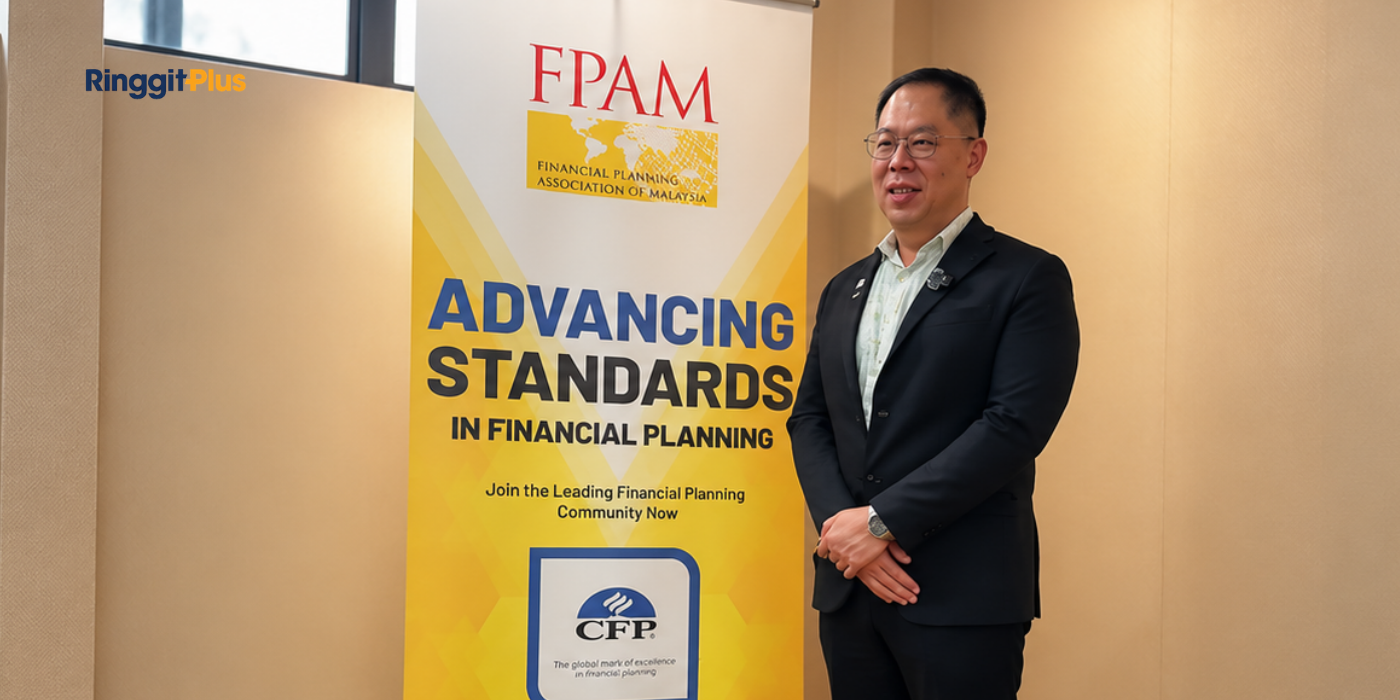
Linnet Lee, CFP®, IFP® CEO, Resolute Planning Sdn Bhd
Linnet Lee is the CEO of Resolute Planning Sdn Bhd, a financial planning firm licensed by the Securities Commission Malaysia. With over 26 years in the industry, she has held leadership roles including CEO of the Financial Planning Association of Malaysia and Head of Financial Planning at Standard FA.
Key industry contributions include being the past Chair of APAC Forum for the global Financial Planning Standards Board. She is currently an Industry Fellow for Social Wellbeing Research Centre, University Malaya.
Regulatory contributions under FPAM include Team Lead for SC-led Joint Action Plan from 2017 to 2024 resulting in establishment of professional standards and best practises for LFPs as well as a dedicated website for their listing. Latest initiative is leading the firm operating standards, established for licenced financial planning firms.
Her expertise in the financial industry spans across unit trusts, insurance, estate planning, and fee-based financial planning. She began her career in unit trust and later becoming a sought-after industry speaker, facilitator and consultant for organisations.
Linnet is a strong advocate for financial literacy. She regularly speaks at public forums, contributes articles to major financial publications, and appears on TV and radio shows. She also conducts financial literacy workshops for employees and individuals.
She has also developed and facilitated sales, customer servicing and attitudinal workshops for different industries.
51vote
Article Rating
SHARE
About THE AUTHOR
Linnet Lee
Linnet Lee
Linnet Lee, CFP®, IFP®CEO, Resolute Planning Sdn Bhd
Linnet Lee is the CEO of Resolute Planning Sdn Bhd, a financial planning firm licensed by the Securities Commission Malaysia. With over 26 years in the industry, she has held leadership roles including CEO of the Financial Planning Association of Malaysia and Head of Financial Planning at Standard FA.
Key industry contributions include being the past Chair of APAC Forum for the global Financial Planning Standards Board. She is currently an Industry Fellow for Social Wellbeing Research Centre, University Malaya.
Regulatory contributions under FPAM include Team Lead for SC-led Joint Action Plan from 2017 to 2024 resulting in establishment of professional standards and best practises for LFPs as well as a dedicated website for their listing. Latest initiative is leading the firm operating standards, established for licenced financial planning firms.
Her expertise in the financial industry spans across unit trusts, insurance, estate planning, and fee-based financial planning. She began her career in unit trust and later becoming a sought-after industry speaker, facilitator and consultant for organisations.
Linnet is a strong advocate for financial literacy. She regularly speaks at public forums, contributes articles to major financial publications, and appears on TV and radio shows. She also conducts financial literacy workshops for employees and individuals.
She has also developed and facilitated sales, customer servicing and attitudinal workshops for different industries.








Comments (0)