Malaysia’s literacy rate sits at 96%. Ask Malaysian students to read for meaning, though, and the picture changes. In the OECD’s 2022 PISA assessment, Malaysian 15-year-olds scored 388 in reading, 409 in maths, and 416 in science, down from 415, 440, and 438 respectively in 2018, and well below the OECD averages of 476, 472, and 485. Malaysia recorded one of the steepest declines of any participating country.
A World Bank report published in 2024, titled “Bending Bamboo Shoots: Strengthening Foundational Skills”, found that 42% of Malaysian students could not read at the expected level by the end of Standard 5, rising to 61% among those from lower-income families. The report attributed this to uneven quality of early childhood education and patchy access to it.
The Gap Between Reading And Understanding
Researchers at Universiti Malaya draw a distinction in the data. Most Malaysians can read and write, but far fewer can understand, interpret, and act on what they read. The pattern shows up in both Bahasa Melayu and English, with students struggling to extract meaning regardless of which language they are reading in. The challenge is not basic literacy but the deeper kind of reading: following an argument, weighing evidence, and understanding what is implied rather than spelled out.
PISA does not test whether students can sound out words on a page. It measures whether they can read between the lines, spot an argument, judge whether a source is trustworthy, and apply what they have read to new situations. These are the skills that determine whether someone can follow a contract, assess a financial product, or weigh up medical information in real life.
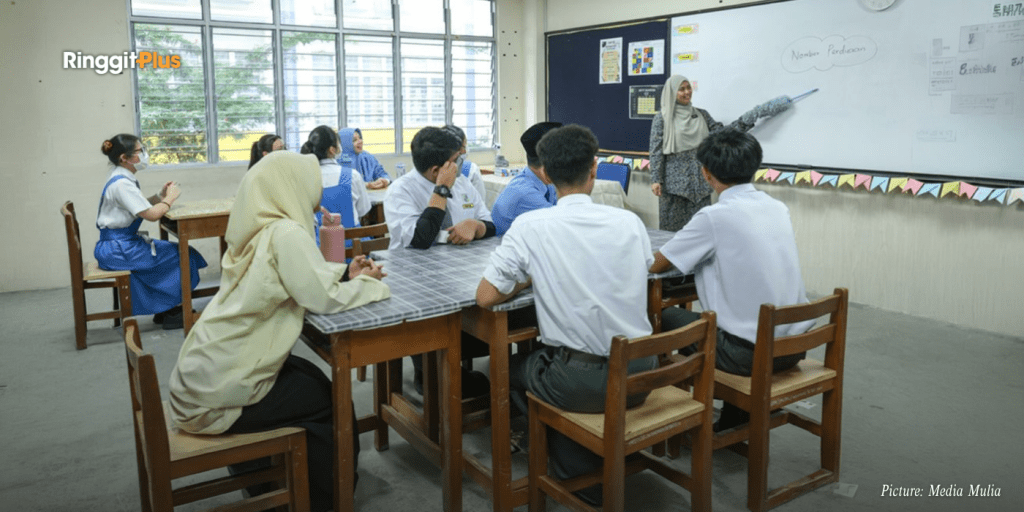
Academics at Institut Pembangunan dan Kemajuan Inklusif (Minda UKM) point out that Covid-19 alone does not explain the drop, since other countries closed schools for similar periods without seeing scores fall this far. The deeper problem lies in what happens in lessons. Where teaching focuses on recall of facts, definitions, and textbook content, students are not being prepared for questions that ask them to analyse, compare, or interpret. Classes of 40 to 45 students and heavy administrative loads on teachers compound the problem further.
Screen Time And The Shrinking Attention Span
Several teachers whose observations are cited in the original reporting described the same pattern across different school types, in both Malay and English classes: students who can pronounce words fluently but cannot explain what a sentence means. Rather than working through a text, many rush to find a quick answer, a habit shaped by constant exposure to short-form content.
Education publishers and reading specialists say the core problem is not vocabulary but inference, meaning the ability to work out what a writer implies without it being spelled out, pick up on tone, and draw conclusions from what is left unsaid. Short-form content such as social media snippets, YouTube Shorts, and headline-only news does not develop these skills because none of it requires sustained attention. Longer texts train readers to track ideas across a page, hold information in mind, and reflect on what they have just read, and that kind of reading is becoming rare among younger Malaysians.
The reading habits forming in classrooms today have real consequences for financial decisions later. Someone who can read the words but not the meaning is more likely to misread loan terms, confusing flat-rate interest with reducing-balance for example, miss key exclusions in an insurance policy, or act on a 30-second TikTok claim about EPF withdrawals without checking what the rules actually say. Our RinggitPlus Malaysian Financial Literacy Survey 2025 found that 68% of Malaysians already turn to social media as their primary source of financial information, the same short-form preference teachers are seeing in classrooms.
What Weak Comprehension Costs At Work
SME leaders report that many employees can read but struggle to act on what they have read, with weak comprehension slowing down training, increasing errors, and causing miscommunication that adds real operational costs. As employers increasingly prioritise analytical thinking and communication alongside technical skills, the baseline for staying employable is rising. Workers who struggle with comprehension face a disadvantage that is hard to escape, both in landing skilled jobs and in adapting when the work changes.
Economists warn that falling PISA scores point to weaker thinking and analytical skills across the workforce, making it harder to staff finance, technology, and STEM roles, slowing productivity, and giving foreign investors a reason to look elsewhere. Poor literacy also widens the wage gap over time, locking some workers out of better-paid work entirely. This connects to broader concerns about Malaysia’s middle income trap, where a large portion of the workforce remains concentrated in lower-wage roles that do not require or reward higher-order thinking.
Building The Habit Early
Reading specialists and parent advocacy groups whose views are cited in the original reporting agree that the habit of reading must begin at home, well before school. Parents who read to children from toddlerhood build vocabulary and attention span, the foundations on which comprehension is built. For parents who spot the gap early, the response often costs money. Tuition centres, reading programmes, and enrichment classes are increasingly common, adding financial pressure to households that are already stretched.
At school, teachers need clearer guidance and more time to teach analytical reading rather than drilling students for exams. Initiatives like Program Anak Kita, a national remedial programme led by the Ministry of Education with support from Yayasan Hasanah, target students who have fallen behind in basic reading, writing, and arithmetic, with a particular focus on lower-income and at-risk groups.
These interventions matter because the reading gap rarely stays confined to the classroom. Over time, it shows up in misread loan agreements, missed insurance exclusions, and financial decisions made on the basis of incomplete information.
Follow us on our official WhatsApp channel for the latest money tips and updates.
Iman writes about personal finance with curiosity. She is interested in the stories behind money, the hesitation around big decisions, and the small habits that shape financial futures. Off the clock, she is either dissecting a film or climbing her way up the leaderboard in her favourite games.
00votes
Article Rating
SHARE
About THE AUTHOR
Iman Aminuddin
Iman Aminuddin
Iman writes about personal finance with curiosity. She is interested in the stories behind money, the hesitation around big decisions, and the small habits that shape financial futures. Off the clock, she is either dissecting a film or climbing her way up the leaderboard in her favourite games.








Comments (0)