Malaysia will set up a national strategic buffer stock for medicines and medical devices to protect supply from the fallout of the conflict in West Asia, Economy Minister Akmal Nasrullah Mohd Nasir announced on Tuesday.
Speaking at a televised briefing on the global energy crisis after a National Economic Action Council meeting earlier that day, Akmal Nasrullah said the buffer stock forms part of a wider medicine security policy known as MyMedSecure. The government also plans to grow the local pharmaceutical and medical device industry to reduce Malaysia’s dependence on imported raw materials.
Local Stock Covers The Next Two To Three Months
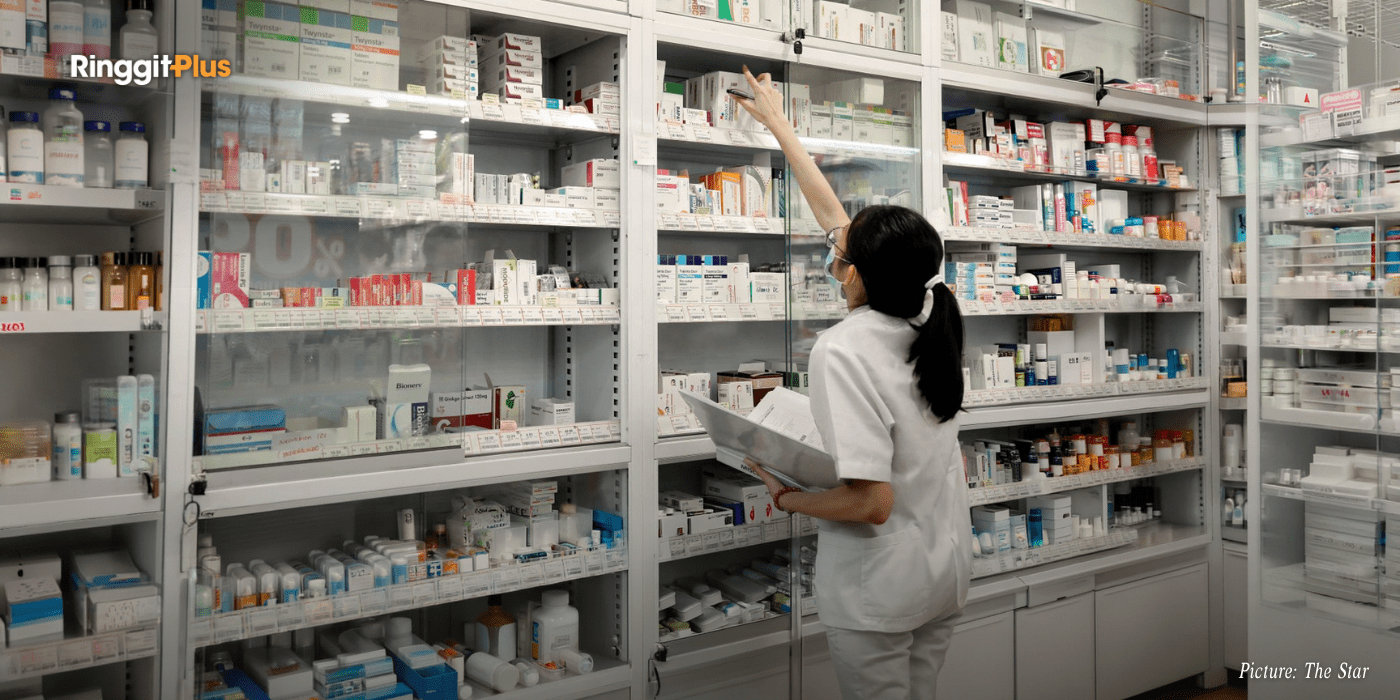
If you have been worried about whether your regular prescription will still be on the shelf, the short answer is yes, at least for the next two to three months. The Malaysian Organisation of Pharmaceutical Industries (Mopi), which represents local manufacturers, says companies are currently holding around three months of active pharmaceutical ingredients (APIs) and excipients on average, and about two months of finished products. The Health Ministry said in March that its own facilities keep one to three months of stock, with another two months of buffer at the concessionaire level.
No specific medicine has been identified as being at risk. Mopi has, however, recorded early price increases on APIs, plastic packaging, diesel, and logistics, along with some difficulty exporting to certain regions. Because most local manufacturers depend on imported raw materials, a prolonged disruption would affect a wide range of medicines rather than a few specific ones.
Freight And Cold Chain Costs Climb Sharply
The clearest pressure so far is on costs. The Malaysian Association of Pharmaceutical Suppliers (MAPS) imports around 2,000 products from 270 suppliers across 40 countries through its 38 member companies, with India accounting for about 30% of those suppliers. South Korea, Thailand, and Germany are the other main sources.
MAPS president Lim Teng Chyuan said freight costs have risen by around 20% on average. Cold chain transportation, used for temperature-sensitive products such as vaccines, has jumped by as much as 70% in some cases. A smaller number of MAPS members are also reporting higher prices for the goods themselves.
Sales representatives travelling for company business do not qualify for the Budi fuel subsidy, which means pharmaceutical companies are also absorbing higher transport costs internally.
Lim’s larger concern is whether source countries might restrict exports to protect their own medicine security, particularly for single-source products with no easy substitute. A meeting between industry stakeholders and Prime Minister Datuk Seri Anwar Ibrahim is expected this week, where suppliers will seek some form of relief to ease the cash flow strain of holding extra inventory.
Short-Term Measures Already In Motion
Akmal Nasrullah said the government will activate a Special Access Pathway to keep critical medicines and medical devices flowing in the short term. Stock levels will be monitored centrally, import sources diversified, emergency response plans activated, and certain items may be designated as controlled goods so supply can be managed if needed.
Over a longer horizon, the government is also looking at moving some products away from raw resin materials towards polymers, which would reduce exposure to petroleum-linked price swings.
What Patients Should Watch Over The Coming Months
If you take monthly medication for a chronic condition such as diabetes, hypertension, asthma, or a thyroid issue, it is worth planning ahead a little, though there is no need to panic just yet. Current stock levels are healthy, and the government is acting early. It is still worth having a quiet word with your doctor or pharmacist on your next visit, just to ask whether your medication is single-sourced or has alternatives, and whether your usual clinic or pharmacy has noticed any changes in supply.
Cost is the other thing to keep track of. Higher freight, packaging, and logistics costs usually reach retail prices over time, particularly for medicines bought out-of-pocket at private pharmacies. For households already budgeting tightly for monthly prescriptions, leaving a little extra room in the medical budget over the next few months is a sensible cushion, even if the shelves stay full.
Follow us on our official WhatsApp channel for the latest money tips and updates.
As a creative content writer, Eloise has covered finance, business, lifestyle topics, and even moonlights as a singer-songwriter outside of RinggitPlus. Her current interests are learning the best ways to optimise spending and credit card hacks to gain more airline miles.
00votes
Article Rating
SHARE
About THE AUTHOR
Eloise Lau
Eloise Lau
As a creative content writer, Eloise has covered finance, business, lifestyle topics, and even moonlights as a singer-songwriter outside of RinggitPlus. Her current interests are learning the best ways to optimise spending and credit card hacks to gain more airline miles.





Comments (0)