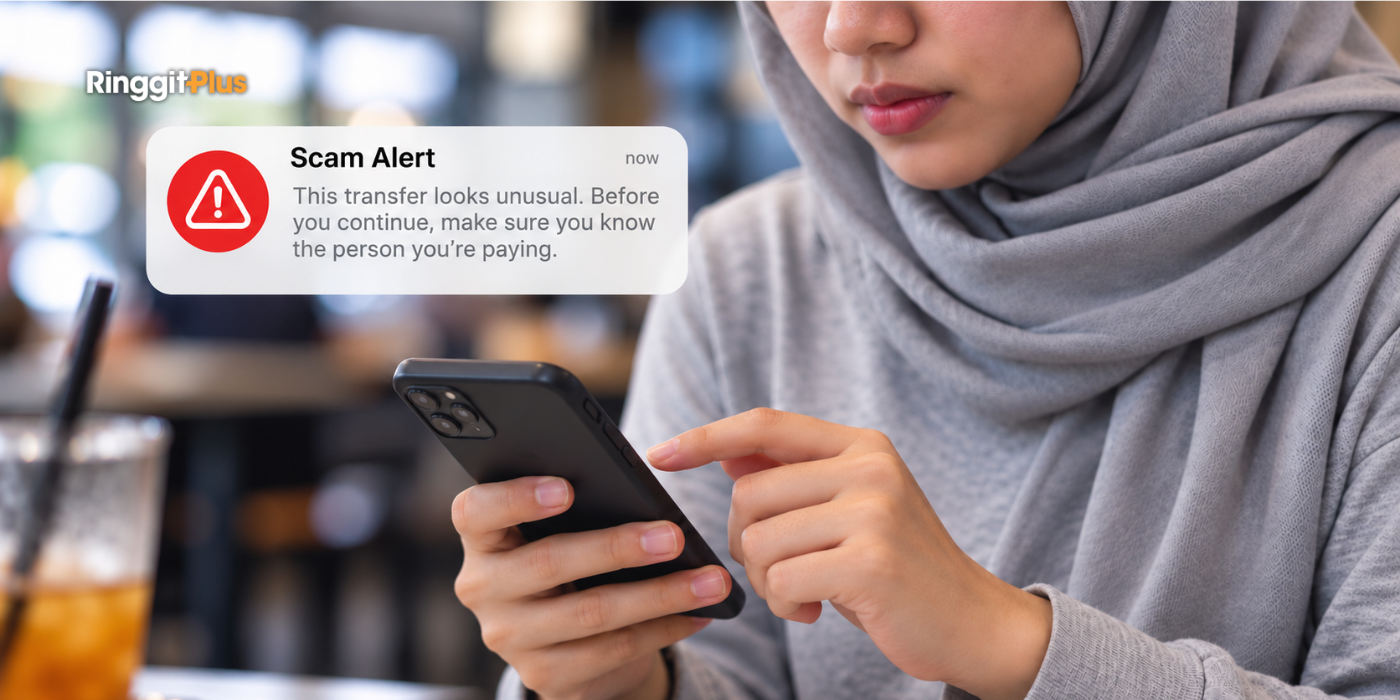
If you make online transfers, your bank may soon warn you when a transaction looks risky, before the money leaves your account. Bank Negara Malaysia (BNM) Governor Dato’ Sri Abdul Rasheed Ghaffour announced on 6 October that banks and PayNet are building these fraud alerts, with pilot testing at selected banks targeted for the first half of 2027 and a wider rollout after that.
A Warning Before The Money Leaves
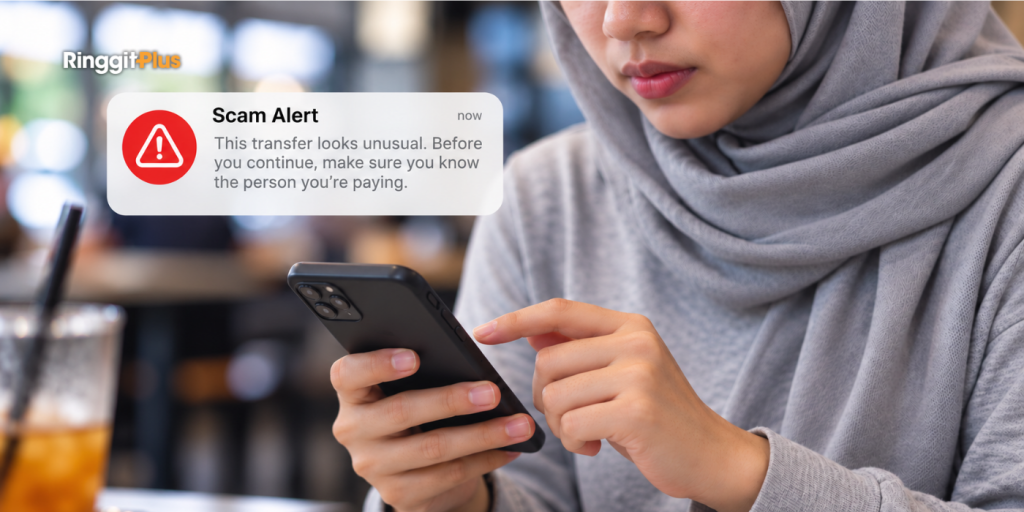
When a transfer looks suspicious, the alert goes to both you and your bank while the transaction can still be stopped. BNM says the aim is to get you to pause and check who you’re paying before you approve the transaction.
About 95% of online fraud cases involve victims who are tricked into transferring the money themselves. Because these transfers come from your own account and phone, your bank’s usual security checks may not stop them.
Your bank already screens transfers for warning signs such as a new payee or an unusual amount. But it can only see its own customers’ accounts. PayNet, the company behind DuitNow and FPX, can see more. Transfers between banks pass through its system, so it can follow money from one bank to another. Since October 2025, PayNet has been trialling this in the National Fraud Portal to spot accounts that receive stolen money and pass it on (mule accounts).
Expect Alerts On Some Genuine Transfers
Abdul Rasheed said the alerts may make some transfers slower or less convenient for customers. He said BNM accepts this because it helps protect you from fraud. This means you may get a warning on some genuine payments too.
What will trigger an alert hasn’t been announced yet. If it follows the checks banks already run, a large payment to someone you’ve never paid before could be flagged, such as a RM5,000 deposit to a renovation contractor or RM30,000 for a used car from a private seller. Both are normal payments, but they look similar to payments made to a fraudster. It’s also not clear yet whether you’ll be able to continue straight after an alert, or whether a flagged transfer could be held for a while.
RM1.9 Billion Stopped In Six Months
The financial sector prevented about RM1.9 billion in attempted fraudulent transactions in the first half of 2026, more than the RM1.2 billion it prevented in the whole of 2025. By our calculation, this year’s monthly rate is more than three times last year’s. You usually don’t see these blocks. With the new alerts, you’ll get a warning on your screen before you confirm a risky transfer.
Before The Alerts Reach Your Bank
Check before you pay anyone new. Call them on a number you already have, or check their account number on PDRM’s Semak Mule portal. If someone on the phone is telling you to ignore your bank’s warning, cancel the transfer.
If you’re tricked into making a transfer, your bank usually isn’t required to refund it, because BNM’s compensation rules mainly cover transactions you didn’t authorise. You can still try to get the money back. Call 997, the National Scam Response Centre hotline, as soon as you can. The line runs 24 hours, and your call counts as a police report. The sooner you report it, the better the chance that the money can be frozen before it’s moved to another account. If you think someone else also has access to your account, use your bank’s kill switch to block your online banking straight away.
Follow us on our official WhatsApp channel for the latest money tips and updates.
Christina writes about personal finance with an eye for making the complicated feel straightforward. She is drawn to the everyday money decisions people face and genuinely enjoys finding the clearest way to explain them. Between articles, she is probably napping, on a hiking trail, or terrorising her sister’s cats.
00votes
Article Rating
SHARE
About THE AUTHOR
Christina Chandra
Christina Chandra
Christina writes about personal finance with an eye for making the complicated feel straightforward. She is drawn to the everyday money decisions people face and genuinely enjoys finding the clearest way to explain them. Between articles, she is probably napping, on a hiking trail, or terrorising her sister's cats.
We provide weekly updates on every Friday at 5pm on the prices of RON95, RON97 and Diesel in Malaysia and a chart that shows the movement of fuel prices across a 6-week period. Bookmark this page now!



Comments (0)