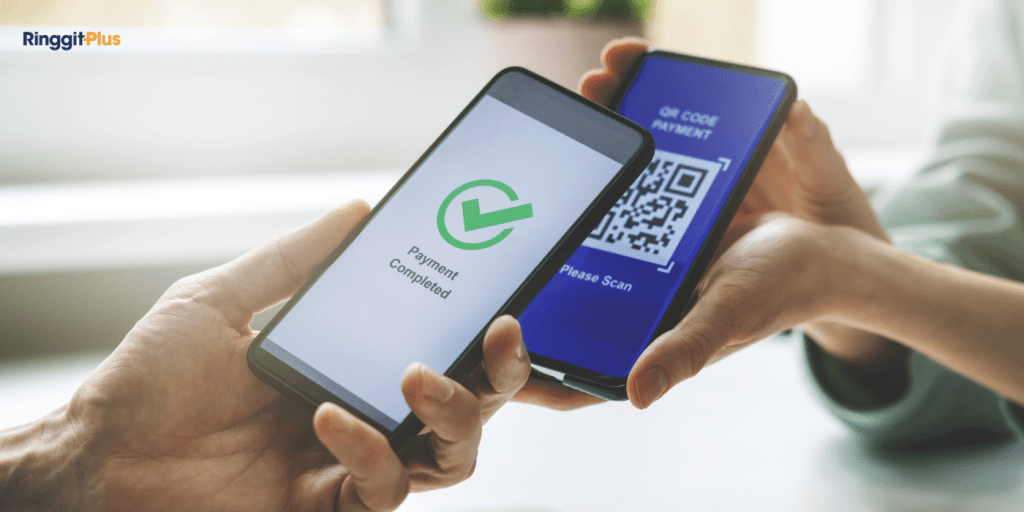
Non-cash payments have become the main way Malaysians transact in 2025. A new Ipsos study found that nearly 3 out of 5 people used a form of digital payment in the past 3 months. The findings reflect rising consumer confidence and a growing preference for quicker and more convenient payment options.
Digital Payments Continue To Grow Across Age Groups
Ipsos’s “Non-cash economy and the role of e-wallets” study recorded a 14% increase in e-wallet usage compared to the previous year, while online bank transfers continued to rise due to improved digital banking features and stronger security measures.
Younger Malaysians remain the most active adopters, with almost two in three individuals aged 25 to 34 having used an e-wallet recently. Usage among older groups is also increasing, shown by an 11 percentage point rise in online bank transfers among those aged 35 to 44. Credit and debit cards continue to be part of the wider non-cash ecosystem.
Data from the Malaysia Fintech Report 2025 shows how much behaviour has shifted. A decade ago, Malaysians made roughly one e-payment a week. Today, the average person makes at least one e-payment a day. Online banking grew 24% in 2024, while e-wallets accounted for 64% of all e-money transactions.
E-Wallets Dominate Everyday Spending And Merchant Adoption Rises
E-wallets have become a preferred payment method for everyday spending. Food and beverage transactions saw the fastest growth, rising 15 percentage points to reach 75%. Usage also continued climbing in retail, tolls, parking, and food delivery.
Despite the growing number of providers, most Malaysians rely on one or two familiar platforms. Touch ‘n Go remains the most widely used e-wallet, followed by MAE, ShopeePay, Setel, and GrabPay.
Malaysia’s broader payment ecosystem is expanding rapidly. The Malaysia Fintech Report 2025 recorded 2.6 million registered DuitNow QR acceptance points as of end-2024, helping transaction volumes more than double from 360 million in 2023 to 770 million in 2024, excluding person-to-person and cross-border payments.
RMFLS 2025 shows how these tools fit into everyday routines. Many Malaysians use e-wallets regularly but keep only small balances for controlled spending. Only a small minority report not using e-wallets at all.
Malaysia’s fintech ecosystem continues to expand in tandem with rising digital adoption. The Malaysia Fintech Report 2025 tracked 360 active fintech companies, up from 289 the previous year. Payments remain the largest segment with 81 companies, followed by the e-wallet category with 43 providers. Lending has 32 firms, while cross-border payments and alternative finance each record 29 companies. Blockchain services add a further 25 active players.
This expansion is significant for consumers. The increasing number of payment apps, digital banking tools, lending platforms, and financial management services means Malaysians now have more choices and greater accessibility than ever before. With more providers entering the market, digital payments feel more familiar, trusted, and readily available in daily life. The growing competition also encourages better rewards, improved user experience, and broader merchant acceptance, which further accelerates adoption.
RMFLS 2025 highlights a similar trend in financial habits. The survey found that many Malaysians are beginning to rely on digital tools for budgeting, investing, and financial guidance. This rising comfort with financial apps supports the wider shift toward a digital-first approach to managing money.
Digital Payments Strengthened By National Initiatives
National digitalisation efforts remain a key driver of Malaysia’s cashless transition. The expanded rollout of DuitNow QR has made digital payments easier for both consumers and businesses, supporting the broader move away from cash and traditional card-based methods. Ipsos expects this momentum to continue as digital channels become a routine part of everyday financial activity.
RMFLS 2025 findings reinforce this outlook. The survey shows a clear shift in consumer preferences, with QR payments now ranking as Malaysians’ top payment method. This demonstrates not only the maturity of digital payment adoption but also the readiness of Malaysians to embrace a more seamless, cashless lifestyle.
Follow us on our official WhatsApp channel for the latest money tips and updates.
Samuel writes about personal finance and financial news, focusing on how banking updates, policies, and promotions affect everyday money decisions. He enjoys making complicated financial topics easier to follow. Outside of writing, he spends his time watching TV shows and occasionally convincing himself he will only watch one episode.
00votes
Article Rating
SHARE
About THE AUTHOR
Samuel Chua
Samuel Chua
Samuel writes about personal finance and financial news, focusing on how banking updates, policies, and promotions affect everyday money decisions. He enjoys making complicated financial topics easier to follow. Outside of writing, he spends his time watching TV shows and occasionally convincing himself he will only watch one episode.
We provide weekly updates on every Friday at 5pm on the prices of RON95, RON97 and Diesel in Malaysia and a chart that shows the movement of fuel prices across a 6-week period. Bookmark this page now!




Comments (0)