Alex Cheong Pui Yin
Previously covered recruitment-related stories and had a short stint as a copywriter for the property industry. She subsequently developed an interest in investment and robo-advisors.

23rd March 2023 - 3 min read

Economy Minister Rafizi Ramli has come forth to clarify that the People’s Income Initiative (IPR) is distinctly different from the universal basic income scheme, which requires the country to be in a stable and strong financial position in order to be implemented.
“The objectives of these two initiatives are different. IPR has a very specific target to allow the lowest income group in our society to have a consistent and sustainable stream of income. At the same time, [it will also help with fixing some of the economic structural issues, such as food supply,” Rafizi explained.
The universal basic income scheme, on the other hand, is defined as a governmental public programme where periodic cash payments are paid out unconditionally. This means the government will not need to assess the recipients’ background or status to determine their eligibility, nor require them to work for the payment. It is based on the premise of providing all individuals with the necessary resources to live so that they can focus on achieving a better quality of life instead.
A successful introduction of the universal basic income scheme will, however, depend heavily on the government’s fiscal position, said Rafizi. Without the necessary economic and financial stability, the government will not be able to sustain the scheme over a long run.
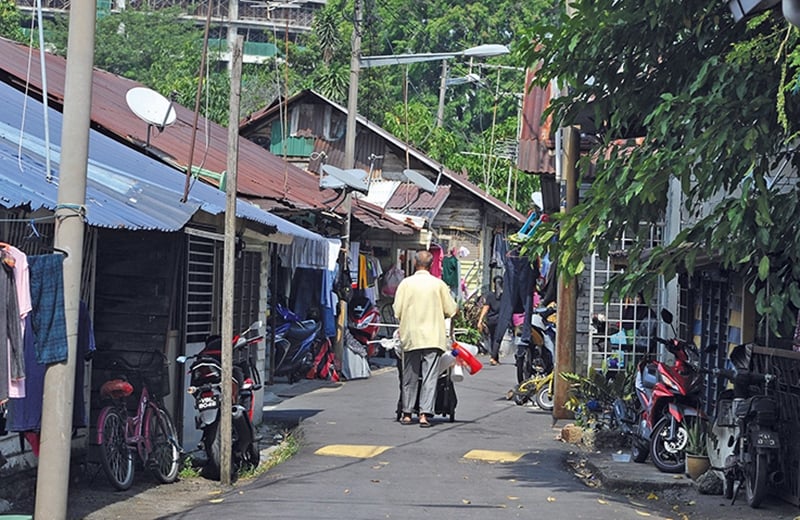
“We need to strengthen the fiscal position first. Unless you have a strong fiscal position, not only universal basic income is out of the question, we won’t even be able to support the cash handout programmes we have currently,” the minister further said, adding that the government will need to first see if it can consolidate most of the fragmented cash handout systems that are currently ongoing. In turn, this will enable the government to evaluate whether the universal basic income approach is feasible.
A version of the universal basic income scheme was previously proposed as an initiative to eradicate hardcore poverty in Malaysia by ensuring all households have a minimum monthly income of RM2,208. Households that earn less than the minimum income level will automatically receive a contribution to push them towards the set minimum amount. Some countries that have piloted the basic income scheme (as small-scale trials, as opposed to the whole country, i.e. universal) as part of their social welfare system include the United States, China, and Germany.
Meanwhile, the IPR was introduced under the re-tabled Budget 2023 to focus on empowering the poor to increase their income potential. It was officially launched at the end of February 2023.
(Source: Malay Mail)
Previously covered recruitment-related stories and had a short stint as a copywriter for the property industry. She subsequently developed an interest in investment and robo-advisors.




Comments (0)