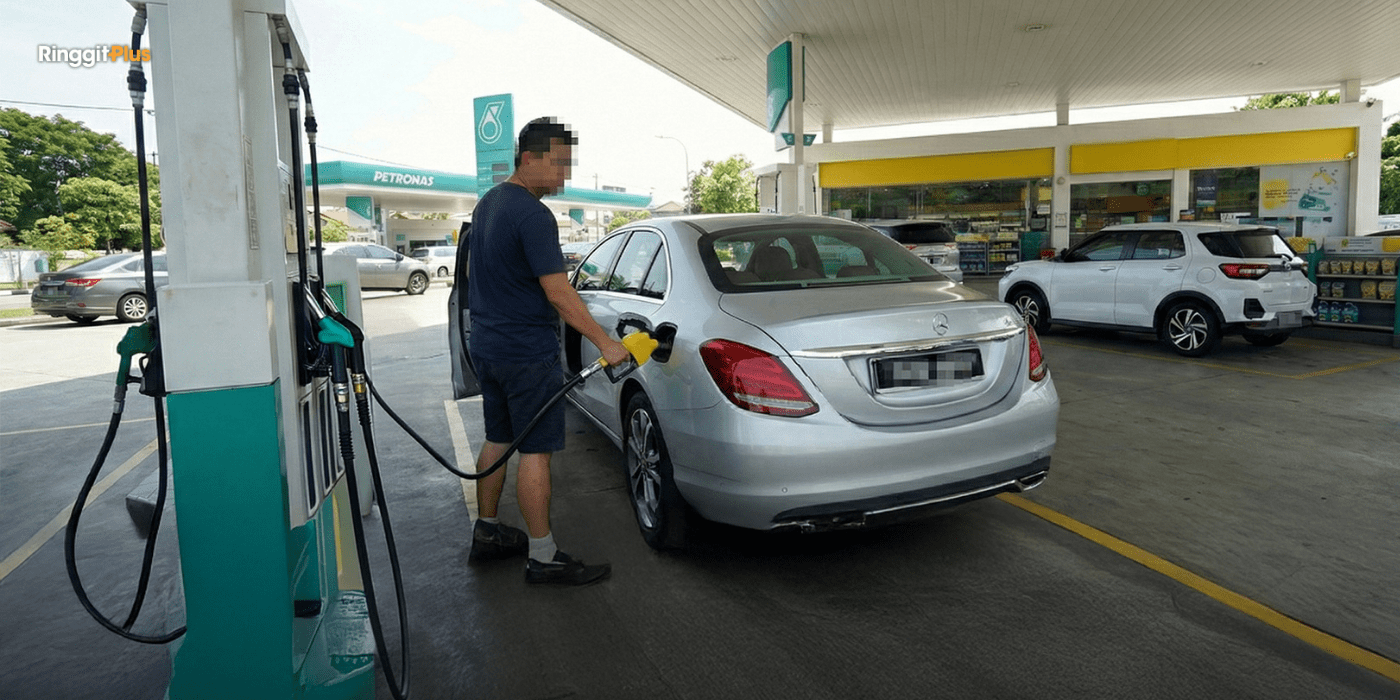
The Domestic Trade and Cost of Living Ministry is drafting new regulations to explicitly prohibit foreign-registered vehicles from purchasing subsidised RON95 petrol at petrol stations nationwide. The move is intended to tighten controls over subsidy distribution and reduce leakage, particularly in border areas.
The proposed rules are still under development and are targeted to be finalised and enforced from April 1.
Proposed Regulations Expand Enforcement Beyond Petrol Stations
Domestic Trade and Cost of Living Minister Datuk Armizan Mohd Ali said the ministry plans to introduce new regulations under Section 6 of the Control of Supplies Act 1961. These regulations are designed to strengthen oversight of subsidised RON95 petrol.
Under the current framework, Regulation 12A only prohibits the sale of RON95 petrol. This allows enforcement action to be taken against petrol station operators, but not against the owners, buyers, or drivers of foreign-registered vehicles.
The new regulations would extend the prohibition to purchases as well. This would allow enforcement action to be taken directly against individuals who buy, own, or drive foreign-registered vehicles that refuel with RON95.
Enforcement Targeted For April Rollout
Armizan said the ministry is currently holding engagement sessions with relevant stakeholders as part of the regulatory drafting process. The ministry is targeting April 1 as the date for the new regulations to come into force, subject to finalisation.
He made these remarks during a question-and-answer session in the Dewan Rakyat, in response to a supplementary question on additional enforcement measures to curb subsidy leakage at petrol stations near Malaysia’s borders.
Retail-Level Controls Focus On Monitoring And Compliance
To strengthen enforcement at petrol stations, the ministry will continue periodic inspections to ensure compliance with existing rules, including the use of identity card verification mechanisms and the ban on RON95 sales to foreign-registered vehicles.
Additional controls include restrictions on fuel purchases outside vehicle tanks. Fuel purchases exceeding 20 litres without a special permit are prohibited, and petrol stations in border areas are subject to regular monitoring through logbooks and visit records.
These measures are intended to limit opportunities for subsidised fuel to be diverted for non-domestic use.
Integrated Operations To Address Smuggling And Leakage
Armizan said enforcement efforts are carried out through integrated operations involving multiple agencies, including the police, the Malaysian Armed Forces, the Malaysian Maritime Enforcement Agency, the Customs Department, and the Malaysian Border Control and Protection Agency.
These coordinated efforts are part of ongoing operations such as Ops Tiris and the nationwide initiative known as Kita Gempur, which focus on combating subsidy manipulation, leakage, and smuggling.
Changes To Essential Goods Distribution Controls
Beyond fuel subsidies, Armizan also highlighted improvements to the Essential Goods Distribution Programme, known as PBP, to reduce leakage in the supply of essential items.
Since 2023, delivery companies and transporters under the programme have been appointed through an open tender system, replacing the previous direct appointment method. Claims submitted by suppliers to transporters must now be supported with uploaded photographs to qualify for reimbursement.
The ministry is also exploring the use of advanced technology to enhance monitoring and enforcement, with the aim of ensuring essential goods reach interior and remote areas as intended.
What The Proposed Rules Would Change At The Petrol Pump
If enforced as planned, the proposed regulations would change how responsibility is applied at the point of purchase for subsidised RON95 petrol. Enforcement would no longer be limited to petrol station operators, as individuals who buy, own, or drive foreign-registered vehicles could also be subject to action for purchasing RON95.
At petrol stations, particularly those near border areas, the rules could require more consistent checks during refuelling to ensure compliance with the ban on RON95 purchases by foreign-registered vehicles. This may involve closer monitoring of vehicle registration details alongside existing identity verification mechanisms already in place.
The restrictions on fuel purchases outside vehicle tanks would continue to apply. Purchases exceeding 20 litres without a special permit remain prohibited, reinforcing controls aimed at preventing fuel from being diverted for non-domestic use or resale.
For Malaysian motorists, the proposed regulations do not change eligibility to purchase subsidised RON95 petrol. However, the tighter enforcement framework is designed to reduce subsidy leakage, which the government has linked to the broader objective of improving subsidy targeting and ensuring public funds are directed towards domestic consumers.
The regulations are still being finalised, and further guidance on enforcement procedures and compliance requirements is expected once the rules are gazetted and come into force.
Follow us on our official WhatsApp channel for the latest money tips and updates.
Samuel writes about personal finance and financial news, focusing on how banking updates, policies, and promotions affect everyday money decisions. He enjoys making complicated financial topics easier to follow. Outside of writing, he spends his time watching TV shows and occasionally convincing himself he will only watch one episode.
00votes
Article Rating
SHARE
About THE AUTHOR
Samuel Chua
Samuel Chua
Samuel writes about personal finance and financial news, focusing on how banking updates, policies, and promotions affect everyday money decisions. He enjoys making complicated financial topics easier to follow. Outside of writing, he spends his time watching TV shows and occasionally convincing himself he will only watch one episode.
We provide weekly updates on every Friday at 5pm on the prices of RON95, RON97 and Diesel in Malaysia and a chart that shows the movement of fuel prices across a 6-week period. Bookmark this page now!



Comments (0)