They warn that enforcing such rules at petrol stations, alongside the costs of system upgrades, may reduce the expected savings from subsidy rationalisation.
Government Finalising New Criteria
Prime Minister Anwar Ibrahim told Parliament on 19 August that the government is finalising the eligibility criteria and implementation mechanism for RON95 subsidies, with a decision expected by the end of September 2025.
Eligibility will be assessed using multiple data sources, including income information from the Inland Revenue Board and the Department of Statistics’ Household Income Survey. Property ownership and luxury vehicle holdings will be factored in on top of monthly income.
Anwar, who also serves as finance minister, emphasised that at least 85% of Malaysians will continue receiving subsidised fuel. Non-citizens and high-income groups will be required to pay market prices, which currently average RM2.50 per litre compared to the subsidised rate of RM1.99.
Concerns from Petrol Station Operators
Petrol station operators, who would be on the frontline of enforcing the new rules, have voiced concerns about costs and operational challenges. The Petrol Dealers Association of Malaysia (PDAM) said all major fuel brands are currently conducting pilot tests of the transaction mechanism at petrol stations, under close supervision by the authorities.
PDAM secretary-general Bashir Ab Razak told CNA that operators have not been given detailed insights into the tests so far. He stressed that dealers should be more directly involved in shaping the rollout, noting that technical and operational planning has mainly taken place between authorities and oil companies. He called for dedicated engagement sessions with the government to share on-the-ground feedback, saying input from operators is essential to ensure the system is efficient and equitable.
Balancing Accuracy and Practicality
Economists say the government appears to be adopting a multi-dimensional approach, similar to the one used when diesel subsidies were rationalised in June 2024. At that time, vehicle owners received RM200 monthly cash assistance if they earned less than RM100,000 annually and owned diesel vehicles more than 10 years old.
For petrol, the threshold may be set higher, possibly around RM200,000, given the larger number of petrol users. Data from the Inland Revenue Board, the Road Transport Department, and the Central Database Hub are expected to guide benchmarks.
Even so, experts warn that “errors of exclusion and inclusion” are inevitable. Lee Heng Guie of the Socio-Economic Research Centre said the key is to keep the system efficient without adding excessive administrative costs.
Others suggest a simpler approach. Malaysia-based economist Shankaran Nambiar proposed charging all users the unsubsidised price and transferring rebates directly to eligible households through their bank accounts, describing card-based or MyKad verification systems as “unwieldy.”
Political Sensitivity of Subsidy Cuts
Fuel subsidies remain highly sensitive in Malaysia. The removal of diesel subsidies in 2024 was linked to the ruling coalition’s loss in a Penang by-election, and Anwar has criticised the opposition for politicising the petrol subsidy issue.
RON95 subsidies cost the government nearly RM20 billion a year in 2023 and 2024, underscoring the financial pressure for reform. Analysts agree that the blanket subsidies are unsustainable, but say full removal is politically unfeasible.
As one analyst noted, multiple eligibility conditions may narrow leakages but could also create loopholes that are exploited. With less than a month until the government’s announcement, questions remain over the final criteria, enforcement mechanisms, and the cost of implementation.
Follow us on our official WhatsApp channel for the latest money tips and updates.
Samuel writes about personal finance and financial news, focusing on how banking updates, policies, and promotions affect everyday money decisions. He enjoys making complicated financial topics easier to follow. Outside of writing, he spends his time watching TV shows and occasionally convincing himself he will only watch one episode.
Samuel writes about personal finance and financial news, focusing on how banking updates, policies, and promotions affect everyday money decisions. He enjoys making complicated financial topics easier to follow. Outside of writing, he spends his time watching TV shows and occasionally convincing himself he will only watch one episode.
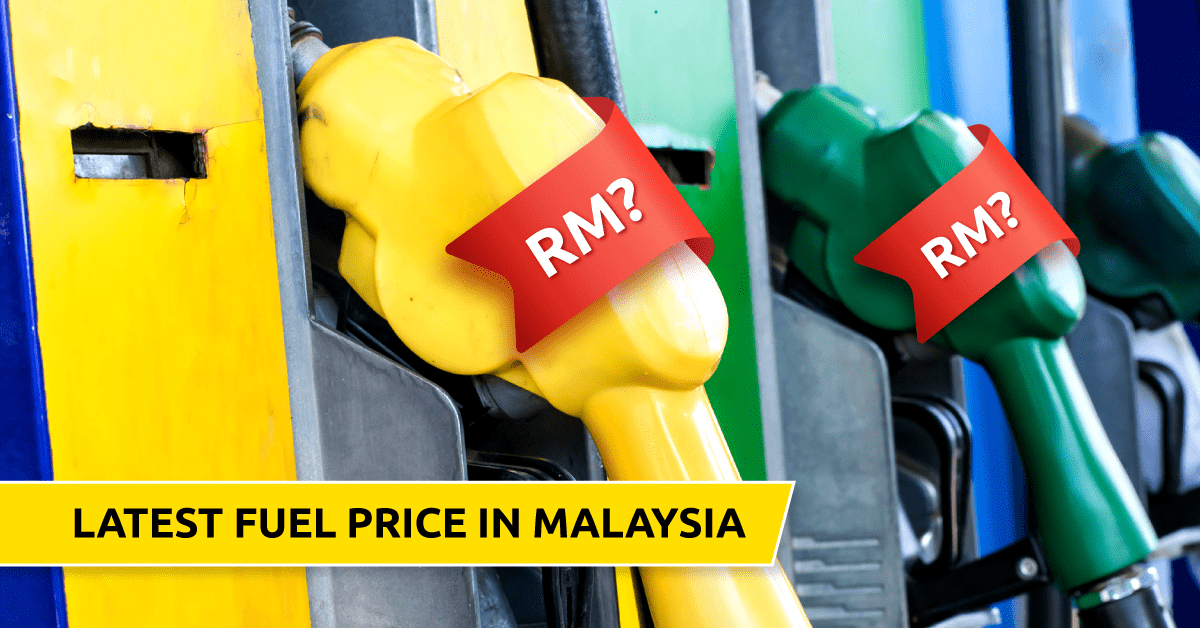
We provide weekly updates on every Friday at 5pm on the prices of RON95, RON97 and Diesel in Malaysia and a chart that shows the movement of fuel prices across a 6-week period. Bookmark this page now!






Comments (0)