The Human Resources Ministry has allocated RM5 million to roll out nationwide initiatives aimed at improving the employability of graduates and job seekers across public and private higher education institutions, with implementation set to begin in April through the Social Security Organisation, commonly known as Perkeso.
Human Resources Minister Datuk Seri R. Ramanan said the programme will be introduced in 400 higher education institutions and is intended to strengthen the role of MyFutureJobs as a national employment platform that supports structured career planning, digitalisation, and better alignment between graduates’ skills and industry demand.
Career Planning To Begin Earlier In Universities
Under the initiative, the ministry will collaborate with the Higher Education Ministry to guide students in planning their career pathways before graduation, rather than only beginning their job search after completing their studies. The objective is to ensure that students select career paths based on their competencies and market demand, instead of relying on informal influences or short term trends.
By embedding MyFutureJobs more directly into universities, the ministry aims to expose students earlier to labour market data, employer expectations, and emerging industry requirements, which may help reduce uncertainty during the transition from campus to the workforce.
Skills Mismatch Persists Despite Low Unemployment
Although Malaysia’s unemployment rate stood at 2.9% in the fourth quarter of 2025, its lowest level in 11 years, the minister highlighted that employment figures alone do not fully reflect labour market efficiency. Data indicates that 1.96 million workers are currently employed in roles that underutilise their skills, while roughly one in three university graduates are working in fields that do not align with their academic qualifications.
This mismatch suggests that a significant portion of the workforce may not be operating at its full productive capacity, even in a relatively tight labour market.
Job Matching Targets And Current Placement Figures
According to Perkeso’s records, there are currently 3.1 million registered job seekers in its database. In 2025, the agency assisted 208,000 individuals, including both graduates and non graduates, in securing employment, and it has set a target of 200,000 placements for this year after placing 12,000 job seekers so far.
These figures illustrate both the scale of demand for job matching services and the government’s focus on strengthening placement outcomes.
MyFutureJobs Career Exploration Centre Introduced
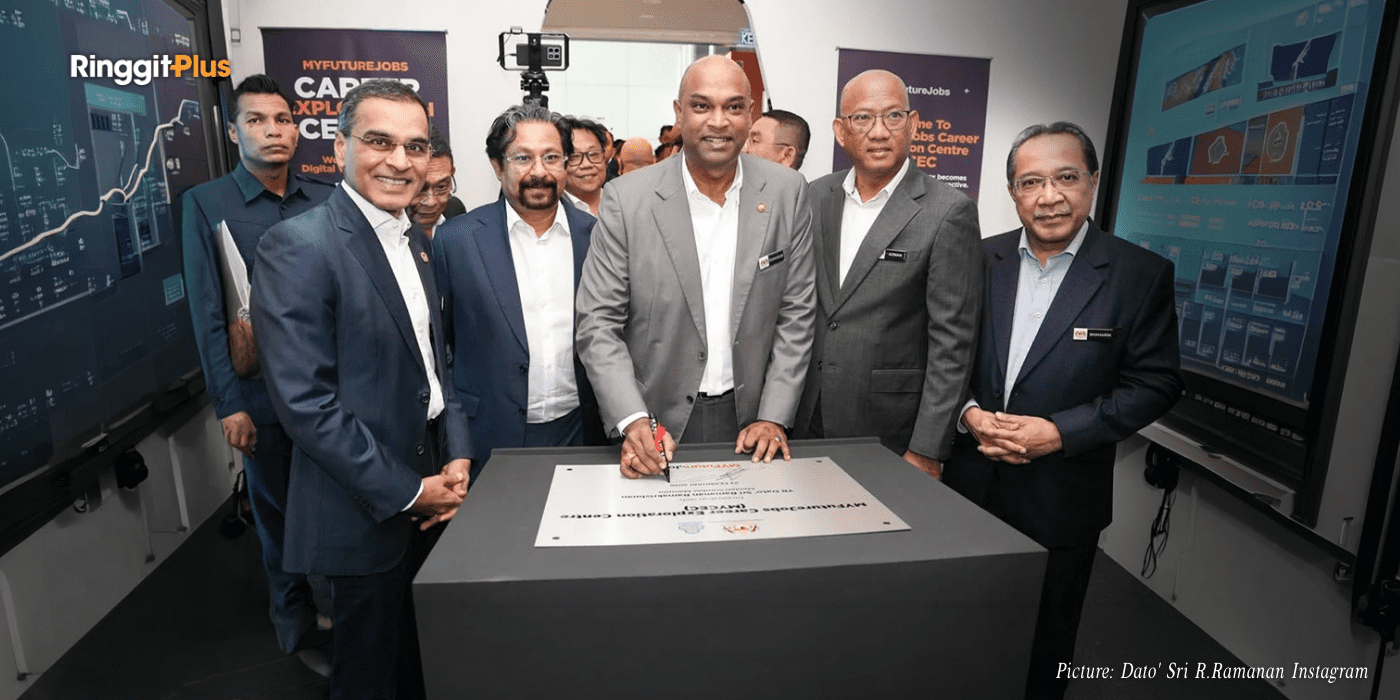
At the launch event, the minister also introduced the first immersive MyFutureJobs Career Exploration Centre, located at Nu Sentral, which incorporates artificial intelligence to analyse job seeker data and improve matching accuracy with industry requirements. The centre is designed to create a more structured job search journey that begins with early awareness and interest exploration and continues through to placement within an integrated national employment ecosystem.
The intention is to provide professional guidance at earlier stages, helping job seekers make decisions based on data and structured support rather than trial and error.
Partnership With RHB Bank Expands Student Reach
During the same event, Perkeso signed a memorandum of understanding with RHB Bank Berhad that will extend MyFutureJobs access to 618,000 active MySiswa RHB Debit Card users. The collaboration aims to increase exposure to employment opportunities among students and young adults who are already connected to the banking platform.
The minister also presented job offer letters to five individuals who secured positions with salaries exceeding RM5,000 through MyFutureJobs, underscoring the platform’s role in facilitating higher value job placements.
What The Initiative Signals For Households And Graduates
The RM5 million allocation reflects a policy focus on addressing structural skills mismatch rather than unemployment alone, recognising that underemployment and misalignment between qualifications and job roles can affect long term income growth and career progression. When graduates enter roles below their skill level, it may limit starting salaries, slow professional development, and reduce overall earning potential over time.
By integrating career guidance, labour market data, and digital tools earlier within higher education institutions, the ministry is attempting to improve alignment between education pathways and industry needs. If successful, this approach could enhance employability outcomes, strengthen workforce productivity, and support more stable income trajectories for young Malaysians entering the job market.
The nationwide rollout is scheduled to begin in April through participating higher education institutions.
Follow us on our official WhatsApp channel for the latest money tips and updates.
Samuel writes about personal finance and financial news, focusing on how banking updates, policies, and promotions affect everyday money decisions. He enjoys making complicated financial topics easier to follow. Outside of writing, he spends his time watching TV shows and occasionally convincing himself he will only watch one episode.
00votes
Article Rating
SHARE
About THE AUTHOR
Samuel Chua
Samuel Chua
Samuel writes about personal finance and financial news, focusing on how banking updates, policies, and promotions affect everyday money decisions. He enjoys making complicated financial topics easier to follow. Outside of writing, he spends his time watching TV shows and occasionally convincing himself he will only watch one episode.
We provide weekly updates on every Friday at 5pm on the prices of RON95, RON97 and Diesel in Malaysia and a chart that shows the movement of fuel prices across a 6-week period. Bookmark this page now!








Comments (0)