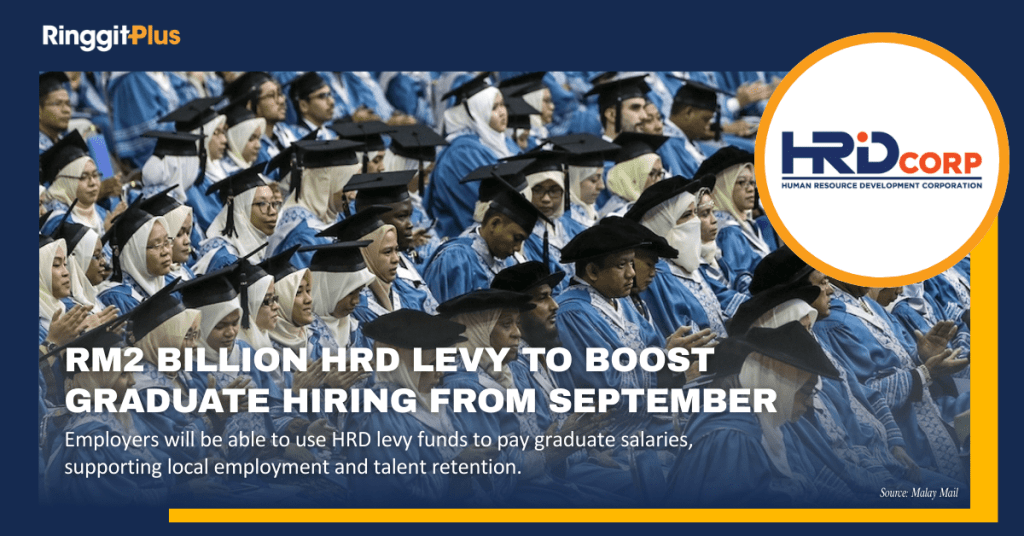
Previously, HRD levy funds were restricted to training-related expenses. Under the new policy, employers will now be able to apply the funds directly to the hiring of Malaysian graduates, including those from public universities and Technical and Vocational Education and Training (TVET) institutions.
Aimed at Boosting Employment and Addressing Brain Drain
Human Resources Minister Steven Sim Chee Keong announced the initiative during the Federation of Malaysian Manufacturing’s 57th annual dinner. He emphasised that the new measure is not only about reducing business costs, but also about creating employment pathways for local graduates.
Sim also highlighted the importance of investing in talent retention as Malaysia advances in technology adoption. He cautioned that sidelining human capital could increase brain drain and weaken the foundation needed for sustainable growth.
Employers Encouraged to Adopt Progressive Workplace Practices
Beyond hiring, the minister encouraged companies to create work environments that better align with the expectations of younger workers. Citing recent surveys, he noted that 40% of Malaysian employees value job flexibility equally to salary, while another 40% prioritise work-life balance.
“These are not luxuries anymore. They are expectations,” he said, adding that organisations with more progressive human capital strategies are better positioned to retain top local talent.
Part of Broader Strategy Under Madani Economy Framework
The RM2 billion release is part of the government’s broader Madani economic strategy, which includes a target of creating 1.2 million high-skilled jobs by 2030. The strategy supports Malaysia’s transition to a technology- and AI-driven economy.
Sim reaffirmed the government’s commitment to working alongside the private sector to achieve these goals, noting that the measure is intended to help both employers and graduates thrive in a competitive job market.
FMM Announces Rebrand to Reflect Broader Industry Role
The event also marked the rebranding of the Federation of Malaysian Manufacturers, now renamed the Federation of Malaysian Manufacturing. The updated name reflects an expanded mandate to represent the entire manufacturing value chain, including services and sectors supporting industrial growth.
Follow us on our officialWhatsApp channel for the latest money tips and updates.
Iman writes about personal finance with curiosity. She is interested in the stories behind money, the hesitation around big decisions, and the small habits that shape financial futures. Off the clock, she is either dissecting a film or climbing her way up the leaderboard in her favourite games.
Iman writes about personal finance with curiosity. She is interested in the stories behind money, the hesitation around big decisions, and the small habits that shape financial futures. Off the clock, she is either dissecting a film or climbing her way up the leaderboard in her favourite games.
We provide weekly updates on every Friday at 5pm on the prices of RON95, RON97 and Diesel in Malaysia and a chart that shows the movement of fuel prices across a 6-week period. Bookmark this page now!








Comments (0)