Buying insurance or takaful can feel like a responsible box checked. For many Malaysians, it offers a sense that the family is protected if something unexpected happens. But owning a policy or certificate is only part of the equation. What matters is whether the coverage would be enough to keep your household financially afloat if your income were disrupted and whether it provides the financial security needed to protect your family from unexpected setbacks.
That difference is becoming harder to ignore. Sun Life Malaysia’s Insure or Unsure: Insurance Literacy Survey 2026, conducted among 1,060 Malaysian adults supporting both children and ageing parents, found that 59% believe they are adequately insured. Yet only 35% said they could maintain their lifestyle for more than six months if their primary income stopped, highlighting the importance of adequate financial preparedness.
This is the protection gap many households may not realise they have. A person may own a plan, pay premiums or contributions regularly and still face a difficult shortfall if the benefit amount does not match today’s household commitments. In that sense, the issue is less about whether Malaysians are insured, and more about whether their coverage is still doing the job they expect it to do.
When The Financial Runway Is Shorter Than Expected
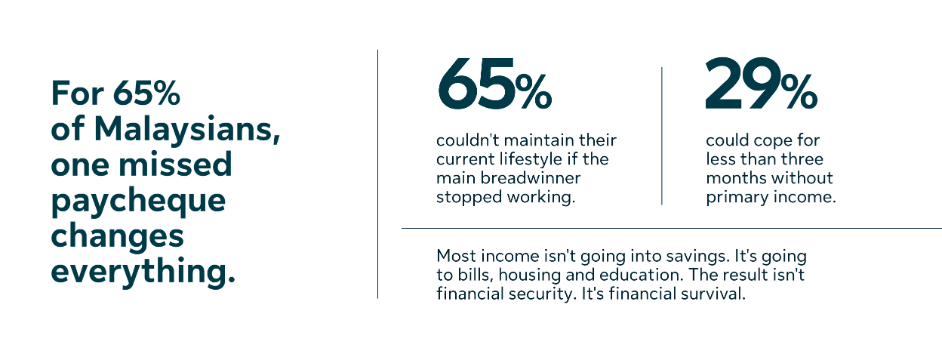
Nearly three in 10 (29%) households said they could cope for less than three months without income. For families already managing daily expenses, children’s needs and support for ageing parents, even a temporary income disruption can create immediate pressure and weaken their overall financial resilience.
Part of the challenge lies in how much of a household’s income is already spoken for. According to the survey, bills take up 30% of household income, followed by housing at 21% and children’s education at 16%. That leaves limited room to build an emergency fund or increase protection as responsibilities grow, especially when living costs continue to compete with longer-term financial goals.
Even among respondents who considered themselves adequately insured, more than half said their coverage would replace only 50% to 100% of monthly income. While that may sound substantial, it may still fall short for households whose regular expenses already absorb most of their earnings. In a real disruption, that gap could mean dipping into savings, delaying commitments or making difficult trade-offs.
Why Protection Needs to Keep Up With Life
Ho Teck Seng, President and Country Head of Sun Life Malaysia, noted that many Malaysians may not be reviewing their coverage often enough to reflect changing financial needs. For families supporting both children and ageing parents, responsibilities and costs can move faster than their protection plans.
Protection is not static. Building long-term financial security requires ongoing financial planning, regular coverage reviews, and greater protection awareness as life circumstances evolve. A plan bought several years ago may have been suitable at the time, but family responsibilities rarely stay the same. Income changes, children grow older, parents may require more support, and healthcare or education costs can rise faster than expected.
Given these changes, regular reviews are an important part of effective financial planning, helping households assess whether their existing coverage still matches their current income, dependents, debts and financial goals. They can also identify whether the sum assured, critical illness protection or income replacement remains sufficient for today’s needs. Without that check, a plan can offer reassurance on paper while leaving a family exposed in practice.
Stress Can Delay Better Financial Decisions
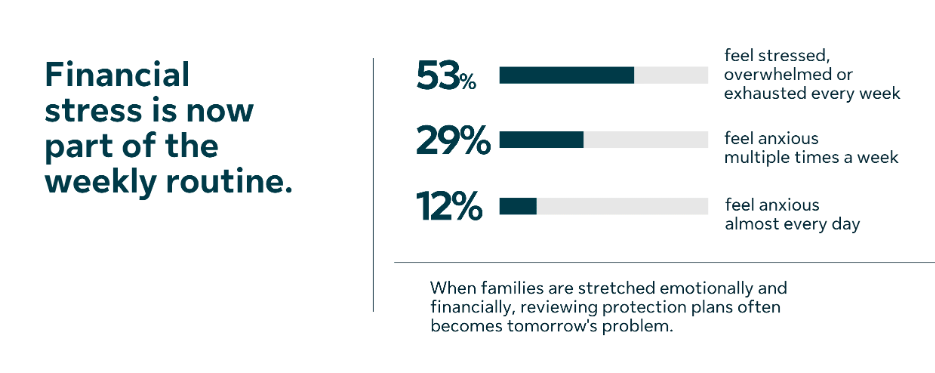
The findings also uncovered that more than half of respondents said they feel stressed, overwhelmed or exhausted at least once a week, while 12% experience this almost daily.
When households are focused on getting through the month, reviewing insurance or takaful coverage can feel like a task for later. But that delay can widen the gap between intention and action. Over time, immediate priorities begin to crowd out longer-term planning. This sustained pressure can make it harder to step back and review financial plans, affecting both their financial wellbeing and ability to prepare for future needs.
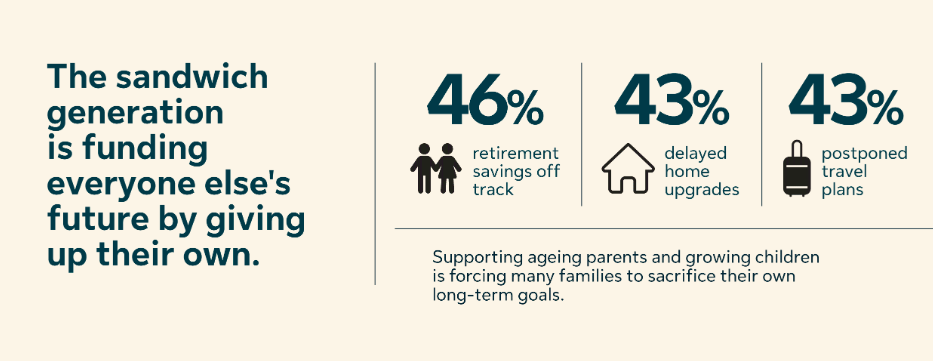
This is already showing up in life decisions. The survey found that 46% of respondents say their retirement savings are not on track, while 43% have delayed upgrading their homes or postponed leisure plans. These trade-offs suggest that many families are not ignoring the future; they are simply being forced to prioritise the present.
The Opportunity Is In Turning Awareness Into Action
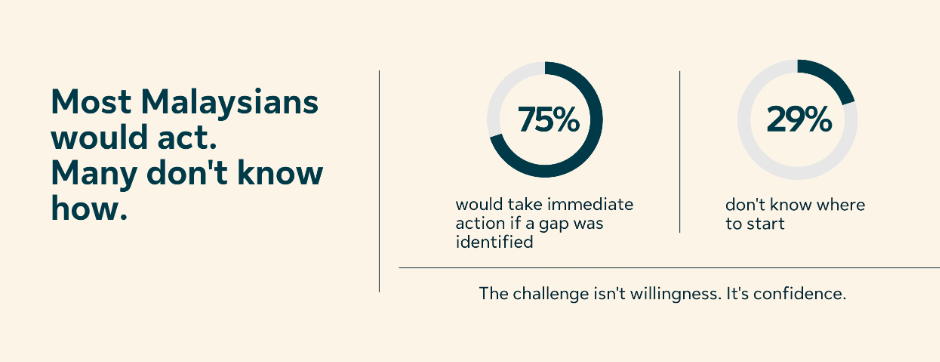
The encouraging part is that many Malaysians appear ready to act once a gap is made visible, suggesting a growing willingness to build greater financial confidence through informed decision-making. The survey found that 75% of respondents who feel adequately insured would take immediate action if a coverage shortfall was identified.
The challenge is helping households recognise those gaps earlier, starting with how long they could cope without income, whether current coverage would replace enough of it, and whether protection still reflects today’s responsibilities.
Through InsureLit 3.0, Sun Life Malaysia is continuing efforts to improve insurance/takaful and financial literacy and help Malaysians build greater financial resilience through youth programmes, roadshows, digital content and on-ground engagement.
Ultimately, feeling covered is only the starting point. The more important question is whether your insurance or takaful still reflects your household’s financial commitments today, not when the policy was first purchased.
Iman writes about personal finance with curiosity. She is interested in the stories behind money, the hesitation around big decisions, and the small habits that shape financial futures. Off the clock, she is either dissecting a film or climbing her way up the leaderboard in her favourite games.
51vote
Article Rating
SHARE
About THE AUTHOR
Iman Aminuddin
Iman Aminuddin
Iman writes about personal finance with curiosity. She is interested in the stories behind money, the hesitation around big decisions, and the small habits that shape financial futures. Off the clock, she is either dissecting a film or climbing her way up the leaderboard in her favourite games.










Comments (0)