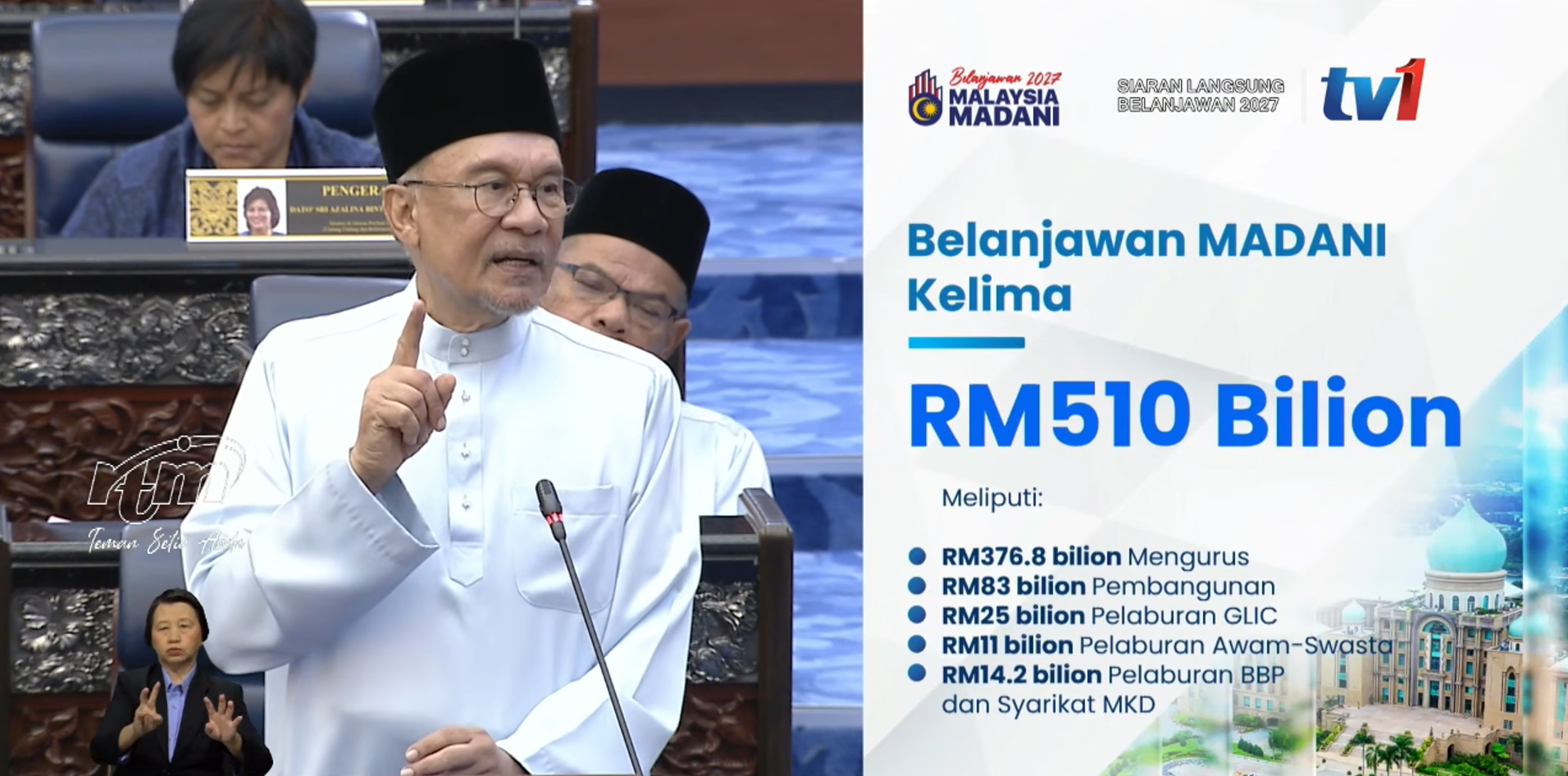
Prime Minister Datuk Seri Anwar Ibrahim tabled Budget 2027 on Friday, 9 October 2026, with a total allocation of RM510 billion, up from RM470 billion last year.
The measures below are the ones most likely to change your take-home pay and household costs next year.
SARA Of Up To RM150 A Month For STR Recipients
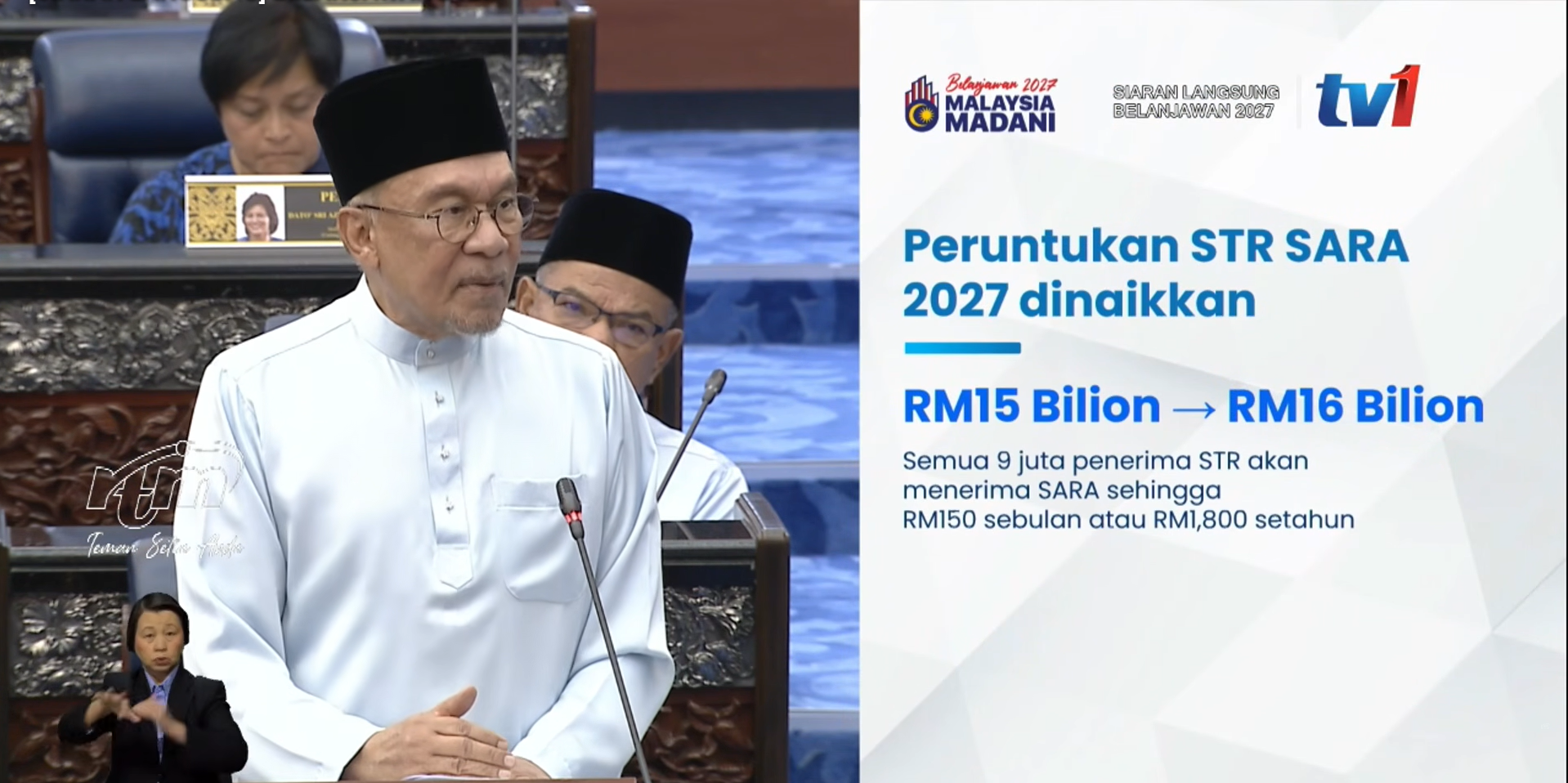
If you receive STR, you’ll get SARA credit of up to RM150 a month, or up to RM1,800 a year, in 2027. This covers up to 9 million people. The combined STR and SARA allocation rises to RM16 billion, from RM15 billion this year.
If you’re 18 or older and don’t receive STR, you’ll get RM100 in SARA MADANI twice next year. The first payment comes before Hari Raya Aidilfitri and the second ahead of the 70th Merdeka anniversary. This covers about 13 million Malaysians, including the M40.
SARA credit can now also be spent on fresh produce at 216 FAMA farmers’ markets and tamu nationwide. The number of small grocery shops accepting SARA will rise from 6,800 to 10,000 by the end of this year.
Individual Tax Relief Raised To RM12,000 And Lower Income Tax Rates
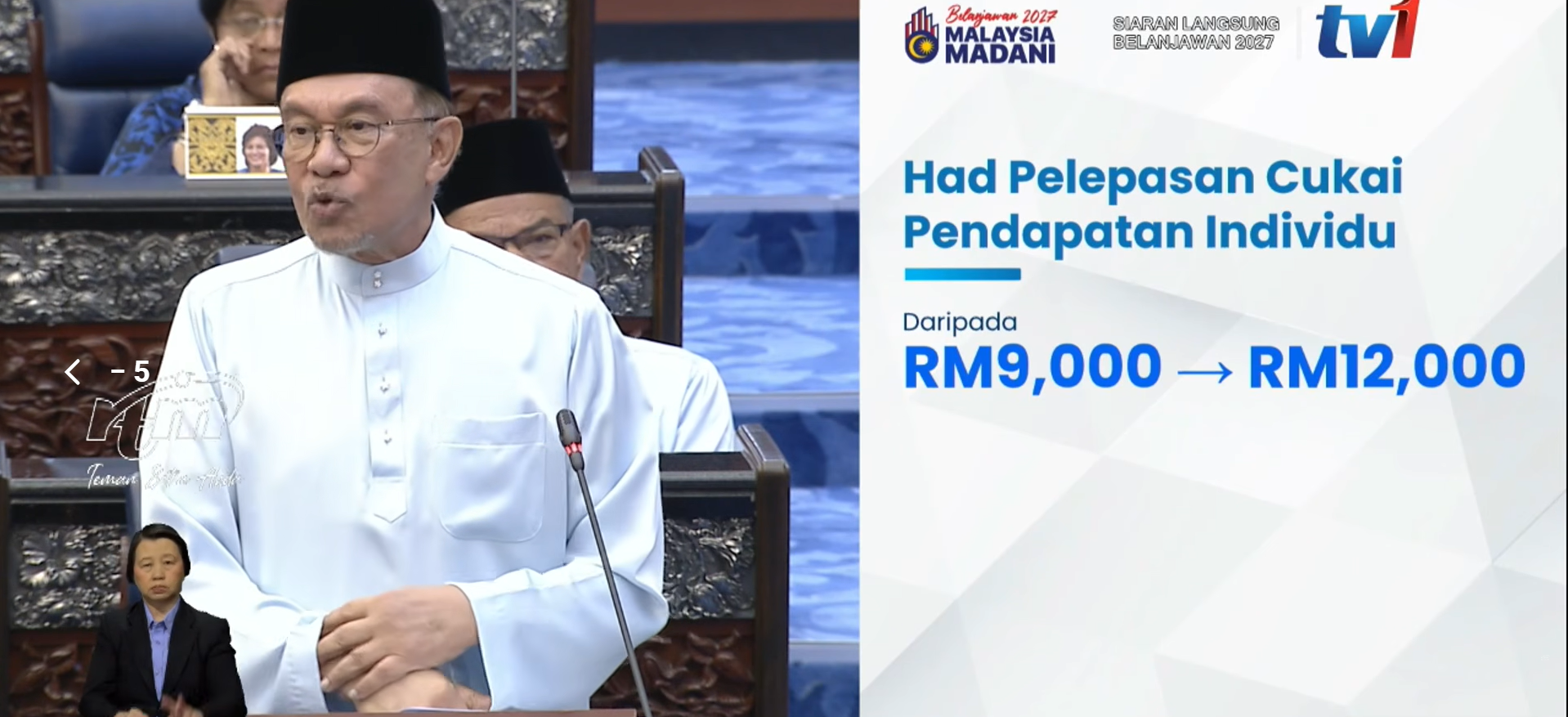
The individual tax relief, unchanged since 2010, goes up from RM9,000 to RM12,000. Income tax rates for resident individuals are also cut by one percentage point in two bands:
Chargeable income of RM70,001 to RM100,000: 18% (from 19%)
Chargeable income of RM100,001 to RM150,000: 24% (from 25%)
At the top end, the tax rate for chargeable income above RM1 million will rise to 30%. Under the current rates, income between RM1 million and RM2 million is taxed at 28%.
The new relief and rates apply from the year of assessment 2027, so you’ll see them when you file in 2028 for income earned in 2027.
The government says the higher relief and lower rates will give about 5 million taxpayers up to RM1,600 more to spend.
For example, someone with RM100,000 in chargeable income pays RM9,400 in tax today. The extra RM3,000 relief brings that down to RM8,830, and the lower 18% rate takes it to RM8,560, a total saving of RM840. If your chargeable income is between RM160,000 and RM400,000, the relief and both rate cuts together save you RM1,550.
More Expenses You Can Claim Tax Relief On
These existing tax reliefs now cover more expenses:
Medical treatment relief now includes postnatal care, up to RM3,000 within the RM10,000 limit.
Relief for parents’ and grandparents’ care covers all care expenses, not just medical treatment, special needs and carer costs.
Sports equipment relief now includes sports shoes, up to RM300 within the RM1,000 limit.
Education and skills fee relief covers all fields of study. The RM7,000 limit stays, and your children’s tuition in STEM, arts, languages or religion counts up to RM2,000.
Lifestyle relief now includes AI subscriptions, adopting a pet from a registered shelter, and vet fees for your pet’s vaccinations, spaying or neutering.
SOCSO relief now covers mandatory Lindung Kendiri contributions. If you also make voluntary Lindung 24 Jam or Lindung Kendiri contributions, you can claim an extra relief of up to RM150.
Cash donations to a school’s public fund (Tabung Sumbangan Wang Awam Sekolah) already qualify for a tax deduction of up to 10% of aggregate income. Under Budget 2027, schools can use the fund for more things, including running costs, repairs, equipment and student programmes.
Minimum Wage Rising To RM2,000 From June 2027
The minimum wage goes up from RM1,700 to RM2,000 a month from June 2027, covering more than 4 million workers. If you work for an SME with sales below RM50 million, the new rate won’t apply to you from June, and the government hasn’t said when it will.
A minimum wage of RM2,500 a month for semi-skilled jobs and graduates will be introduced as the first step in a reform of workers’ pay. No start date has been given. Government-linked investment companies (GLICs) and government-linked companies (GLCs) are raising their living wage from RM3,100 to RM3,400 a month, for 230,000 employees.
Higher Earnings And SOCSO Support For Gig Workers
If you’re a typical e-hailing driver, your take-home income is expected to rise by up to RM227 a month from 2027. For p-hailing riders, it’s up to RM100 a month.
This comes from a RM160 million package co-funded by the government and Grab that raises minimum earnings for e-hailing and p-hailing workers. It also helps with vehicle maintenance, insurance and SOCSO contributions. The Gig Consultative Council will finalise a minimum income rate and formula in early 2027.
Other measures for gig and self-employed workers include:
A 35% matching SOCSO contribution for e-hailing and p-hailing workers, rising to 50% if the platform also contributes.
A 70% matching SOCSO contribution for more than 200,000 self-employed workers in 17 sectors where SOCSO contributions aren’t compulsory.
EPF matching contributions under i-Saraan of up to RM600 a year, or RM6,000 over a lifetime, for e-hailing and p-hailing workers.
RM270 million in financing from BSN and Agrobank for gig workers who want to start a business or buy their first home.
Every Malaysian citizen will also be signed up to EPF automatically when they turn 18.
Full Stamp Duty Exemption For First Homes Up To RM500,000
First-time buyers get a full stamp duty exemption on the loan agreement and transfer document for homes priced up to RM500,000. For homes priced up to RM750,000, the first RM500,000 is fully exempted and the remaining amount gets a 50% exemption. This applies to sale and purchase agreements signed from 1 January 2027 to 31 December 2030, extending and widening the exemption announced in Budget 2026.
Original buyers, and contractors or developers who take over abandoned housing projects, also get a full stamp duty exemption over the same period. Skim Jaminan Kredit Perumahan (SJKP), the government’s home loan guarantee scheme, will provide up to RM20 billion in guarantees for around 80,000 first-time buyers, especially self-employed people without a fixed income.
Registration for Phase 1 of Bandar MADANI Bukit Jalil, a new public housing development, opens on 12 October 2026.
Basic Credit Cards With Interest Capped At 14%
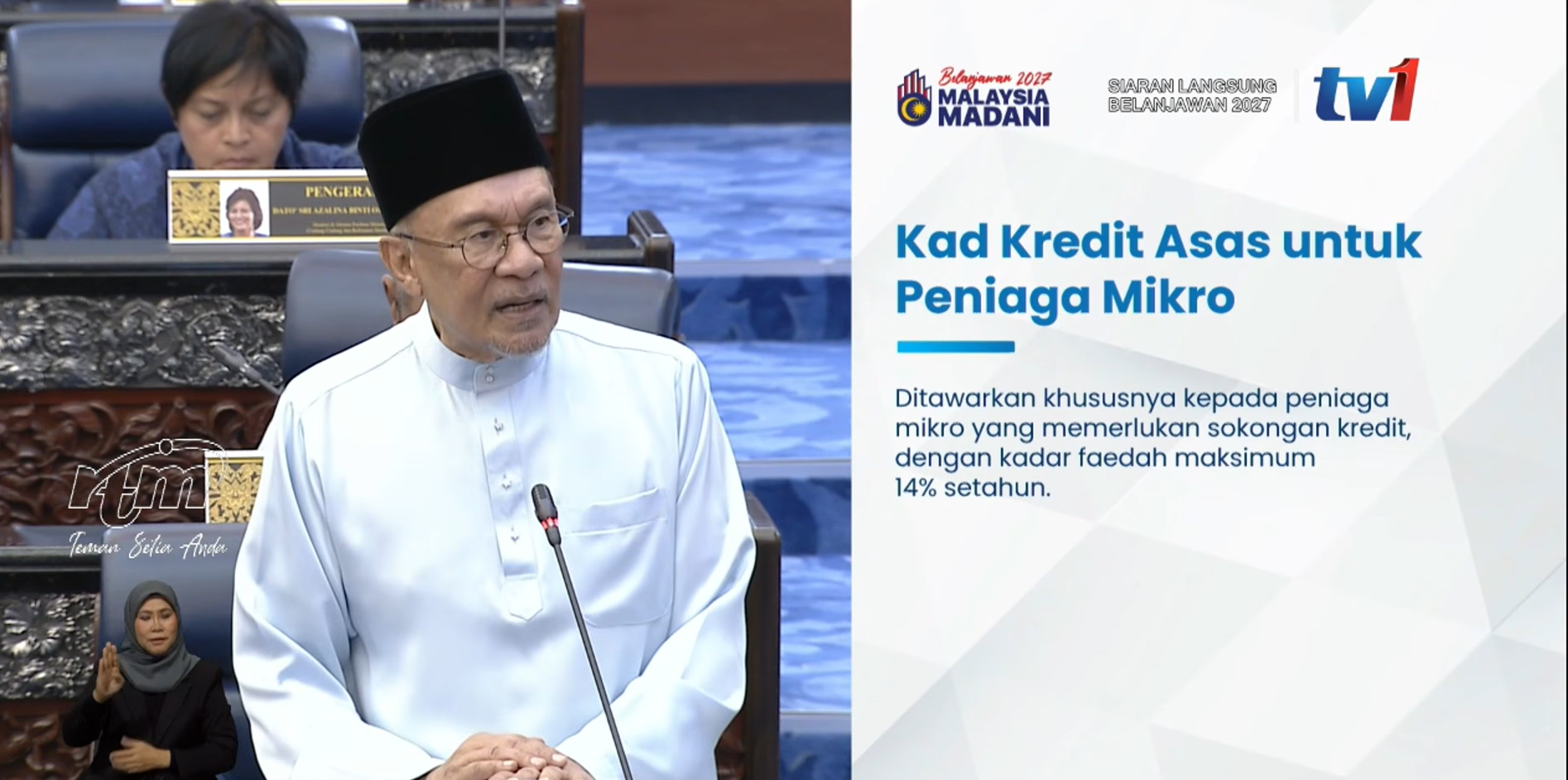
Alliance Bank, Maybank and CIMB have started offering basic credit cards with interest rates of no more than 14% a year. Standard cards can charge up to 18% a year under Bank Negara Malaysia’s rules.
Other banking and savings changes include:
Full stamp duty exemption on opening savings and current accounts from 1 January 2027.
Peer-to-peer (P2P) financing agreements, where investors fund small businesses through an online platform, are fully exempt from stamp duty until 31 December 2026. From 1 January 2027 to 31 December 2030, they’ll pay a stamp duty of RM10 instead.
The income tax exemption for people who invest in businesses through equity crowdfunding platforms is extended to 31 December 2030.
EPF members with Shariah savings can pay zakat directly from their dividends.
EPF members aged 55 and 60 can opt for the i-Emas scheme to receive monthly withdrawals while the balance keeps earning dividends.
Bankruptcy Threshold Raised To RM150,000
From 2027, the minimum debt for bankruptcy proceedings rises from RM100,000 to RM150,000. The Second Chance Policy helps people get out of bankruptcy faster. It now also covers caregivers of OKU family members, chronic patients and the elderly, as well as gig workers and people with irregular income.
MediAsas Health Plan Payable From Akaun Sejahtera
MediAsas is a voluntary basic medical insurance plan that the government will launch in January 2027. The price hasn’t been announced yet. Hospital charges under the plan will be based on the type of diagnosis and treatment.
If you’re an EPF member under 55, you can pay the premium from your Akaun Sejahtera. SMEs with fewer than 75 employees will get a RM200 subsidy per worker on the first year’s premium, for up to 50 workers per company.
From 2027, private hospital bills will use standard charge categories. MySalam also continues next year.
For families with older relatives, the service tax on elderly care services drops from 8% to 6% from 1 January 2027. Care fees of up to RM96,000 a year are exempt from service tax.
PTPTN Repayment Deferment For Borrowers Earning Up To RM2,500
In 2027, PTPTN borrowers earning up to RM2,500 a month can defer repayment. Those earning between RM2,500 and RM3,000 a month only need to pay a minimum of RM50. More than 400,000 borrowers are expected to benefit.
Borrowers who aren’t behind on payments and repay regularly will get a 10% discount. Employers who repay PTPTN loans on their staff’s behalf from 1 January 2027 to 31 December 2028 can claim a tax deduction.
Early Schooling Aid Raised To RM200 Per Pupil
Bantuan Awal Persekolahan rises from RM150 to RM200 per pupil, so a family with four school-going children will receive RM800 for the 2027 school session. It’ll be handed out at schools to 5.3 million pupils.
Form Six students will receive a RM2,500 living allowance, the same rate as matriculation students, for 90,000 students. FlySiswa flight assistance for public university students goes up from RM400 to RM500. The monthly allowance for pupils with special educational needs rises from RM150 to RM200.
My50 Continues And MyKomuter50 Introduced
My50 continues for 300,000 Prasarana bus and rail users in the Klang Valley. A new MyKomuter50 pass for KTM Komuter users is expected to save 40,000 commuters up to RM160 a month. Free passes also continue for 360,000 schoolchildren, OKU and children under six.
Lower Income Tax Rates For SMEs
The SME income tax rate is cut by one percentage point from the year of assessment 2027. The first RM150,000 of chargeable income will be taxed at 14%, and income from RM150,001 to RM600,000 at 16%. This is expected to give 300,000 SMEs up to RM6,000 in extra income.
Air Conditioner Rebates, Duty-Free Shopping And Free AI Subscriptions
A NUR MADANI rebate of up to RM200 on energy-efficient air conditioners and refrigerators.
The duty-free purchase limit in Langkawi and Labuan rises to RM10,000, subject to a minimum 48-hour stay.
Tickets for local films and theatre performances in the Federal Territories are fully exempt from entertainment duty from 2027.
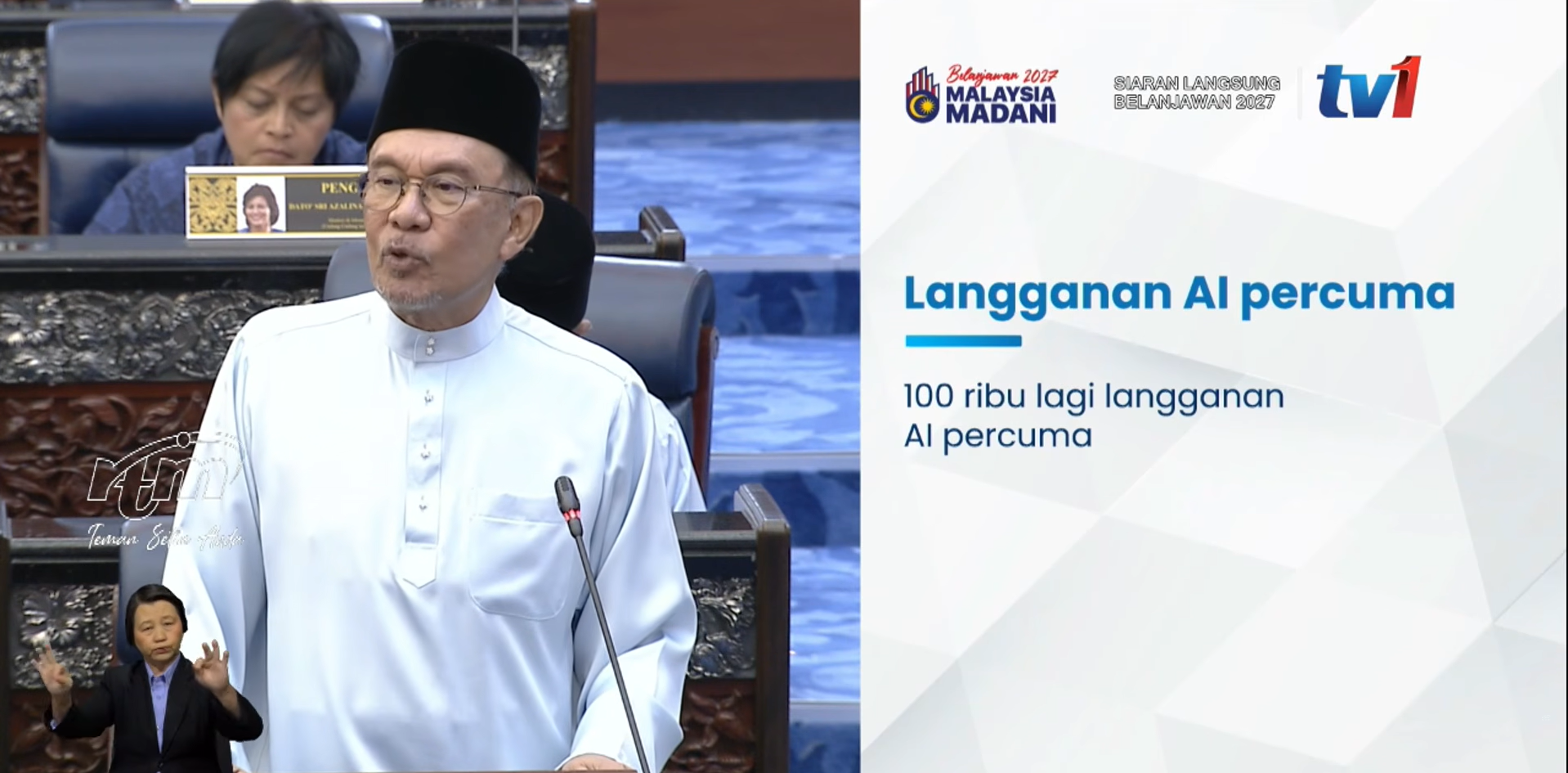
100,000 more free AI subscriptions for young people, now including ChatGPT.
An AI app from the National Scam Response Centre that lets you check phone numbers, bank accounts and suspicious links before making a transaction.
Home repair aid for disaster victims doubles from RM5,000 to RM10,000.
Bantuan Warga Emas rises to RM1.3 billion for nearly 200,000 recipients, and care aid for bedridden OKU and chronic patients goes up from RM500 to RM600 a month.
A one-off RM1,000 for 38,000 taxi and rental car drivers and 15,000 school bus drivers, to be paid in the week of 12 October.
For civil servants, maternity leave goes up to a maximum of 98 days per birth, and the minimum pension rises from RM1,000 to RM1,350 a month.
If you’re buying your first home, check when you sign your sale and purchase agreement. On a RM600,000 home, an agreement signed in December 2026 gets no exemption under the current rules. One signed from 1 January 2027 pays no duty on the first RM500,000 and half the duty on the remaining RM100,000. The first SARA MADANI payment comes before Hari Raya Aidilfitri, and the tax changes apply when you file in 2028. For a closer look at each measure, read our Budget 2027 coverage.
Follow us on our official WhatsApp channel for the latest money tips and updates.
Christina writes about personal finance with an eye for making the complicated feel straightforward. She is drawn to the everyday money decisions people face and genuinely enjoys finding the clearest way to explain them. Between articles, she is probably napping, on a hiking trail, or terrorising her sister’s cats.
00votes
Article Rating
SHARE
About THE AUTHOR
Christina Chandra
Christina Chandra
Christina writes about personal finance with an eye for making the complicated feel straightforward. She is drawn to the everyday money decisions people face and genuinely enjoys finding the clearest way to explain them. Between articles, she is probably napping, on a hiking trail, or terrorising her sister's cats.




Comments (0)