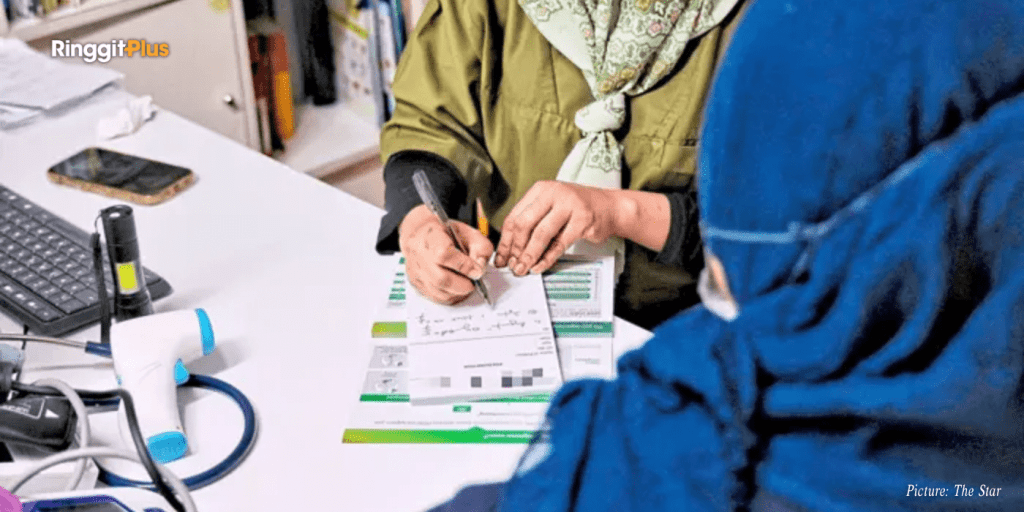
Prescriptions issued at Health Ministry (MOH) facilities will soon carry significantly more information about patients and their medications, following a new directive from the ministry. The updated format takes effect on 1 January 2027, though facilities that exhaust their existing prescription stock before that date may implement it earlier.
What Is Changing
The existing prescription slip only requires a patient’s name, MyKad number, age, date, and diagnosis. The new format expands this considerably.
Under the updated format, patient details will include full name, full address, age, MyKad number, registration number, weight where applicable, sex, telephone number, diagnosis, drug allergies, citizenship status, and medication details. Medication details will cover the name, dose, dosage form, frequency, duration, and quantity supplied.
The form will also require fuller prescriber and facility information, including the prescriber’s signature and full name, an official stamp, the full name and address of the facility, the facility’s telephone number, and the date. Additional requirements include a prescription serial number, a reverse page for outpatient prescriptions, and separate ward and pharmacy copies for inpatient prescriptions.
Why The Ministry Made The Change
MOH director-general Datuk Dr Mahathar Abd Wahab said the review found the existing format did not meet requirements under several pieces of legislation, including Section 21(2) of the Poisons Act 1952 and related regulations covering psychotropic substances and dangerous drugs.
A key gap identified was the absence of drug allergy information. “There is no medication safety element, particularly the patient’s drug allergy status,” he said. The ministry also noted that practices for handling inpatient prescriptions were not standardised across facilities.
The new directive applies to both paper prescriptions and facilities using digital systems.
The Patient Side Of The Change
For patients visiting MOH facilities, the practical change is that prescriptions will become more detailed documents. Having drug allergy information on the prescription itself reduces the risk of a pharmacist dispensing medication that a patient is allergic to, particularly in cases where the dispensing pharmacist is not the same clinician who issued the prescription.
This is especially relevant for patients who split their care between public and private facilities, where GP consultation fees were recently revised to better reflect the complexity of care provided.
Follow us on our official WhatsApp channel for the latest money tips and updates.
Iman writes about personal finance with curiosity. She is interested in the stories behind money, the hesitation around big decisions, and the small habits that shape financial futures. Off the clock, she is either dissecting a film or climbing her way up the leaderboard in her favourite games.
00votes
Article Rating
SHARE
About THE AUTHOR
Iman Aminuddin
Iman Aminuddin
Iman writes about personal finance with curiosity. She is interested in the stories behind money, the hesitation around big decisions, and the small habits that shape financial futures. Off the clock, she is either dissecting a film or climbing her way up the leaderboard in her favourite games.




Comments (0)