Alex Cheong Pui Yin
Previously covered recruitment-related stories and had a short stint as a copywriter for the property industry. She subsequently developed an interest in investment and robo-advisors.

5th April 2024 - 18 min read
All Malaysians who earn an annual income of more than RM34,000 are obligated to file and pay taxes (if any), but you can tap into a variety of tax reliefs, deductions, and rebates to help you reduce the amount that needs to be paid. There’s a long list of reliefs that you may be eligible for, so this guide will help you with a bird’s eye view of all the reliefs available for YA 2023.
Now, why should you take the time to claim the tax reliefs that you are eligible for? After all the process can be quite tedious – especially if you’re doing this for the first time. The answer is quite simple: by claiming eligible tax reliefs, you reduce your chargeable income for that year, resulting in a possible surplus in the taxes deducted from you – meaning you’ll get a tax refund on the excess amount!
We’ve compiled all the different tax reliefs, deductions, and rebates that you can claim for YA 2023 here, for your convenience. Experienced taxpayers will find most of these details familiar, but the government has also updated certain tax benefits for the year, so be sure to go through them and avoid missing out on any reliefs that you’re eligible for!
To further simplify things for you, we’ve prepared an infographic on everything that you can claim for YA 2023 – which you can use as a quick checklist as you file your taxes. For the specifics of each tax incentive, meanwhile, simply scroll down further to read more.

This section is for those of you who want to find out more about the specific conditions and requirements that apply to each tax incentive. We’ll also briefly highlight what makes tax reliefs, deductions, and rebates different from each other (but if you want an in-depth explanation, head on to our explainer article here!)
Ready to check whether you’re truly eligible for the tax incentive that you wish to claim? Let’s dive in.

Tax reliefs – which make up most of the tax incentives that you can tap into – are used to reduce your chargeable income (which determines the tax rate that applies to you). Read on for the full details of all the tax reliefs that you can claim for YA 2023:
1) Individual & dependent relatives
Claim: RM9,000
Automatically granted to an individual for themselves and their dependents.
2) Medical treatment, special needs, and carer expenses for parents
Claim: ≤RM8,000
This encompasses care and treatment by a nursing home, and non-cosmetic dental treatment. Note that non-cosmetic dental treatment here refers only to the following expenses:
Teeth restoration and replacement involving crowning, root canal, and dentures cannot be claimed under this tax relief.
Also, note that your claims must be evidenced by a registered medical practitioner or written certification of a qualified carer (must not be taxpayer, or his/her spouse or child). Additionally, your parents must reside in Malaysia, and their treatments, too, must be provided within the country.
Note that for YA 2024, this tax relief will be expanded to include full medical examination for parents (with a sub-limit of RM1,000).
3) Husband/Wife/Alimony
Claim: ≤RM4,000
You can claim this tax relief if your spouse has no source of income, or if he/she opts for joint assessment in your name. It is also not allowed if your spouse has gross income exceeding RM4,000 derived from sources outside of Malaysia.
Meanwhile, husbands who are paying alimony to a former wife are permitted to claim the actual amount paid, or up to a maximum of RM4,000. Note as well that this RM4,000 deduction cap encompasses the payment for the wife who is living together with you, as well as the alimony payments made to a former wife.
4) Education fees in Malaysia
Claim: ≤RM7,000
Claim this tax relief for the amount spent on any of the following courses of study, provided that they are undertaken in a recognised institution or professional body of Malaysia (you can check at the Ministry of Higher Education Malaysia website here!):
| Education/degree level | Eligible courses of study |
| Masters or Doctorate degree | Any course of study undertaken is eligible, as long as it is recognised |
| Other than a Masters/Doctorate degree | Any course of study up to tertiary level undertaken for law, accounting, Islamic finance, technical, vocational, industrial, scientific, or technical skills or qualifications are eligible |
| Course of study undertaken for upskilling/self-enhancement (capped at RM2,000) | Any skill areas recognised by the Director General of the Department of Skills Development under the National Skills Development Act 2006 (Act 652) |
To note, the tax relief for upskilling courses was initially limited to RM1,000 when it was first introduced for YA 2021, in a bid to encourage Malaysians to pick up new skills and improve their employability during Covid-19. This sub-limit was subsequently increased to the current RM2,000 for YA 2022, applicable until YA 2023. Under Budget 2024, the tax relief has been extended until YA 2026.
5) Medical expenses
Claim: ≤RM10,000 (in total)
If you’ve incurred any medical expenses that fall under the following categories, you can claim this tax relief:
| Medical expense categories | Claim limit | Details |
| Medical expenses on serious diseases for self, spouse, or child | Up to RM10,000 in total (Inclusive of all five medical expense categories) | Includes treatment of AIDS, Parkinson’s disease, cancer, renal failure, leukemia, heart attack, pulmonary hypertension, chronic liver disease, fulminant viral hepatitis, head trauma with neurological deficit, tumour in brain or vascular malformation, major burns, major organ transplant, and major amputation of limbs |
| Medical expenses for fertility | Up to RM10,000 in total (Inclusive of all five medical expense categories) | – Includes intrauterine insemination (IUI) treatment, in vitro fertilization (IVF), or any other fertility treatments on yourself or your spouse (including consultation fees and medicines) – Only for married individuals |
| Vaccination expenses for self, spouse, or child | Up to RM1,000 (Included in the total RM10,000 tax relief) | Includes vaccination for pneumococcal, human papillomavirus (HPV), influenza, rotavirus, varicella, meningococcal, tetanus-diphtheria-acellular-pertussis (TDAP combination), and coronavirus disease 2019 (Covid-19) |
| Complete medical and mental health examination for self, spouse, and child | Up to RM1,000 (Included in the total RM10,000 tax relief) | – Refers to a thorough examination as defined by the Malaysian Medical Council (MMC) – Includes purchases of Covid-19 self-detection test kits (e.g. PCR and RTK tests) and vaccination expenses – Includes mental health examination by registered psychiatrists, clinical psychologists, and counsellors |
| Diagnostic assessments, early intervention programmes, and rehabilitation treatments for learning disabilities | Up to RM4,000 (Included in the total RM10,000 tax relief) | – Allowed for autism, attention deficit hyperactivity disorder (ADHD), global developmental delay (GDD), intellectual disability, Down Syndrome, other specific learning disabilities – All assessments, programmes, and treatments must be performed by registered medical practitioners (with receipts issued) and carried out in Malaysia |
This tax relief – which was previously set at RM8,000 in total – was increased to RM10,000 under the revised Budget 2023 by Prime Minister Datuk Seri Anwar Ibrahim. Along with this increase, the scope of this tax relief was also expanded to include assessments, early intervention programmes, and rehabilitation treatments for learning disabilities.
Remember to retain the receipts of your medical treatments, along with a copy of the certification of the registered medical practitioner for future reference!
For your future reference, this tax relief will be expanded in YA 2024 to cover dental examination and treatment expenses for self as well.
6) Lifestyle purchases for self, spouse, or child
Claim: ≤RM2,500
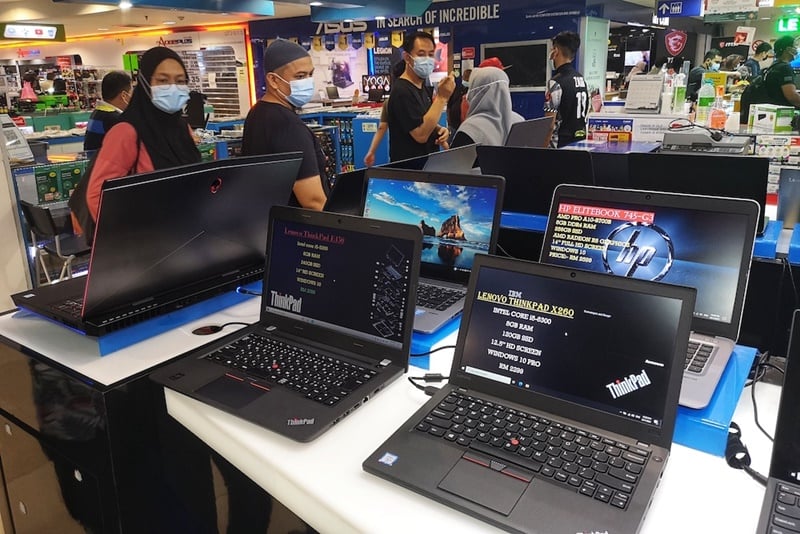
This tax relief can be claimed for the following lifestyle expenses:
Note that under Budget 2024, this tax relief will be restructured for YA 2024 onwards to exclude the purchase of sports equipment and gym membership fees (which will be treated as a separate tax relief of its own, which you can read about right after this). Instead, it will be expanded to include fees for self-improvement courses.
7) Expenses related to sports activity for self
Claim: ≤RM500
Introduced in a bid to encourage a more active lifestyle among Malaysians, this specific tax relief covers the following expenses:
This tax relief is in addition to the general lifestyle tax relief of RM2,500 (mentioned in Part 6). To illustrate how this tax relief works, let’s say you purchased a sports equipment worth RM3,000 in 2023. You can first claim RM2,500 under the general lifestyle tax relief, and the remaining RM500 under this additional tax relief for sports.
For YA 2024 onwards, this sports tax relief will be increased from RM500 to RM1,000.
8) Purchase, installation, or rental of electric vehicles (EV) charging equipment
Claim: ≤RM2,500
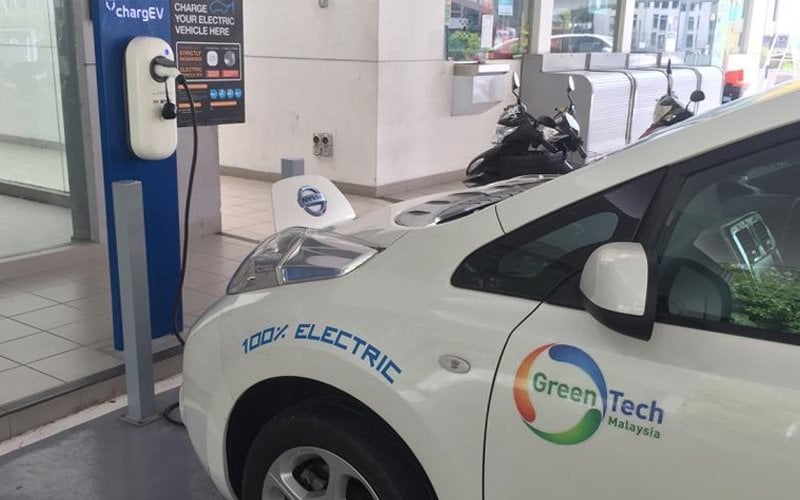
This tax relief is claimable for the fees of purchasing (including hire-purchase), installing, and renting EV charging equipment. It also includes the subscription of the use of EV charging facilities.
This tax relief was introduced under Budget 2022, and is originally allowed only until YA 2023. Under Budget 2024, it has been extended to YA 2027.
9) Breastfeeding equipment
Claim: ≤RM1,000 per mother (only for women taxpayers)
Mothers who have purchased breastfeeding equipment for their own use to breastfeed their own child (aged 2 years and below) are entitled to claim this tax relief. Breastfeeding equipment that qualifies include:
You can only claim this relief once every two years, and in the case of a combined assessment, this deduction is only allowed if the assessment is made in the name of the wife.
10) Childcare fees
Claim: ≤RM3,000
Parents with children aged 6 years and below can claim this tax relief for the childcare expenses that they pay to a registered childcare centre or kindergarten. It is capped at RM3,000 even if you have more than one child who is eligible under this tax relief.
Note that for married couples who are assessed separately, this tax relief can only be claimed by either one of the parents. Divorced couples, meanwhile, can both claim the tax relief, provided they made payments for the childcare fees of different eligible children.
You must support your claims for this tax relief with your child’s birth document and receipts from the childcare centre or kindergarten.
11) Net deposit in SSPN
Claim: ≤RM8,000 per individual with children
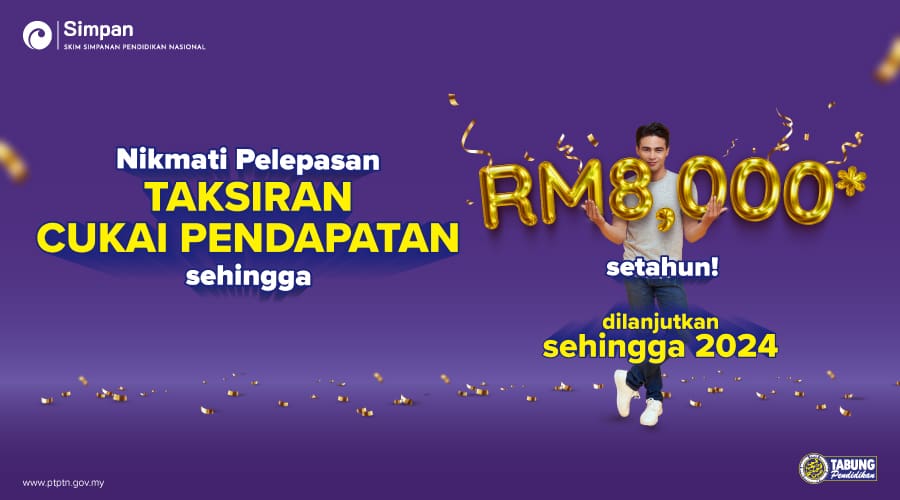
If you’re saving for your children’s higher education via the National Education Savings Scheme (SSPN), then you can claim this tax relief for the net deposit kept in SSPN, up to the RM8,000 limit allowed. Remember, the amount deposited must be under your children’s name!
Also, net deposit refers to the amount of savings that you still have after deducting any withdrawals that you have made during the year. As an example, let’s say you had a balance of RM4,500 brought forward from 2022 to 2023, and you made a deposit of RM2,000 but subsequently withdrew RM1,500. This means that the amount of tax relief that you can claim is only RM500 (RM2,000 – RM1,500); the balance brought forward (RM4,500) cannot be used to claim the relief.
If you have not been keeping track of all your SSPN deposits and withdrawals, though, no need to fret! SSPN will generate a tax document that shows you the net deposit you can claim for tax relief. It’s good form to cross-check, however, if you have retained records of your transactions.
12) Ordinary child relief (under age of 18)
Claim: RM2,000 per child
A deduction is allowed for every child who is unmarried and is below the age of 18 years at any time during the year of assessment.
13) Child (18+) in full-time education
Claim: RM2,000 or RM8,000 per child

A tax relief of RM2,000 is claimable for each child who is unmarried, 18 years of age and above, and receiving full-time education.
Meanwhile, a deduction of RM8,000 is allowed if the child is unmarried, 18 years of age and above, and satisfies any of the following conditions:
(UPDATED 5/4/2024): 14) Life insurance and Employees Provident Fund (EPF)
Claim: ≤RM7,000
This relief covers both your life insurance premium payments and EPF contributions, where you’re allowed to claim the following:
To note, this tax relief has been restructured slightly under Budget 2023 for YA 2023 and subsequent years, in a bid to encourage all Malaysians to save for their retirement. Prior to this, it was treated differently depending on whether you are a pensionable public servant or a private sector employee.
Pensionable public servants (who did not contribute to EPF voluntarily) were previously allowed to claim up to the full RM7,000 relief under life insurance premium payments and takaful contributions. Meanwhile private sector employees (who contribute to EPF) have always been restricted to the RM3,000 (for life insurance premium payments and takaful contributions) and RM4,000 (for EPF and other approved schemes) limit.
Another update to this tax relief as of YA 2023 is the expansion of the tax relief allocation for life insurance premiums, now to cover additional voluntary EPF contributions as well (allowed for all workers, both in formal or informal sector). This means that members who contribute both compulsorily and make voluntary contributions may now actually be able to claim the full RM7,000 tax relief for their EPF savings.
This initiative is meant to encourage more Malaysians to increase their retirement savings for old age, after the EPF signalled that many of its members simply do not have enough to tide them through their retirement period.
15) Private retirement scheme (PRS) and deferred annuity
Claim: ≤RM3,000

This tax relief is limited to RM3,000 for an individual, and RM3,000 for a spouse who has a source of income. Meanwhile, married couples who opt for joint assessment are restricted to RM3,000 deductions.
This tax relief has been provided since YA 2012, and has been extended until YA 2025 via several national budgets throughout the years.
16) Education and medical insurance
Claim: ≤RM3,000
You can claim this tax relief for the payment of insurance premiums that are related to education or medical benefits for yourself, as well as your spouse and child. It is limited to RM3,000 for an individual, and RM3,000 for a spouse who has a source of income. However, if you elect for joint assessment, the deduction allowed is restricted to RM3,000.
17) Social Security organisation (SOCSO)
Claim: ≤RM350
Your contributions to SOCSO can be claimed as relief during the year of assessment. Employees’ contributions via the Employment Insurance System (EIS) is also allowed.
18) Equipment for disabled self, spouse, child, and parent
Claim: ≤RM6,000
You’re entitled to this tax relief if you’ve purchased any necessary basic supporting equipment for yourself, as well as your spouse, child, and parents. Such equipment includes haemodialysis machines, wheelchairs, artificial legs, and hearing aids; spectacles and optical lenses are excluded.
Note that the disabled individual must be registered with the Department of Social Welfare.
19) Disabled individual
Claim: RM6,000

Disabled individuals are allowed to claim this tax relief, provided they have been certified in writing by the Department of Social Welfare.
20) Disabled husband/wife
Claim: RM5,000
Individuals with a disabled spouse are entitled to a further deduction under this tax relief.
21) Disabled child
Claim: RM6,000
Individuals with a disabled child who is unmarried can claim this tax relief.
22) Additional relief for disabled child (18+) in higher education
Claim: RM8,000
This is an additional tax relief provided on top of the RM6,000 relief allowed for those with a disabled child (mentioned above). If your child is unmarried (18 years of age and above), and meets the following conditions, you can claim this:
To clarify, this means you can get a total of RM14,000 tax relief for a disabled child if all the conditions are met.

While tax reliefs reduce your chargeable income, tax deductions reduce the amount of your aggregate income (your total income for the entire year). For YA 2023, the tax deductions allowed are as follows:
1) Donations to charities, sports activity, and approved funds/institutions
Deduction: ≤10% of aggregate income
If you’ve made donations that fall under these categories, then you’re allowed to deduct them from your aggregate income, up to the limit specified:
On top of these, the explanatory notes for YA 2023 by the LHDN still states that tax deductions will be given to donors who donate cash or contribution in kind for the fight against Covid-19, or to help those affected by the pandemic. If you have continued to make such donations, the tax deduction amount is also restricted to 10% of your aggregate income.
Just be sure to keep a record or a receipt of your donations as supporting documents!
2) Other donations, gifts, and contributions
Deduction: Up to value of gift, unless stated otherwise
You can enjoy tax deductions for the following situations (with varying limits):
3) Membership subscription for professional bodies
Deduction: Membership subscription paid
You can claim the membership subscription fees paid to professional bodies for your profession/industry, such as medical or legal professional fees.

The third tax incentive that you can tap into is the tax rebates, which are calculated at the end of your tax form (BE Form for individuals who do not carry a business). This is after you’ve determined the amount of tax charged on your chargeable income, and it directly affects the amount of tax that you need to pay.
1) Tax rebate for self
Rebate: RM400
You can claim this rebate if your chargeable income (after tax reliefs and deductions) comes up to less than RM35,000.
2) Tax rebate for spouse
Rebate: RM400
Go ahead and claim this rebate if your chargeable income (after tax reliefs and deductions) is less than RM35,000, and you have been allowed the tax relief of RM4,000 for your spouse. A small condition though: your spouse must not have a source of income, or has elected for joint assessment in your name.
3) Departure levy rebate for umrah/religious travel
Rebate: Amount of departure levy paid
This rebate is allowed for any individuals who leaves Malaysia by air to perform umrah, or other kinds of religious pilgrimage but not for the purpose of performing hajj. Be sure to keep these documents to claim this rebate:
You can only claim this relief for two trips in a lifetime.
4) Zakat/fitrah
Rebate: Zakat/fitrah paid
This rebate is applied to the payment of obligatory zakat and fitrah during the basis of the assessment year.
***

We hope that these clarifications provided for the tax reliefs, deductions, and rebates for YA 2023 will be helpful in your tax filing process! If you have not, do take time to go through your receipts and spending from 2023 (especially big-ticket items!) to see which tax incentives you’re eligible for – while the process may take a while, it’s absolutely worth the effort.
Do also keep an eye out for our Income Tax Guide for YA 2023, which is coming out very soon! In it, we’ll take you through the whole tax filing process, step by step.
Previously covered recruitment-related stories and had a short stint as a copywriter for the property industry. She subsequently developed an interest in investment and robo-advisors.


Comments (147)
Hi…can I claim house wifi Bill under my wife’s name, who is full time House wife…
Hi there!
Yes, you can still claim the home internet (WiFi) bill under the Lifestyle Tax Relief, even if the bill is under your wife’s name, as long as you are the one paying for it and filing the tax return. Just remember to keep the bill and payment records in case LHDN requests supporting documents later.
For confirmation on specific cases, you may also wish to check directly with LHDN, as tax treatment can depend on individual circumstances.
Hi Alex, your articles is good. I have some questions here:
1. My husband is bedridden but he still have income. He claims under disable person RM6000. Can I claim too for having a disabled spouse?
2. My sister is caring for my husband together with me. Can I claim under caregiver (my sister) relief? or it has to be under my husband income tax claim
Hi there, thanks for your kind words!
Yes, you can claim Disabled Spouse Relief (RM5,000) even if your husband claims Disabled Individual Relief (RM6,000), as long as he’s registered with JKM.
Caregiver Relief (RM3,000) can only be claimed by one person and must be for your own parent or spouse. So yes, you may be eligible but not your sister.
Hope this helps!
Hi Alex, with regards to the Membership subscription for professional bodies, example Malaysia Institute Accountant, in which line we should input this when completing the e-filing?
For the Membership subscription to professional bodies like the Malaysia Institute of Accountants, you should typically input this under the “Other deductions” or “Tax relief” section in your e-filing, depending on the nature of the subscription.
Hi, under my BE form REBATE / TAX DEDUCTIONS / TAX RELIEF, the only other deduction section i can see is ‘Section 110 tax deduction (others)’ is this the correct field to include membership subscription fee? thanks
If you’re only seeing ‘Section 110 tax deduction (others)’, that’s actually meant for tax already withheld (like from dividends or royalties), not for membership subscription fees.
Professional membership fees should be claimed under the Tax Relief section, usually listed as “Professional Fees / Subscriptions”. If you don’t see it, make sure you’re in the correct part of the form (under Tax Relief, not Tax Rebate or Section 110).
Hi, I am.paying for my daughter’s insurance as she is not working yet. Can I claim?
Yes, you can claim your daughter’s insurance under the tax relief for life insurance and EPF (up to RM3,000) if the policy is under your name and you’re the one paying for it.
However, if the policy is under her name and you’re just paying on her behalf, unfortunately, it usually can’t be claimed under your tax relief.
Hope that helps!
Where can I find the list of recognised institution or professional body of Malaysia?
MOE website stated above do not link me to the listing.
Hi Jocelyn!
You can find the list of recognised professional bodies for tax relief purposes on the LHDN (Inland Revenue Board) website, not the MOE site.
Here’s the direct link to the list:
👉 https://www.hasil.gov.my/media/1zwftj4j/senarai-badan-profesional-diiktiraf.pdf
may i know if life insurance premium paid for spouse who is have no income is deductible ?
Yes, you can claim tax relief for life insurance premiums paid for your spouse, even if they have no income. As long as you’re paying, you can claim up to RM3,000 under a joint assessment. Always best to double-check with a tax professional for your specific case.
Hi Alex, for “Internet subscription” beside cover for broadband subscription, now it also cover for mobile plan subscription correct (since mobile plan also include with internet access) ?
Yes, it’s correct.
Mobile plans with internet access are eligible for the lifestyle tax relief in Malaysia, as long as they cover internet data. You’ll need to ensure that the bill is under your name, and if the bill separates charges, only the internet portion qualifies for the relief.
For more details, it’s always best to check with the tax authorities.
Why can’t we claim for spectacles..it is a disability since we cannot see without it. And spectacles are so expensive
Unfortunately, the tax laws don’t currently consider them as a medical expense eligible for tax relief in the same way as other medical conditions. But hopefully, this is something that will be looked into in the future.
Hi Alex
I am an expat and have been working in Malaysia since 2022. I am still waiting for my tax relief return from 2022 and 2023. I cannot get any answer about the status. What can I do?
I understand your frustration. For tax relief returns, it’s best to follow up directly with the Inland Revenue Board of Malaysia (LHDN). You can check the status of your tax return online through the LHDN e-Filing system or by contacting their helpline. If you’ve already done this and haven’t received an update, it might help to visit the nearest LHDN branch in person to inquire further.
meaning tax relief is only to deduct the tax chargable to paid, rather than the government pay the tax relief specific amount to our banks?
Yes, you’re correct. Tax relief generally reduces the amount of tax you owe, rather than the government paying a specific amount into your bank account. It lowers your taxable income or provides deductions, resulting in a smaller tax bill.
Hi Alex,
Very well presented article. Clear and easy to understand. Thank you.
I wanted to ask if I could claim tax relief for the purchase of a Drone. Could it come under Lifestyle or Sports equipment? I am a teacher in an international school teaching, Art, Photography and Graphic Communication and I use it for this purpose also.
Please advise.
Thanks for your kind words, glad you found the article clear and helpful!
Regarding your question, unfortunately, the purchase of a drone typically does not qualify for tax relief under Lifestyle or Sports equipment categories.
Since you use it for teaching art and photography, it might be considered a work-related expense, but such claims are usually allowed only if you’re employed and your employer doesn’t reimburse you. Also, tax relief for work equipment can be limited.
It’s best to check directly with LHDN or a tax professional to see if your specific case qualifies.
I would like to check out if i am paying the course to learn about Stock market, the company is a legit company that paying for SST etc. Is this kind of course is considered as an upskill and entitle for tax relief?
For tax relief, courses related to upskilling, such as stock market courses, are best checked with a tax advisor or the IRB for specific details.
I appreciate clarification on the dental treatment item (2). Is this applicable to parents or the taxpayer?
Tq
The dental treatment item (2) is applicable to the taxpayer only. Unfortunately, it does not extend to parents or other dependents.
Hi Alex. Your article is much appreciated. I would like to seek your clarification on whether I can claim tax relief for my husband’s life insurance premium since I paid for it, as he is has been out of job for the last one year. Even if he starts working again later, can I continue to claim for it if I am the one who pays the premium? Thank you in advance.
Glad you found the article helpful! Normally, you can claim tax relief for life insurance premiums paid for your spouse, even if the policy is not in your name, as long as you are the one making the payments.
Just gather proof of payment, the insurance policy details and ensure the insurance premiums qualify for tax relief.
Hi Alex, thanks for the article. I have 1 question regarding child relief.
Can I claim child relief if I have a biological child under 18 years old and I’m an unmarried mother with no marriage cert (the child’s JPN birth cert has both parents’ details).
12) Ordinary child relief (under age of 18)
Claim: RM2,000 per child
A deduction is allowed for every child who is unmarried and is below the age of 18 years at any time during the year of assessment.
Regarding the Membership subscription for professional bodies, could you please let me know which session shows that we could claim the membership subscription? I check from LHDN website that there is no mentioned about this rebate.
Deduction for membership subscriptions to professional bodies under Section 46(1)(d) of the Malaysian Income Tax Act 1967. This section allows the deduction if the membership is relevant to your profession. While the LHDN website may not detail every rebate, this deduction is generally covered under their guides and leaflets. For specific details, consult the latest LHDN guides or contact a tax professional.
Hi, can claim any orthotics equipment? can claim under personal medical claim?
Yep, you can claim orthotics for tax relief. Just make sure to keep the receipts handy for your records. Happy claiming!
“12) Ordinary child relief (under age of 18)
Claim: RM2,000 per child
A deduction is allowed for every child who is unmarried and is below the age of 18 years at any time during the year of assessment.”
For this relief is actually for child necessity such as formula milk, diapers ? can you elaborate more, since im not fully understand..
The Ordinary Child Relief of RM2,000 per child is basically a tax deduction for each unmarried child under 18. It’s more of a general help for families, not specifically for necessities like formula milk or diapers.
can contribution to united nation bodies eg World Food Program be deductable ?
Hi Zainal! Donations to UN bodies like the World Food Program can often be tax-deductible, but it varies by country. Check with the local tax office for the lowdown.
the company has a car and one of the director is using it and all his petrol expenses is paid for. Can this be claimed as company expenses. For the director is it considered as BIK?
Yes, the car and petrol expenses can be claimed as company expenses. For the director, it’s considered a Benefit in Kind (BIK). Contact LHDN for more information.
My son is over 18 years old and newly working in Singapore, he is taking part-time degree course there and I have to support his study. Can I claim Tax relief rm8,000?
Tq
Generally, the RM8,000 tax relief is for full-time students. Since your son is doing a part-time degree, it’s best to check with LHDN or a tax expert to be sure. Thanks!
Hi! Thanks for the explanation! I do voluntary EPF contribution for my mom every month. Is this eligible for tax relief?
You’re welcome! Voluntary EPF contributions made on behalf of a parent are generally not eligible for tax relief. Tax relief is typically applicable only to individual EPF contributions made by the taxpayer themselves.
Hi there, thanks for the helpful explanation!
For the lifestyle, we can claim RM2500 and additional RM500.
I have more than 1 internet subscription (one in Ipoh one in KL), can I claim both internet subscription?
Also, can I claim my gym subcription under the “addtional RM500” for Lifestyle? As it was stated more for sports equipment rather then gym subscription?
Thank you in advance if you could give a piece of advice!
I’m glad you found the explanation helpful! You can typically claim expenses for multiple internet subscriptions if they’re for different locations. As for the gym subscription, if it’s more for sports equipment, it might not be eligible. It’s worth checking if it qualifies under the additional RM500 for Lifestyle.
Hi,… following on the internet subscriptions thing…
my internet subscription is under my wife name & she is not working at all (housewife), can i claim the internet subscription?
If the account is under your wife’s name, you generally won’t be able to claim it for tax purposes since it’s not under your name.
For tax relief for higher education of RM8000, let’s say my daughter graduation is in May 2023, should I proportion the tax relief accordingly?
If the expenses were incurred in 2023, you should be able to claim the full RM8000 for that year. But hey, it’s always a good idea to double-check with the experts or tax authorities just to be sure!
For tax relief for higher education of RM8000, let’s say my daughter graduation is in May 2023, should I proportion the tax relief accordingly?
Hey there! When it comes to tax relief for higher education expenses like your daughter’s graduation, you usually claim the full RM8000 for the year the expenses were incurred. So if it’s in 2023, you should be good to go for the full amount. But it’s always a good idea to check with the pros.
Can I claim tax for 2023, if I forgot to declare on 2022 ?
You can’t claim tax deductions or exemptions for a previous year if you missed declaring them, but, it’s best to check with tax pro.
For retirees who contributed to EPF, can they claim the Rm3000 and Rm4000 deductions?
As a retiree contributing to EPF, you can claim tax relief on your EPF contributions up to RM7,000.
Retirees who contribute to EPF can claim both the RM3,000 and RM4,000 deductions. But, it’s important to note that tax relief is subject to the total allowable amount for all tax relief categories.
My son started his Foundation in Science course in September 2023, in a local private university. He turned 17 in December 2023. So, can I claim RM8,000 tax relieve for him, instead of RM2,000 for Y2023?
You should be able to claim RM8,000 tax relief for your son if he started his Foundation in Science course and turned 17 in 2023.
Great. Thanks!
Hi. My son enrolled for a Foundation in Science course in a local private university in September 2023. He turned 17 in December 2023. Can I claim RM8,000 tax relief for this child instead of RM2,000?
Since your son started his Foundation in Science course at a local private university and turned 17 in December 2023, you’re eligible to claim RM8,000 tax relief for him.
How to I file for the deductions of Professional Membership subscription paid? I don’t see any fields to complete in
Look for the “Deductions” or “Tax Reliefs” section on your tax form (Form BE or Form B/Form E) and enter the details there. If you’re unsure, consider seeking advice from a tax pro.
Hi can someone guide me regarding 30% tax for non resident, will it be refund after one year of working in Malaysia or not.
Whether you get a tax refund after a year depends on your income and tax treaties with your home country.
Hi,
Is Travelling daily meal allowances without receipts can be applied to Part F (List of tax exempt allowances / perquisites / gifts / benefits) of EA form to be exempted?
Thanks.
Daily meal allowances without receipts can often be applied to Part F of the EA form for exemption, but it’s always best to double-check with a tax professional or your company’s HR department just to be sure!
Is any donation to churches eligible to tax relief as well?
Donations to churches can be eligible for tax relief. It’s best to check with a tax advisor for specifics eligibility criteria and requirements.
Hi, my child finished his A level in June 2023 and enrolled in University in Nov 2023. Do I claim RM2k or RM8k under the tax exemption?
You can typically claim RM2,000 for each year of tertiary education under the tax exemption. So, for the year 2023, you would be eligible to claim RM2,000 for your child’s tertiary education.
My kid finished A level in June 2023 & started Uni in Nov 2024. Do I claim under RM2k or RM8k under child tax exemption?
You can typically claim RM2,000 for each year of tertiary education under the tax exemption. So, for the year 2023, you would be eligible to claim RM2,000 for your child’s tertiary education.
For 2) Tax rebate for spouse
Rebate: RM400
Go ahead and claim this rebate if your chargeable income (after tax reliefs and deductions) is less than RM35,000, and you have been allowed the tax relief of RM4,000 for your spouse. A small condition though: your spouse must not have a source of income, or has elected for joint assessment in your name.
Question is Rebate rm400 or rm4, 000.
Headline is rm400. The paragraph mentions rm4, 000.
The correct rebate amount is RM400, as stated in the headline.
Hi, for sole proprietor business submission, can I claim relief for internet subscription, mobile phone bill payment ?
You can claim tax relief for internet subscription and mobile phone bill payments incurred for your business, provided they are solely for business purposes and not for personal use expenses.
My dad has high blood pressure and he is on medication. However, I bought his medication from pharmacy with Dr’s prescription, is that eligible for claim?
You should be able to claim the medication expenses as long as you have a valid doctor’s prescription. Contact your insurance provider to confirm eligibility and the claims process.
Hi, my parent has been hospitalized in private hospital for 5 days due to skin infection. Is it eligible to claim under medical expenses for parents? If my parent is sick (eg. caught a cold) and went for clinic visit as out patient, can that be claim as well?
Whether you can claim depends on your policy. It’s best to check with your insurance provider.
If husband 63000 ya income and wife only 2500ya income, should combine or separate or should select husband with income only?
For tax filing purposes, you typically have the option to file jointly or separately as a married couple. In some cases, filing jointly may offer certain tax benefits, but it’s best to evaluate your situation or consult with a tax professional for more advice.
Hi! My gym membership was RM5000, can I first claim RM2,500 under the general lifestyle tax relief, and the remaining balance under the RM500 additional tax relief for sports?
You can claim RM2,500 under the general lifestyle tax relief, and the remaining balance under the RM500 additional tax relief for sports.
Hello, im a property agent and i don’t have a trading license, income is fully based on commissions and i am using CP38 for e filing. Can I deduct my petrol expenses, tools for marketing & entertainment expenses before declare my income? Should i use BE form or B Form?
You can deduct petrol, marketing tools, and entertainment expenses before declaring your income. Just use the B Form for e-filing since you’re claiming business deductions.
Hi, can I claim insurance deduction for insurance premiums paid in another country?
It’s depending on the specific tax laws and regulations of both countries. It’s best to consult with a tax professional in both countries to determine your eligibility for such deductions.
Good stuff you have put up
As for the tax relief for children below 18, if the parents are separately assessed, can each of the parent claim fully for each child? Or if a parent has claimed fully, the other parent can’t claim such tax relief.
Thank you for the positive feedback! Regarding tax relief for children below 18, if parents are separately assessed, each parent can claim fully for each child. There’s no restriction if one parent has already claimed.
Hi, i suppose the tax relief can only be claimed by either one of the parents?
Certain tax relief provisions allow both parents to claim benefits under specific circumstances. For example, both parents may be able to claim relief for medical expenses or education-related expenses for their child.
Hi Alex,
Great explanation! i just wonder, if i can claim alimony, as my spouse was jobless from Jan till Oct 23? his 2023 income is less than 20K. please advise thank you
I’m glad you found the explanation helpful! Regarding your question about claiming alimony, it’s best to consult with a legal expert who can provide personalized advice based on your specific situation and applicable laws.
I thought you are legal expert?
We’re specialize in providing general information and assistance. If you have legal questions, it’s best to consult with a qualified legal professional.
Hi,
My wife and I chose separate assessment
I am disabled and claim RM6,000 relief. Can my wife claim RM5,000 for disabled husband ?
Typically only one spouse can claim it at a time, so it’s best to confirm with a tax advisor to ensure compliance with the current rules.
Hi, want to check if there’s no more option to key in our housing installment’s interest portion to reduce our chargeable income anymore?
It’s possible that the option for housing installment interest deductions might have changed. I’d suggest checking with a tax expert or your local tax authority for the latest info. They’ll be able to give you the lowdown on any available options to reduce your chargeable income.
Would love to know if diving equipments like dive computers or diving masks are claimable? Tried looking everywhere for this info but everyone seems to have different definitions
Generally, diving equipment like dive computers and masks might not be claimable as tax deductions unless they’re specifically listed as eligible expenses by your tax authority. It’s best to check directly with them for the most accurate info. Good luck!
Would like to seek your advise on claiming Insurance Medical Relief for child above 18 years old and still studying. Insurance policy has changed to his name though I’m still paying the premium. Can I still claim in my income tax assessment form?
Thank you in advance.
Usually, as the one paying the premium, you can claim insurance medical relief, even if the policy is in your child’s name. But it’s best to confirm with a tax advisor for sure.
So just to confirm, i can claim up to 7000RM for voluntary and compulsory contribution to EPF and another 3000RM for PRS? That would be up to 10000RM relief?
Exactly! You can claim up to 7,000 RM for EPF and another RM3,000 for PRS, giving you a total relief of RM10,000. However, it’s always best to verify the current tax regulations with a tax professional, as rules and limits may change over time.
Hi ssenik, I am a government servant who contributes to EPF (around 7k this year)
I would like to know if I can claim full 7k under this tax relief or only max 4k (as is mandatory?)
Like wise, if I self contribute to EPF another 3k, can I claim it?
Thank you for the great article!
Hey, glad you enjoyed the article! You can claim the full 7k for your EPF contributions, including both mandatory and self-contributions. But remember, check with the experts since rules can vary.
Hmm, what I mean is my mandatory EPF contribution is 7k last year, and I dont have any voluntary contribution. Do you think I can claim full 7k in this situation?
Thank you!
If your mandatory EPF contribution was 7k last year and you didn’t make any voluntary contributions, you should be able to claim the full 7k for tax relief. For more info, reach out to the EPF hotline or checking their website for details.