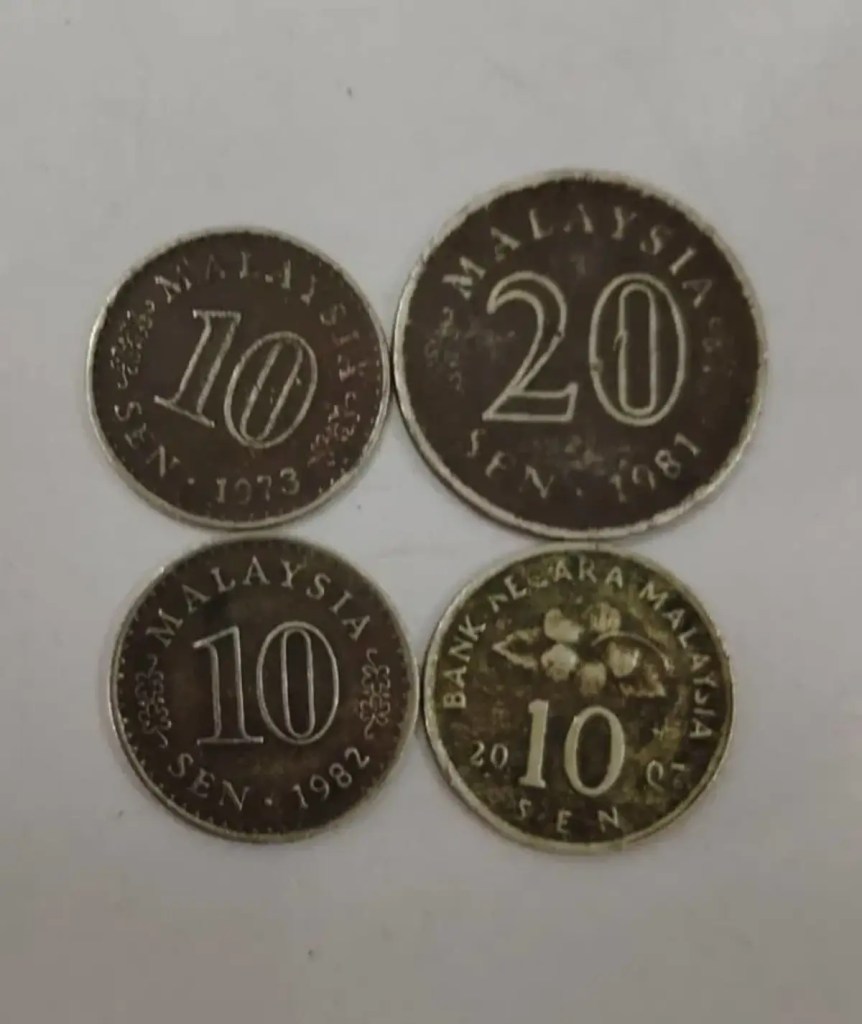
A customer in Malaysia was recently caught off guard when a shop refused to accept his 20 sen coin during checkout. The reason? The coin looked dark and old.
The man, who is in his 40s, felt confused and frustrated. After all, he was using legal Malaysian currency. He later brought up the issue with Hee Pi Fuan, DAP Taman Pertama branch chairman, hoping the government could clarify whether shops are allowed to reject coins just because they look worn.
What Happened at the Shop?
The incident happened when the customer went to buy two cans of bean paste, each costing RM5.60. His total came up to RM11.20. He handed over RM11 in cash and added a 20 sen coin to make up the difference.
But when he gave the coin to the shop owner, he was told, “We don’t take dark ones.”
(Image: Oriental Daily)
The customer asked why the coin was being rejected. The shop owner’s reply was simply, “If it were you, would you take it?”
The man answered that he would, explaining the coin had been given to him as change elsewhere. He saw no reason it should not be accepted.
Is It Legal to Reject a Coin That Looks Old?
According to Hee, coins naturally darken over time, especially when they have been in circulation for many years. The coin in question was issued in 1981, making it over 40 years old. While it might not look shiny anymore, it is still a valid coin issued by the Malaysian government.
Hee said that unless the government announces that certain coins are no longer in use, shopkeepers have no valid reason to reject them.
He compared this situation to that of damaged banknotes. If someone draws on a banknote or defaces it, it makes sense for a shop to reject it. But a coin simply showing signs of age is a different matter. It is not damage caused on purpose, and refusing to accept it is not fair to the customer.
Confusion Between Coin Sizes
Hee also brought up another issue that some members of the public had raised. The 20 sen and 50 sen coins in Malaysia now both have a gold colour and are quite similar in size. This has led to confusion during transactions.
Some shopkeepers or customers may mistake a 20 sen coin for a 50 sen coin, which could result in accidental overpayment or underpayment. If unnoticed, someone could easily lose 30 sen in a simple mistake.
Hee suggested that the government consider bringing back the older version of the 20 sen coin, which was silver in colour and slightly larger. This would make it easier for people to tell the two coins apart and avoid confusion during purchases.
Samuel writes about personal finance and financial news, focusing on how banking updates, policies, and promotions affect everyday money decisions. He enjoys making complicated financial topics easier to follow. Outside of writing, he spends his time watching TV shows and occasionally convincing himself he will only watch one episode.
Samuel writes about personal finance and financial news, focusing on how banking updates, policies, and promotions affect everyday money decisions. He enjoys making complicated financial topics easier to follow. Outside of writing, he spends his time watching TV shows and occasionally convincing himself he will only watch one episode.










Comments (0)