Deputy Finance Minister: Government Monitoring Effects Of OPR Increases On Consumer Loan Repayments

Nur Adilah Ramli
10th August 2022 - 3 min read
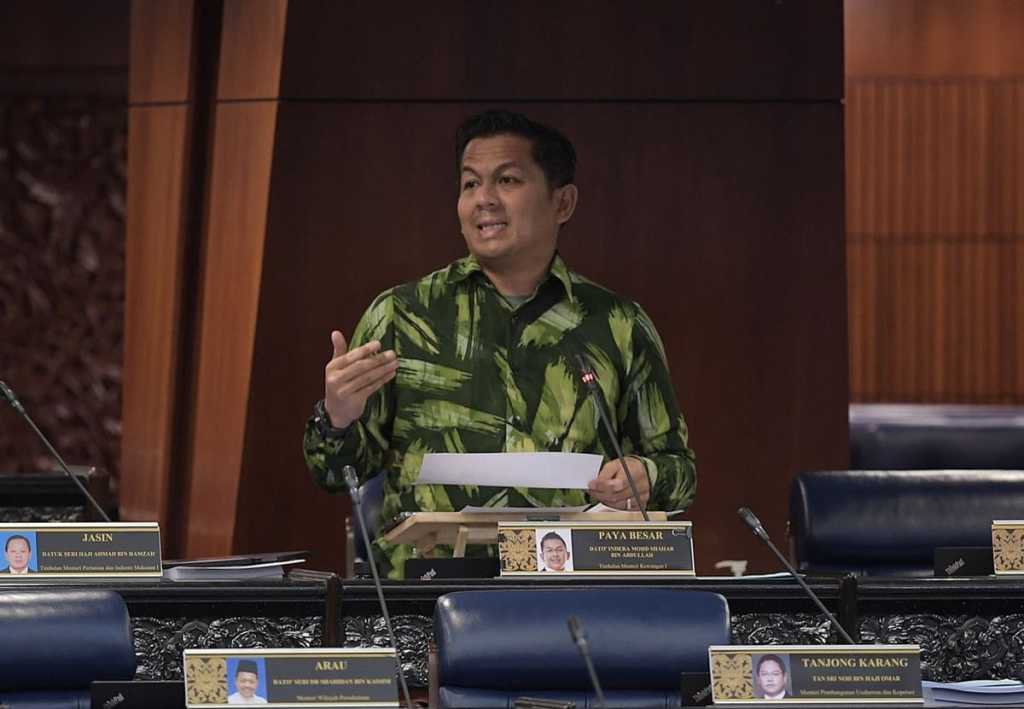
Deputy Finance Minister I Datuk Mohd Shahar Abdullah has said that the government is actively monitoring the effects of the overnight policy rate (OPR) increases on the amount of consumer loan repayments. He also noted that the increases should not significantly impact the economy or the people, especially the B40 income group, as they are being done in a controlled manner.
During a parliamentary session, Datuk Mohd Shahar explained that the B40 group will not be significantly impacted because one-third of their loans are fixed-rate loans, including car loans and personal financing. He also highlighted that various assistance programmes have already been put in place to assist financially vulnerable borrowers, such as targeted loan repayment assistance by banks and advisory services by the Credit Counselling and Debt Management Agency (AKPK).
Meanwhile, small and medium enterprises (SMEs) that are in need of assistance can tap into BNM’s Fund for SMEs. Established by Bank Negara Malaysia (BNM), the facilities provided include the Micro Enterprises Facility (MEF) and the Business Recapitalisation Facility (BRF).

Moreover, Datuk Mohd Shahar stated that the decision by BNM to raise the OPR by 25 basis points (bps) last May and another 25 bps in July, was made when the country’s economy was beginning to recover. “When the economic indicators are showing positive signs such as the unemployment rate decreasing and foreign direct investment (FDI) increasing, it is timely for BNM to increase the OPR,” he said, adding that the total amount of the OPR hike is still under control.
Datuk Mohd Shahar also remarked that the government is aware that a drastic and significant increase in the OPR can adversely affect the country’s economic growth and the people’s well-being. He cited several countries as examples, including the United States, the Philippines, and Turkey – all of which are facing soaring inflation rates after implementing significant rate hikes.
As such, Malaysia will take care to adjust its OPR gradually, complemented by various measures to control the increase in prices of basic goods and services. This, in turn, will ensure that Malaysia’s inflation rate remains at a moderate level.

“This step can further prevent hyperinflation, which is when the inflation rate remains at a very high level from one month to the next, so much so that it can erode the value of a country’s currency,” Datuk Mohd Shahar further explained, adding that Malaysia’s inflation rate in 2022 is expected to range between 2.2% to 3.2%. Headline inflation from January to June is recorded at 2.5%.
Malaysia’s OPR – which currently stands at 2.25% – is expected to settle somewhere between 2.50% to 2.75% by the end of this year. Several local investment banks and financial and research institutions have predicted that the OPR will be gradually increased over the remaining two Monetary Policy Committee (MPC) meetings for 2022, set to take place in September and November.
(Source: The Edge Markets [1, 2])
About THE AUTHOR
Nur Adilah Ramli
Most Viewed Articles
Most Viewed Articles
Personal Finance News
Petrol Price Malaysia Live Updates (RON95, RON97 & Diesel)
We provide weekly updates on every Friday at 5pm on the prices of RON95, RON97 and Diesel in Malaysia and a chart that shows the movement of fuel prices across a 6-week period. Bookmark this page now!

Personal Finance News
Rakyat Digital Portal Offers Free Coursera And AI Access
Malaysians can now get free access to Coursera courses and leading AI applications through the newly launched Rakyat […]

Personal Finance News
1 In 8 Malaysians Is Now Aged 60 Or Older
Malaysia’s population is ageing faster than its birth rate can keep pace, with 4.2 million residents, or 12.3% […]
Personal Finance News
DOSM: June Inflation Eases To 1.9% As Transport Costs Slow
Malaysia’s inflation rate eased to 1.9% in June 2026, down from 2.0% in May, according to the latest […]
Related articles



Comments (0)