Home loan instalments, car financing, and savings returns often move in the same direction as Bank Negara Malaysia’s policy rate. For now, economists expect those borrowing costs to stay stable through 2026.
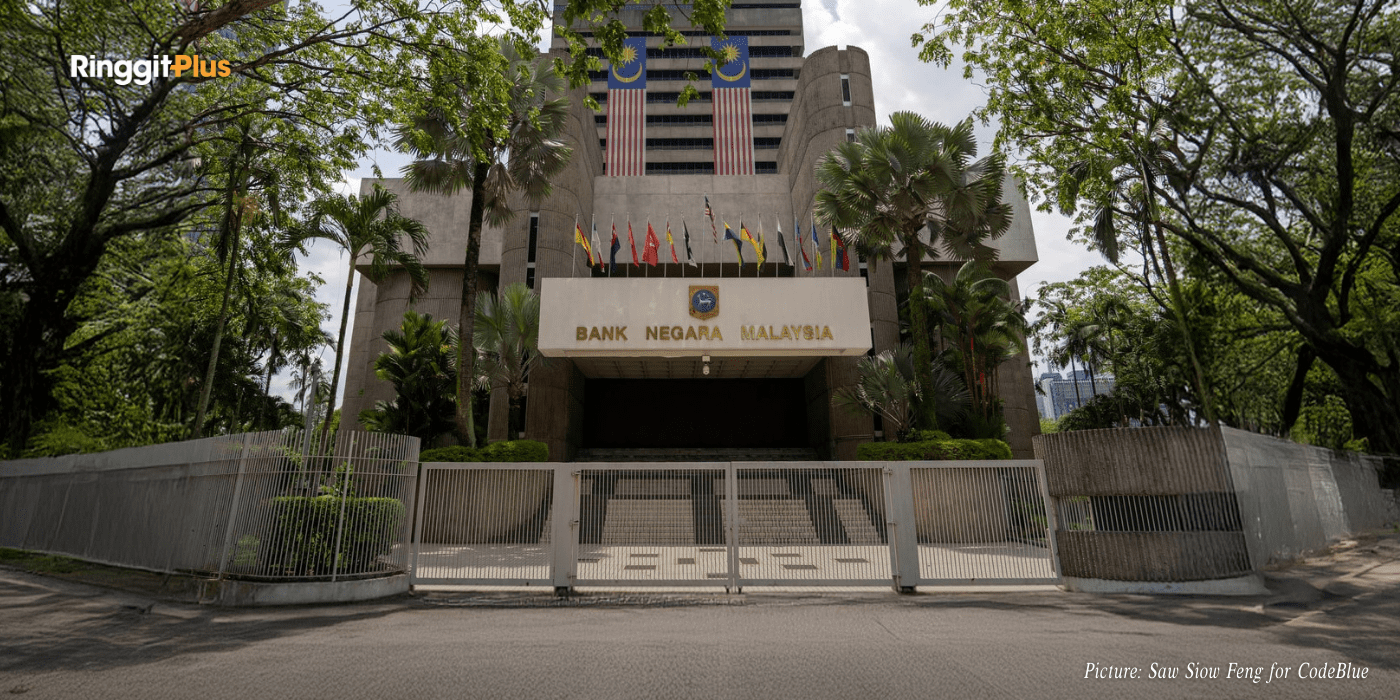
Bank Negara Malaysia (BNM) decided this week to keep the overnight policy rate (OPR) at 2.75%, a move widely expected by economists surveyed by Bloomberg. Most analysts believe the central bank is likely to maintain this level unless global economic conditions change significantly.
Economists Expect Borrowing Costs To Remain Stable
For households and businesses, the OPR matters because it influences how banks price loans and deposits.
When the OPR rises, borrowing typically becomes more expensive. Mortgage repayments, personal loans, and business financing costs may increase. When the rate falls, loan repayments can ease while savings returns often decline.
At the moment, most economists expect BNM to keep the rate unchanged through 2026. Analysts at United Overseas Bank (UOB) said the central bank’s latest statement suggests a preference to maintain the current policy stance unless inflation rises unexpectedly or global conditions worsen.
BNM’s message indicates that policymakers are watching global developments closely, but do not yet see a need to tighten monetary policy.
Financial Markets Are Beginning To Price In A Possible Rate Increase
Even though economists expect rates to stay unchanged, some investors are positioning for the possibility that borrowing costs could eventually rise.
Interest rate swap markets are currently pricing in slightly more than a 20% chance that BNM could raise the OPR by 0.25 percentage points within the next 12 months.
That expectation is largely tied to global risks rather than domestic economic weakness. Escalating tensions in the Middle East have raised concerns about energy supply disruptions, which could push oil prices higher and eventually feed into inflation.
Malaysia’s economy has also remained relatively strong, with growth reaching 6.3% in the fourth quarter of 2025. Strong growth combined with rising prices could, in theory, pressure the central bank to raise rates.
Energy Prices Could Eventually Feed Into Inflation
For consumers, the main channel where global tensions could affect daily expenses is through energy prices.
Economists note that if oil prices rise sharply, transportation costs and production expenses across the economy may also increase. These higher costs can eventually feed into consumer prices.
CIMB estimates that a US$10 increase in Brent crude oil prices could raise Malaysia’s headline inflation by about 0.1 percentage points, assuming subsidised petrol remains capped at RM1.99 per litre.
Other potential knock-on effects include higher electricity tariffs through the automatic fuel adjustment mechanism, as well as increased costs for transporting goods and producing petrochemical-based materials.
However, inflation in Malaysia remains relatively contained for now, staying below 2%. As long as price pressures remain moderate, economists expect BNM to keep interest rates steady.
Export Demand Could Also Be Affected
Another area economists are watching is Malaysia’s export sector. A prolonged geopolitical conflict could weaken global demand for electronics, which remains one of Malaysia’s largest export industries. Slower export growth could reduce economic momentum later in the year.
At the same time, higher commodity prices could partly offset this effect for Malaysia, which exports oil, gas, and other raw materials.
Because these factors pull the economy in different directions, economists generally believe there is not yet enough evidence to justify a rate change.
What This Means For Borrowers And Savers
For borrowers, the current outlook suggests that loan repayments are unlikely to change significantly in the near term.
Mortgage and financing rates linked to the OPR should remain broadly stable as long as the policy rate stays at 2.75%. This means monthly instalments for existing floating-rate loans are unlikely to shift dramatically in the short term.
For savers, deposit rates may also remain relatively steady since banks usually adjust deposit returns alongside policy rate movements.
The key factor to watch over the coming year will be inflation. If global energy prices surge and start pushing up domestic prices, the central bank may face greater pressure to raise rates.
For now, however, Malaysia’s relatively stable inflation and steady economic growth give policymakers room to keep borrowing costs unchanged while monitoring how global risks unfold.
Follow us on our official WhatsApp channel for the latest money tips and updates.
Samuel writes about personal finance and financial news, focusing on how banking updates, policies, and promotions affect everyday money decisions. He enjoys making complicated financial topics easier to follow. Outside of writing, he spends his time watching TV shows and occasionally convincing himself he will only watch one episode.
00votes
Article Rating
SHARE
About THE AUTHOR
Samuel Chua
Samuel Chua
Samuel writes about personal finance and financial news, focusing on how banking updates, policies, and promotions affect everyday money decisions. He enjoys making complicated financial topics easier to follow. Outside of writing, he spends his time watching TV shows and occasionally convincing himself he will only watch one episode.
We provide weekly updates on every Friday at 5pm on the prices of RON95, RON97 and Diesel in Malaysia and a chart that shows the movement of fuel prices across a 6-week period. Bookmark this page now!








Comments (0)