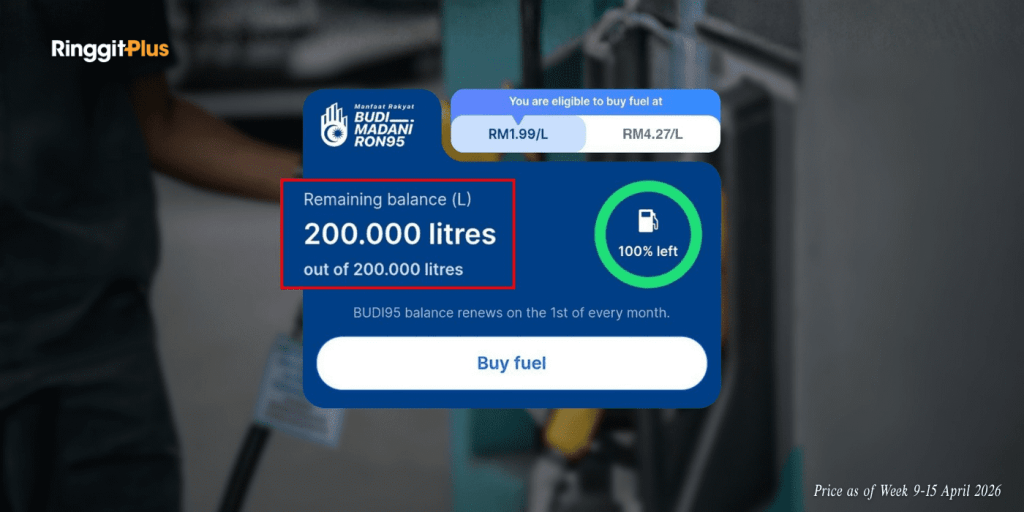
Claims that Malaysians can request a higher monthly allocation of subsidised RON95 petrol under the BUDI95 scheme are false. The Ministry of Finance (MOF) confirmed on 7 April that the 200-litre cap is still in force, and that the application button on the BUDI95 portal has been disabled.
The clarification follows a wave of circulating messages suggesting that users could apply through the portal to raise their personal quota beyond the current limit.
The Application Button Was Never For Public Use
An application function labelled “Permohonan Penambahan Kelayakan” did exist on the BUDI95 portal during the scheme’s early rollout, but the MOF said it was not designed for general requests. It was built for specific, verified operational cases such as e-hailing drivers and registered boat owners, subject to set eligibility criteria.
Once it became clear the feature was being widely misread as an open channel for personal quota increases, the ministry pulled it down entirely.
200 Litres Remains The Standard Monthly Limit
The monthly quota was reduced from 300 litres to 200 litres effective 1 April, as the government moved to contain a subsidy bill that has surged to an estimated RM4 billion a month amid rising global oil prices.
At the subsidised rate of RM1.99 per litre, the 200-litre cap allows eligible users to purchase up to RM398 worth of RON95 per month. The government estimates it absorbs around RM500 in subsidy costs per recipient at this level. Any fuel consumed beyond the monthly quota is charged at the unsubsidised market price, which currently stands at RM4.27 per litre.
The MOF said its data shows the 200-litre limit is sufficient for around 90% of BUDI95 users, with average monthly consumption sitting closer to 100 litres.
The Gap Between The Two Prices Adds Up Quickly
For most drivers, the April quota reduction changes very little day to day. Nine in ten users do not come close to the 200-litre ceiling, so the adjustment has no practical effect on their monthly fuel spending.
The pressure falls on a smaller group, mainly those with long daily commutes, limited access to public transport, or work that requires regular driving. For these users, the difference between the subsidised and unsubsidised price is not trivial. At RM1.88 per litre more expensive, a driver who exceeds the cap by 50 litres in a month pays roughly RM94 more than they would under the previous 300-litre arrangement.
The MOF said it will continue monitoring global energy conditions and make further adjustments where needed, but gave no indication that the current limit is under review. For now, the 200-litre cap stands, the portal button is gone, and any messages suggesting otherwise should not be taken at face value.
Follow us on our official WhatsApp channel for the latest money tips and updates.
Christina writes about personal finance with an eye for making the complicated feel straightforward. She is drawn to the everyday money decisions people face and genuinely enjoys finding the clearest way to explain them. Between articles, she is probably napping, on a hiking trail, or terrorising her sister’s cats.
00votes
Article Rating
SHARE
About THE AUTHOR
Christina Chandra
Christina Chandra
Christina writes about personal finance with an eye for making the complicated feel straightforward. She is drawn to the everyday money decisions people face and genuinely enjoys finding the clearest way to explain them. Between articles, she is probably napping, on a hiking trail, or terrorising her sister's cats.
We provide weekly updates on every Friday at 5pm on the prices of RON95, RON97 and Diesel in Malaysia and a chart that shows the movement of fuel prices across a 6-week period. Bookmark this page now!







Comments (0)