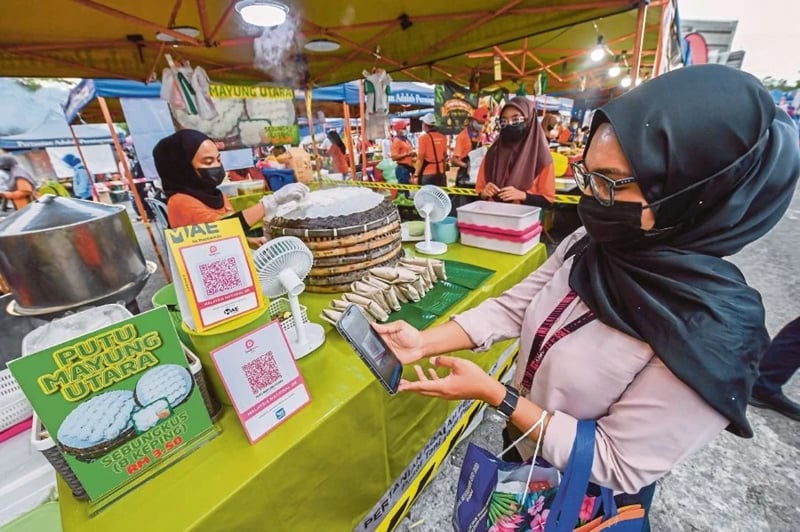
Malaysia recorded a sharp rise in digital payment use in May, with electronic money (e-money) transactions increasing by 70.2% year-on-year to RM21.5 billion. The data indicates a continued increase in the use of digital platforms for everyday purchases and small-scale transactions.
The survey also found that 95% of respondents use at least one e-wallet app, supporting the sharp rise in e-money usage seen in DOSM’s latest trade data.
Real-Time and Online Payments Lead the Way
Real-time retail payments remained the most popular form of digital transaction, reaching RM289.4 billion in May. Internet banking followed with RM39.2 billion in transactions. Credit card spending held steady at RM18.7 billion, while debit card usage increased by 8% to RM14.1 billion.
The growth in digital payment platforms is part of Malaysia’s ongoing financial digitalisation and aligns with efforts to modernise retail and consumer services.
Consumer Spending Rises During Holiday Season
Consumer spending increased in May, with wholesale and retail trade rising 4.4% year-on-year to RM154.3 billion, according to official data from the Department of Statistics Malaysia (DOSM).
The increase was driven by three main sectors. Retail trade rose by 4.9% to RM67.1 billion, reflecting strong consumer activity across stores and digital platforms. Wholesale trade also saw growth, climbing 4.7% to RM68.2 billion, supported by steady demand for food, household goods, and medical supplies. Meanwhile, motor vehicle sales increased by 1.2% to RM19 billion, contributing modestly to the overall rise in trade.
Retail Sector Sees Steady Growth
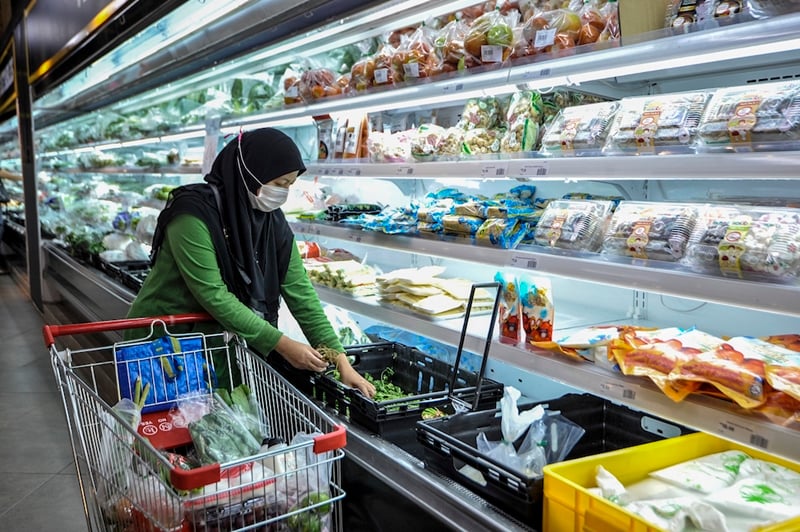
General retail sales in stores such as supermarkets and provision shops rose by 4% to RM25.9 billion. Specialised retail stores, including pharmacies, cosmetic shops, and fashion outlets, recorded a 5.2% rise to RM14.1 billion.
(Image: Malay Mail/Shafwan Zaidon)
Sales of household goods such as furniture, hardware, and textiles also increased by 5.6%. Food, beverages, and tobacco saw a 6.4% boost, while automotive fuel recorded a 5.7% rise.
Wholesale Trade Benefits from Higher Food and Medical Sales
The wholesale sector grew 4.7% year-on-year, supported by increased demand for household goods and food items. Sales of household goods reached RM14.7 billion, a 7.4% rise, largely due to stronger pharmaceutical and medical product sales.
Food, beverages, and tobacco also performed well. Sales in this category grew by 7.7% to RM14.1 billion, driven by higher demand for seafood, poultry, meat, and eggs.
Vehicle Sales See Modest Increases
Meanwhile, sales in the motor vehicle segment rose by 1.2% in May, with growth supported by several key areas. Motor vehicle sales edged up 0.2% to RM9.9 billion. Sales of motor vehicle parts and accessories grew by 2.1%, reaching RM5.1 billion. The most notable increase came from sales, maintenance, and repair of motorcycles, which jumped 8.2% to RM1.2 billion, indicating growing demand for two-wheeled transport and related services.
The Road Transport Department also reported 74,393 new vehicle registrations in May, up slightly from 73,901 the previous year.
Online Retail and Volume Index Trends
Online retail sales rose by 2.2% compared to May last year but fell 3.4% from April due to seasonal adjustments.
The volume index, which reflects changes in trade volume excluding price effects, increased by 4.1% year-on-year. On a seasonally adjusted month-on-month basis, it dipped slightly by 1.6%.
Malaysia’s Payment Landscape Continues to Evolve
DOSM highlighted that the rise in digital payments reflects the continued expansion of Malaysia’s payment infrastructure. The strong growth in e-money and real-time platforms indicates growing trust in digital transactions among consumers and businesses alike.
The latest figures suggest that Malaysia is moving steadily toward a more cashless, technology-driven economy.
For more insights into how Malaysians are managing money, saving, and spending in a digital world, stay tuned for the release of RMFLS 2025.
Follow us on WhatsApp for money news that matters.
Samuel writes about personal finance and financial news, focusing on how banking updates, policies, and promotions affect everyday money decisions. He enjoys making complicated financial topics easier to follow. Outside of writing, he spends his time watching TV shows and occasionally convincing himself he will only watch one episode.
Samuel writes about personal finance and financial news, focusing on how banking updates, policies, and promotions affect everyday money decisions. He enjoys making complicated financial topics easier to follow. Outside of writing, he spends his time watching TV shows and occasionally convincing himself he will only watch one episode.
We provide weekly updates on every Friday at 5pm on the prices of RON95, RON97 and Diesel in Malaysia and a chart that shows the movement of fuel prices across a 6-week period. Bookmark this page now!






Comments (0)