The conflict in West Asia has pushed crude oil prices toward US$120 (approximately RM482) per barrel, but the oil itself is only part of the story.
When people think about rising oil prices, they usually think about supply and demand. Too little oil, too many buyers, prices go up. That’s true, but it leaves out the cost of moving oil from where it is pumped to where it is needed.
Since the global energy crisis began on 28 February 2026, crude oil prices have risen by around 40%. Over the same period, shipping costs for oil tankers have increased by between 47% and 176%, and insurance premiums for vessels passing through conflict zones have surged by up to 337%. Petronas president and group CEO Tan Sri Tengku Muhammad Taufik Tengku Aziz outlined these figures on RTM’s Bicara Naratif Khas on TV1 on 3 April 2026.
Homuz Strait Keeps The Global Economy Moving
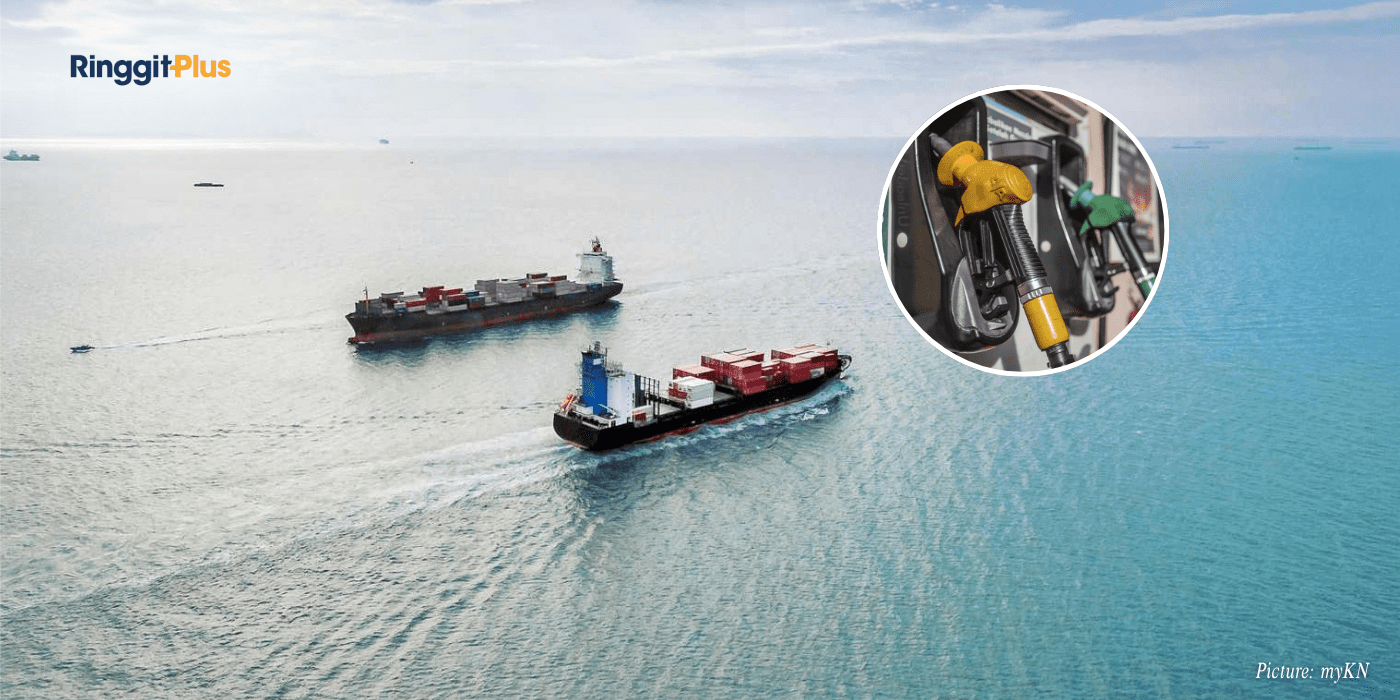
The conflict’s most immediate geographic pressure point is the Strait of Hormuz, a narrow waterway between the Arabian Peninsula and Iran. Roughly 20% of the world’s oil supply passes through it daily, along with a significant share of global liquefied natural gas (LNG).
The strait also carries goods that rarely feature in energy headlines. About 30% of the world’s helium supply, a byproduct of natural gas processing used in medical equipment and electronics manufacturing, transits through it. So does around 30% of global fertiliser supply, including urea, potash, ammonia, and phosphate. Fertiliser prices affect what farmers pay to grow food, which eventually feeds into grocery costs.
Tengku Muhammad Taufik noted that no economy is fully shielded from disruptions in that corridor.
The Gap Between The Headline Price And What Malaysia Actually Pays
There is a difference between the price quoted on financial news and the price that Malaysian refiners actually pay to take delivery of crude oil.
The quoted price reflects market conditions at the time of trade. By the time a cargo arrives in Malaysia, the buyer has also absorbed shipping fees, insurance costs for passing through or near conflict zones, and domestic logistics costs to move the oil onward.
Tengku Muhammad Taufik put a figure on this gap. If crude oil is trading at US$100 (approximately RM402) per barrel on the market, the real cost at the refinery gate could reach US$110 to US$115 (approximately RM442 to RM462) once all delivery-related costs are factored in. That difference adds up quickly when multiplied across the volumes Malaysia imports.
Disruptions to alternative delivery routes, specifically through Fujairah in the United Arab Emirates and Yanbu in Saudi Arabia, have added further pressure as ship owners divert to longer or riskier paths when standard routes become untenable.
What This Means At the Pump And In Your Shopping Basket
Malaysia’s targeted fuel subsidy framework has provided some near-term buffer against the full weight of the price surge reaching consumers at the petrol station. Tengku Muhammad Taufik noted that ongoing supply stabilisation efforts are also part of that short-term response.
Transport operators, manufacturers, and distributors all absorb higher fuel and freight costs before goods reach the shelf. These costs migrate into prices over time, typically without a single headline-worthy moment. Groceries, building materials, and consumer goods transported using petroleum-derived energy are all subject to this pressure, even when the pump price remains temporarily stable.
The 337% rise in insurance premiums compounds this. Insurance costs flow through to almost every price in an import-dependent economy, and Malaysia, which imports substantial volumes of both fuel and food, absorbs that impact across its supply chains.
The conflict began five weeks ago. How long it lasts, and whether alternative shipping routes can absorb the volume being rerouted away from the Strait of Hormuz, will shape how much of this cost eventually reaches everyday prices and how long the current buffer holds.
Follow us on our official WhatsApp channel for the latest money tips and updates.
Christina writes about personal finance with an eye for making the complicated feel straightforward. She is drawn to the everyday money decisions people face and genuinely enjoys finding the clearest way to explain them. Between articles, she is probably napping, on a hiking trail, or terrorising her sister’s cats.
00votes
Article Rating
SHARE
About THE AUTHOR
Christina Chandra
Christina Chandra
Christina writes about personal finance with an eye for making the complicated feel straightforward. She is drawn to the everyday money decisions people face and genuinely enjoys finding the clearest way to explain them. Between articles, she is probably napping, on a hiking trail, or terrorising her sister's cats.
We provide weekly updates on every Friday at 5pm on the prices of RON95, RON97 and Diesel in Malaysia and a chart that shows the movement of fuel prices across a 6-week period. Bookmark this page now!








Comments (0)