If you are still paying off your National Higher Education Fund Corporation loan while trying to build savings or qualify for a home loan, you know that education debt does not disappear quickly. The reminder that repayments are essential is not just administrative language. It determines whether future students can continue to access study financing without disruption.
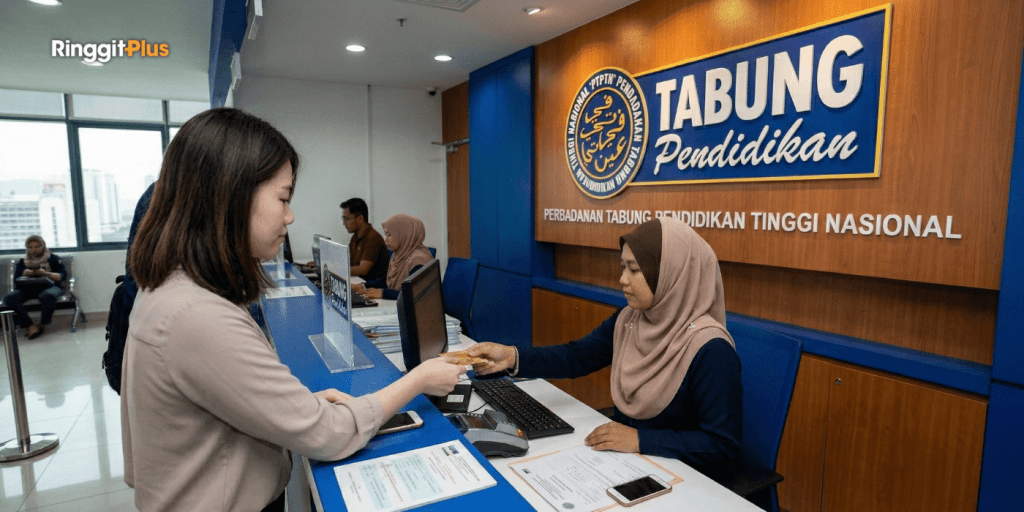
The National Higher Education Fund Corporation, known as PTPTN, receives about RM3 billion annually from the government to support roughly 600,000 existing and new students. That allocation is supported by repayments from past borrowers. When repayments slow, the available pool for new loans tightens, which increases fiscal pressure and limits flexibility in funding future cohorts.
Flexible Repayment Channels Aim To Prevent Escalating Debt Problems
PTPTN chairman Datuk Seri Norliza Abdul Rahim has encouraged borrowers to engage with the agency if they are struggling to repay. Through the #PTPTNBolehBincang and #PTPTNSediaBantu initiatives, borrowers can restructure their repayment schedules based on current financial capacity rather than fixed instalments that may no longer reflect their income situation.
This flexibility is particularly relevant for graduates in contract roles, commission based work, or gig employment where monthly income fluctuates. Adjusting instalments can reduce the likelihood of enforcement action, which may include legal proceedings or travel restrictions that affect career mobility.
However, restructuring does not reduce the principal automatically, nor does it remove the obligation to repay. It addresses timing and instalment size rather than the total debt. Borrowers who ignore repayment entirely remain exposed to enforcement measures, which can create additional financial strain beyond the original loan.
RM3 Billion Allocation Confirms Loans Remain Central To Education Access
The continued RM3 billion annual allocation signals that Malaysia’s higher education financing model remains heavily loan based. Around 600,000 students rely on PTPTN funding each year, meaning the system depends on both government support and borrower repayments to remain operational.
For current borrowers, this does not introduce new discounts or automatic relief. Repayment expectations remain in place. The short term financial impact is limited unless an individual chooses to engage with restructuring options.
Over the next one to three years, unless broader reforms are introduced, study loans will likely continue to play the primary role in tertiary education access, with repayment forming a core part of the model’s sustainability.
Expanded Matching Grants Encourage Early Education Savings
PTPTN is also promoting early savings through the National Education Savings Scheme, known as Simpan SSPN. The intention is to reduce future dependence on loans by encouraging parents to accumulate funds before their children enter higher education.
Under Simpan SSPN Prime, depositors receive income tax relief of up to RM8,000 annually, along with free takaful coverage, competitive dividends, and government guaranteed and syariah compliant savings features. Families earning up to RM4,000 a month qualify for a matching grant of up to RM10,000, which effectively increases savings beyond their own contributions if eligibility conditions are met.
Budget 2025 expanded this support through the Ihsan Matching Grant Initiative, known as Gapai, for a two year period. Families earning between RM4,000 and RM6,000 a month can now qualify for matching grants of up to RM5,000 per family. This measure is already in force under Budget 2025.
The financial impact depends on the ability to contribute consistently. Households with surplus cash can use tax relief to reduce annual tax payable while building a dedicated education fund. Families with tight monthly budgets may find it difficult to commit regular savings, which limits the practical benefit despite eligibility.
The System Still Relies On Borrowing, But Early Planning Changes The Outcome
Malaysia’s higher education financing framework remains fundamentally loan driven. Borrowers are expected to repay, and enforcement mechanisms remain part of the structure. What has evolved is the emphasis on engagement and early preparation.
Graduates who communicate with PTPTN can potentially avoid escalating penalties by restructuring repayments in line with income capacity. Parents who take advantage of matching grants and tax relief can reduce the amount their children need to borrow in the future.
In the coming years, the structure is unlikely to shift away from loans without significant policy reform. What can change at the individual level is how debt is managed and whether savings are built early enough to reduce reliance on borrowing.
For working adults repaying PTPTN today, the immediate decision is whether to formalise a manageable repayment plan instead of risking enforcement action. For parents, the question is whether current tax incentives and matching grants justify adjusting the household budget to build an education fund now rather than facing larger loan obligations later.
Follow us on our official WhatsApp channel for the latest money tips and updates.
Samuel writes about personal finance and financial news, focusing on how banking updates, policies, and promotions affect everyday money decisions. He enjoys making complicated financial topics easier to follow. Outside of writing, he spends his time watching TV shows and occasionally convincing himself he will only watch one episode.
00votes
Article Rating
SHARE
About THE AUTHOR
Samuel Chua
Samuel Chua
Samuel writes about personal finance and financial news, focusing on how banking updates, policies, and promotions affect everyday money decisions. He enjoys making complicated financial topics easier to follow. Outside of writing, he spends his time watching TV shows and occasionally convincing himself he will only watch one episode.
We provide weekly updates on every Friday at 5pm on the prices of RON95, RON97 and Diesel in Malaysia and a chart that shows the movement of fuel prices across a 6-week period. Bookmark this page now!









Comments (0)