When Leong took over his family’s hardware business in 2019, expanding the company felt like the obvious next step. Orders were growing, and demand from both retail and wholesale customers was steady.
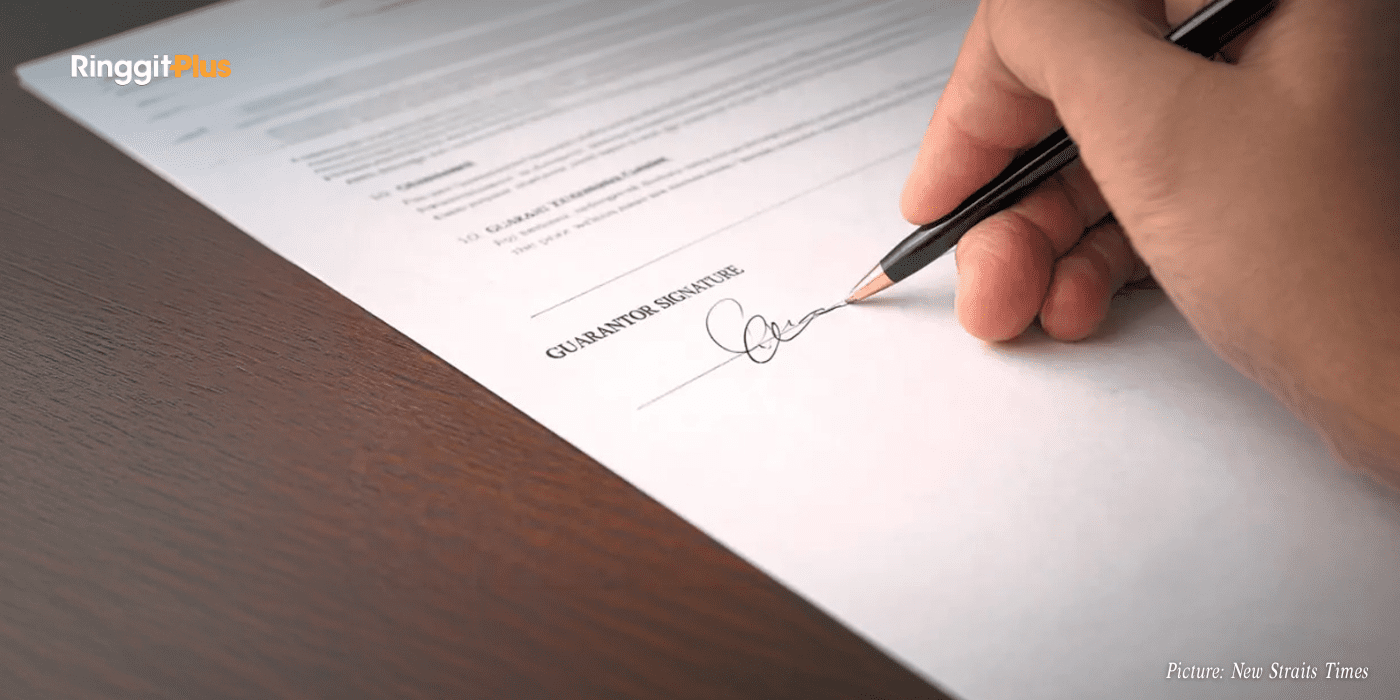
To support that growth, the company took out a RM500,000 bank loan. As part of the process, Leong signed on as a corporate guarantor.
“I guaranteed the loan because the bank required it. I believed the business could handle the repayments,” said the 50-year-old from Klang.
A year later, the COVID-19 pandemic disrupted that plan. Construction projects stalled, customers delayed payments, and cash flow tightened.
“We had to lay off some workers and I even used my personal savings to service the loan for some time.”
The business eventually fell behind on repayments, and the bank continued to pursue the outstanding debt. With no way to catch up, Leong filed for bankruptcy.
“I never expected things to turn out like this when I signed the guarantee. At that time, I thought it was just part of running the business.”
A Common Requirement Many Business Owners Accept
For many small and medium-sized enterprises in Malaysia, banks require directors or major shareholders to sign personal guarantees before approving loans. It is often treated as part of the process of securing financing.
Adam, 48, from Kuala Lumpur, had a similar experience.
He and his brothers took a loan to stabilise their food supply business after the pandemic, when delayed payments and weaker demand affected cash flow.
“At that time, we just agreed because we needed the funds to continue operating,” he said.
Only later did he realise what that agreement meant.
“I didn’t know the bank could come after me personally. I only understood the risk later.”
With the business still recovering, the pressure has not eased.
“The recovery has been very hard, especially with the current economic conditions. Costs have gone up and business is still not like before.”
When A Business Loan Becomes A Personal Risk
A personal guarantee removes the usual separation between a company and the individual behind it.
In a private limited company, debts are typically contained within the business. Once a guarantee is signed, that no longer applies to the loan in question. If the company cannot repay, the lender can pursue the guarantor directly, including personal savings, property, and other assets.
Under the Insolvency Act 1967 [PDF], creditors can initiate bankruptcy proceedings if the unpaid debt is at least RM100,000 and remains unresolved. Once declared bankrupt, an individual’s finances fall under the Insolvency Department, with restrictions on borrowing and asset ownership.
For Leong, what began as a plan to expand the business eventually affected his personal finances.
Signing a personal guarantee means that risk exists from the start, even if the business appears stable.
Follow us on our official WhatsApp channel for the latest money tips and updates.
As a creative content writer, Eloise has covered finance, business, lifestyle topics, and even moonlights as a singer-songwriter outside of RinggitPlus. Her current interests are learning the best ways to optimise spending and credit card hacks to gain more airline miles.
00votes
Article Rating
SHARE
About THE AUTHOR
Eloise Lau
Eloise Lau
As a creative content writer, Eloise has covered finance, business, lifestyle topics, and even moonlights as a singer-songwriter outside of RinggitPlus. Her current interests are learning the best ways to optimise spending and credit card hacks to gain more airline miles.
We provide weekly updates on every Friday at 5pm on the prices of RON95, RON97 and Diesel in Malaysia and a chart that shows the movement of fuel prices across a 6-week period. Bookmark this page now!







Comments (0)