Alex Cheong Pui Yin
Previously covered recruitment-related stories and had a short stint as a copywriter for the property industry. She subsequently developed an interest in investment and robo-advisors.

7th July 2023 - 3 min read
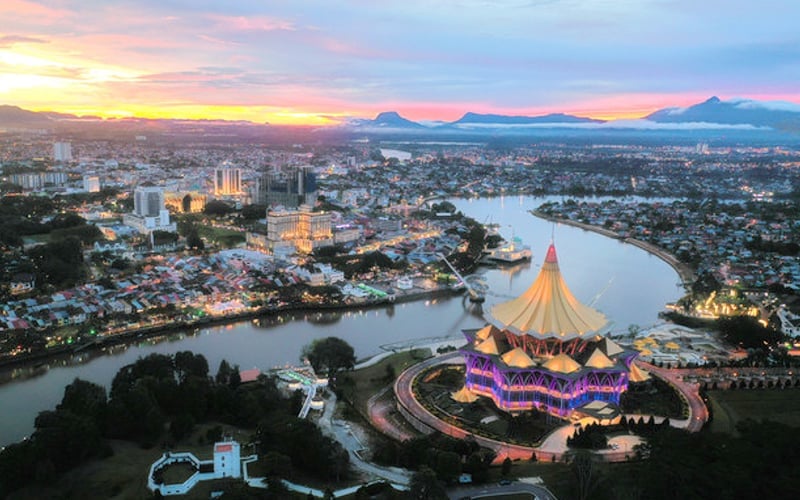
The World Bank said that Sarawak has achieved high income status as a state, based on its gross national income (GNI) per capita of more than US$13,205 (RM61,442).
“We (World Bank) just released our latest high-income data. 83/218 countries are now high income. Newest entrants: Guyana and American Samoa. While Malaysia’s quest to join the high-income club continues, there is one nice surprise: Sarawak is now a high-income state!” said the lead economist of the World Bank, Apurva Sanghi in a Twitter post.
For context, the World Bank would annually sort the world’s economies into four income groups based on its own set of income classifications, namely low, lower-middle, upper-middle, and high income. The classifications for each group are also updated on 1 July each year based on the GNI per capita that was recorded in the previous year (converted to US$). Here are the latest income classifications used:
Aside from the newly crowned Sarawak, other states in Malaysia that have also been acknowledged as high-income states to date include Penang, Labuan, and Kuala Lumpur:
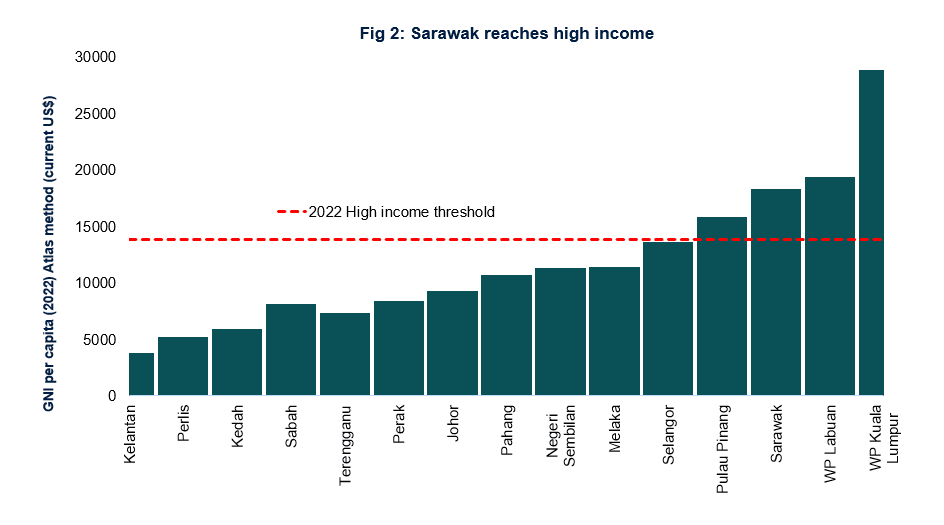
Sanghi also explained that to conduct its calculations for Malaysia, the World Bank had obtained the state-level gross domestic product (GDP) data from the Department of Statistics Malaysia (DOSM). Following that, the figures were converted to US$ with the application of the World Bank Atlas method, and then divided by the mid-year population.
To explain, the conversion of currency to US$ by applying the Atlas method is different from using the more straightforward current market exchange rates. This specific method is designed to help reduce the price and exchange rate fluctuations, as well as modulate impacts on estimates of economic size and growth – thereby giving the World Bank a more accurate comparison of national incomes.
Meanwhile, deputy minister in the state premier’s department (labour, immigration, and project monitoring) Gerawat Gala has dismissed Sanghi’s claims, stressing that Sarawak has yet to achieve the coveted high-income status. The state government’s data from its Post-Covid Development Strategy (PCDS) 2030 showed that the state’s current income per capita was still lower than US$13,000, he said.
“I’m not sure how the World Bank worked out that Sarawak’s GNI (has exceeded the high-income threshold of) US$13,205, which looks very high to me. Sarawak is not a high-income state yet. Our PCDS 2030 is targeted to make Sarawak a high-income state by 2030,” Gerawat said.
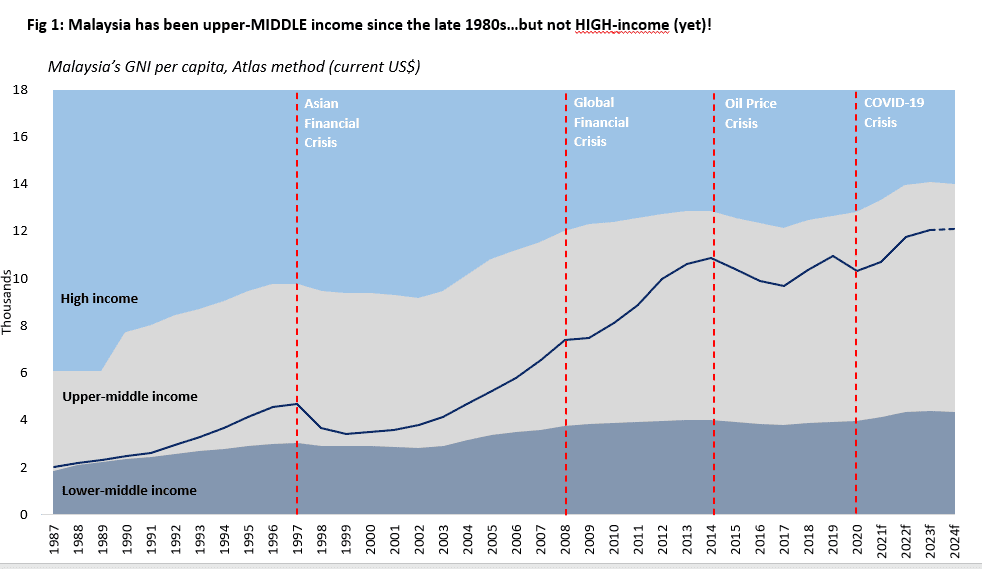
As for Malaysia as a whole, the country has been categorised as an upper-middle income country since the late 80s. The World Bank had previously commented that Malaysia needs to see improvements in six areas before it can become a high-income country, such as raising the participation of female labour force, creating well-paying and high quality jobs, as well as modernising institutions.
More recently, Economy Minister Rafizi Ramli had also commented that Malaysia stands a chance of becoming a high-income nation by 2026 if its economic growth stays above 4% for the next three years. This is in addition to having a stronger currency.
(Sources: Malay Mail, Free Malaysia Today)
Previously covered recruitment-related stories and had a short stint as a copywriter for the property industry. She subsequently developed an interest in investment and robo-advisors.




Comments (0)