Alex Cheong Pui Yin
Previously covered recruitment-related stories and had a short stint as a copywriter for the property industry. She subsequently developed an interest in investment and robo-advisors.

16th February 2023 - 3 min read

Economy Minister Rafizi Ramli said that Malaysia will be able to become a high-income nation by 2026, provided its economic growth stays above 4% for the next three years. A stronger currency, too, will help to accelerate the country’s transition to high-income status.
“If the economic growth from 2023 to 2025 is around 4% to 5% and performing well, we can reach the status of a high-income nation as early as 2026. It would be better (if) our economic growth exceeds 5% within two to three years; the aspiration of reaching high-income country status will be sooner,” said Rafizi.
For context, Bank Negara Malaysia (BNM) recently reported that Malaysia saw an encouraging annual gross domestic product (GDP) growth of 8.7% in 2022, but quarterly growth for the fourth quarter of the year (4Q22) has continued to slow from 14.2% in the previous quarter to 7%. Going forward, a similar trend is expected to persist, and combined with the possibility of a slower global economic growth as well, it is highly likely that the government will need to contend with a challenging economic environment in 2023.

Aside from that, Rafizi also noted that Malaysia’s transition to high-income status can also be hastened by a stronger value of the ringgit, which ultimately leads to a better foreign currency exchange. This will enable the nation to catch up quickly to existing high-income countries, which typically have a GDP of US$15,200 per capita.
“If the value of the ringgit is stronger than the current value of 4.3 against the US dollar in the next one to two years, it will also accelerate the country’s status to reach a high-income country,” Rafizi shared, adding that Malaysia is, unfortunately, still trapped in a middle-income economy today despite being so close to crossing the high-income threshold.
The minister further shared that Malaysia had missed its first target of becoming a high-income nation back in 2020 due to its heavy reliance on a low-waged and labour-intensive economy. As such, one of the government’s top priorities now is to roll out policies that could help to increase salaries, especially for the hardcore poor and B40 households. One possibility is to introduce a national wage growth policy, he said, but the process will take time as it involves the cooperation of multiple agencies and ministries.
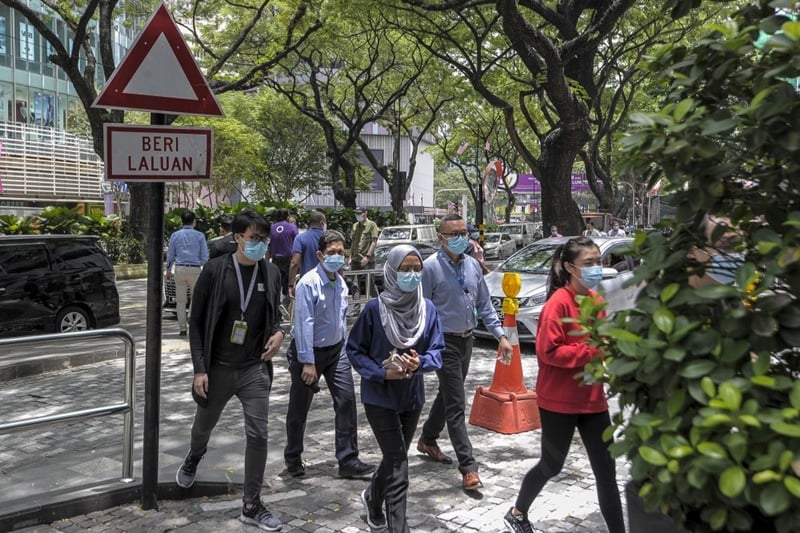
Similarly, Rafizi said that his ministry, too, will prioritise economic programmes that focus on two key factors during its planning, namely cost of living and income. “The Economy Ministry also places these two matters as the focus in improving the country’s economic policies and the people’s economic programmes that take an integrated implementation approach. Policies related to the employment of the people will be brought to the National Economic Action Council (NEAC), which is chaired by the prime minister, so that national policies are aligned towards a comprehensive salary growth target for all workers,” he said.
In the meantime, to kick things off, Rafizi said that the Economy Ministry is set to launch the Inisiatif Pendapatan Rakyat programme on 26 February 2023, which aims to increase the people’s income, starting with B40 households and the hardcore poor.
(Sources: Malay Mail, The Edge Markets)
Previously covered recruitment-related stories and had a short stint as a copywriter for the property industry. She subsequently developed an interest in investment and robo-advisors.





Comments (0)