Alex Cheong Pui Yin
Previously covered recruitment-related stories and had a short stint as a copywriter for the property industry. She subsequently developed an interest in investment and robo-advisors.

29th June 2020 - 3 min read
(Image: Reuters)
Despite the economic challenges faced amidst the Covid-19 pandemic, Malaysia is capable of transitioning from a middle-income nation to a high-income country within a decade, according to a new World Bank report. However, this is provided the country carries out reforms in six major areas.
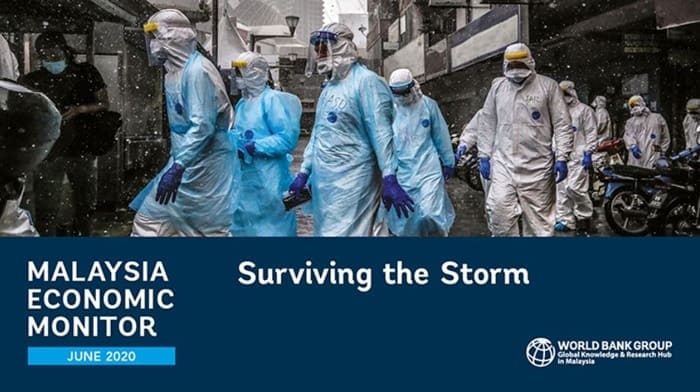
According to the World Bank’s latest biannual Malaysia Economic Monitor report (June edition), the six areas that Malaysia needs to work on include:
The World Bank highlighted that while Malaysia has the potential to become a high-income nation, it is also impeded by several issues when compared to other countries that have achieved high-income status in recent years. Specifically, Malaysia is growing slower, has a lower share of high-skilled employment, and suffers from greater inequality.
“In particular, there is a growing sense among Malaysia’s middle-class that the proceeds of growth have not been equitably shared between the richest and the poorest, and that increases in the cost of living are outstripping incomes, especially in urban areas,” the report elaborated.
To resolve this, a different set of policies and institutions are needed to help achieve a knowledge-intensive and productivity-driven growth. Such policies can be outlined through mediums such as the 12th Malaysia Plan and the Shared Prosperity Vision 2030. However, these plans need to reflect the six reforms suggested if Malaysia wishes to attain a high-income status.
“To compete with other high-income countries, Malaysia needs to use its resources more efficiently, to produce new ideas and products, to expand markets, and to increase productivity,” added the World Bank.
If you’re wondering how the World Bank determines the status of a country, the organisation categorises each nation according to their gross national income (GNI) per capita. A country’s GNI per capita is defined as the total amount of money earned by a nation’s people and businesses, and is calculated by dividing a nation’s total income with its population.
At present, Malaysia is ranked as an upper middle-income nation, recording a GNI per capita of US$10,590 (latest figure on the World Bank’s open database). It sits in the category alongside Thailand, while Brunei and Singapore are categorised as high-income economies. Other Southeast Asian nations, meanwhile, are classed as lower middle-income nations.
You can read the full Malaysia Economic Monitor report by the World Bank here.
(Source: Malay Mail)
Previously covered recruitment-related stories and had a short stint as a copywriter for the property industry. She subsequently developed an interest in investment and robo-advisors.








Comments (0)