If you run a business that buys or sells goods overseas, moving money across borders can be slow and costly. Exchange rate mark-ups, transfer fees, and settlement delays can affect how quickly you get paid and how much profit you keep.
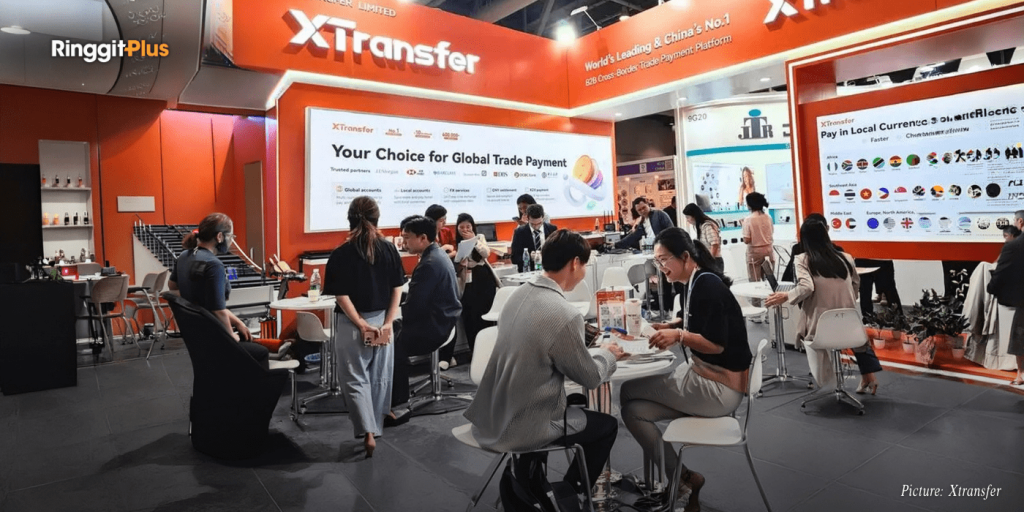
XTransfer, a company that focuses on cross-border business payments, has received conditional approval from Bank Negara Malaysia to operate certain payment services in Malaysia. The approval covers the ability to issue electronic money and provide remittance and currency exchange services.
Conditional Approval Does Not Mean Services Are Live
Conditional approval means the central bank has agreed in principle, but the company must first meet specific regulatory and operational requirements before it can officially launch. These conditions usually involve compliance systems, risk controls, and internal processes.
Until those steps are completed and final authorisation is granted, Malaysian businesses will continue using their existing banks and payment providers. There is no immediate change to how international payments are processed today.
What The Company Plans To Offer
If fully approved, XTransfer plans to introduce digital payment services designed for small and medium-sized enterprises involved in international trade. In practical terms, this could allow businesses to receive money from overseas customers, send payments to foreign suppliers, and convert currencies through a single digital platform.
At the moment, many SMEs rely on traditional banking channels that may involve several intermediaries. Each additional layer can add time, cost, and administrative work. A platform that integrates these functions could reduce some of that operational friction, although the actual benefit will depend on the fees and exchange rates offered once services begin.
Electronic Money And Remittance Explained Simply
Approval to issue electronic money allows a company to provide digital stored value accounts, similar to holding funds in a regulated digital wallet. A remittance licence allows the company to legally move money across borders and handle currency exchange.
Together, these permissions would enable XTransfer to facilitate international business payments within Malaysia, subject to final approval.
Malaysia Positioned As A Regional Base
The company has also indicated plans to establish Malaysia as a regional operational hub for Southeast Asia, coordinating compliance, risk management, and customer support from here. If implemented at scale, this could support skilled roles in financial operations and regulatory oversight.
However, the broader economic impact will depend on how large the operation becomes and how widely the services are adopted.
What This Means For Malaysian SMEs
At this stage, nothing changes for businesses on the ground. The approval is conditional, and services are not yet available.
If the company completes the regulatory requirements and launches successfully, Malaysian SMEs may gain an additional option for handling international payments. Over time, increased competition in cross-border trade payments could encourage clearer pricing and improved service standards.
Over the next one to three years, the key question will be whether new providers can offer better foreign exchange rates, faster settlement times, and smoother onboarding compared to existing channels. If those improvements materialise, SMEs could benefit from stronger cash flow management and lower transaction costs. If not, the development will represent expanded choice rather than a major shift in how trade payments operate in Malaysia.
Follow us on our official WhatsApp channel for the latest money tips and updates.
Samuel writes about personal finance and financial news, focusing on how banking updates, policies, and promotions affect everyday money decisions. He enjoys making complicated financial topics easier to follow. Outside of writing, he spends his time watching TV shows and occasionally convincing himself he will only watch one episode.
00votes
Article Rating
SHARE
About THE AUTHOR
Samuel Chua
Samuel Chua
Samuel writes about personal finance and financial news, focusing on how banking updates, policies, and promotions affect everyday money decisions. He enjoys making complicated financial topics easier to follow. Outside of writing, he spends his time watching TV shows and occasionally convincing himself he will only watch one episode.
We provide weekly updates on every Friday at 5pm on the prices of RON95, RON97 and Diesel in Malaysia and a chart that shows the movement of fuel prices across a 6-week period. Bookmark this page now!






Comments (0)