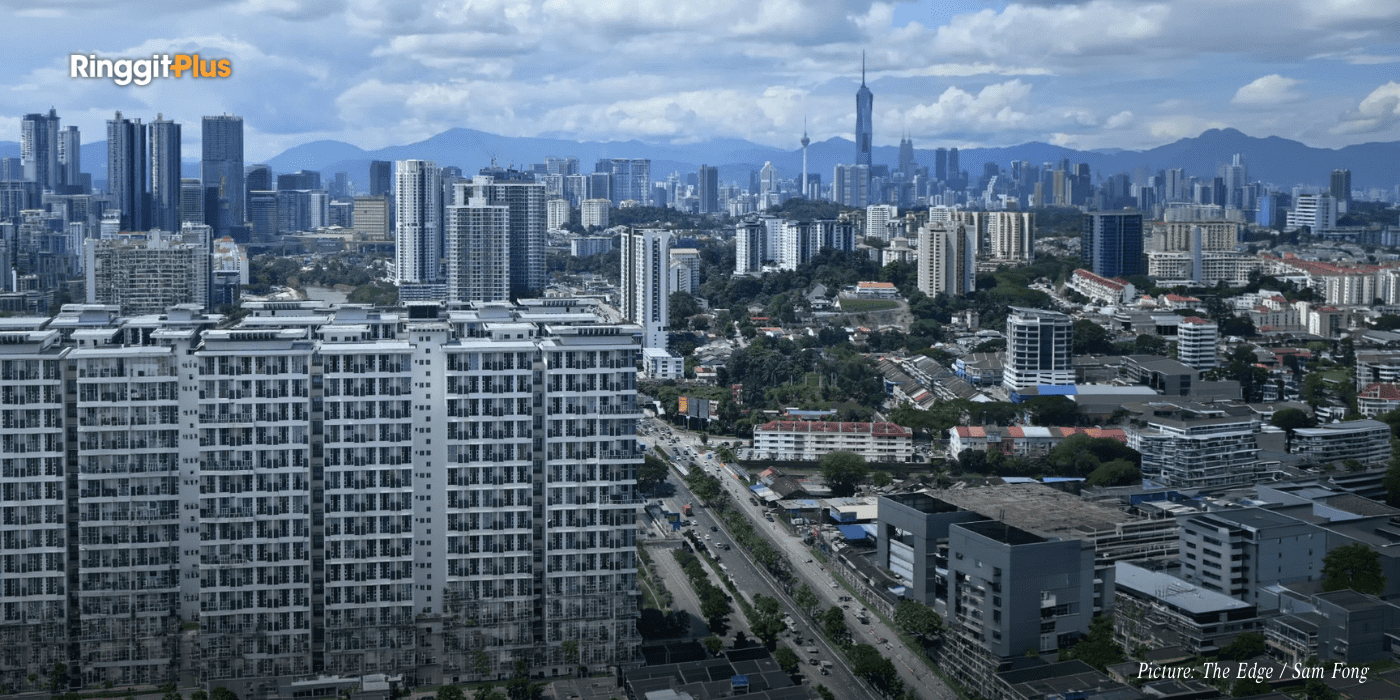
If you’ve spent any time browsing property listings in KL, Penang or Johor Bahru, you already know what you’re up against. The properties you’d actually want to live in cost far more than your salary can support, and that gap isn’t closing anytime soon.
This issue was raised recently in the Dewan Negara, where Senator Michael Mujah Lihan pushed the government to do more, specifically through stronger price controls and better tax incentives for buyers.
Whether that leads anywhere is a different question. For now, the squeeze is real, and it’s worth understanding exactly why it’s happening.
Prices Are Rising Faster Than Pay
Property prices in major Malaysian cities have been climbing steadily for years. Land costs more. Building materials cost more. Developers pass those costs on. At the same time, median wages have grown, but not at the same pace.
The result is a widening gap between what homes cost and what people earn. Banks measure this as the price-to-income ratio, and for many urban buyers in their twenties, it’s now sitting at uncomfortable levels.
It gets harder if you already have debt, which most working adults do. A car loan, a study loan, or a credit card balance all reduce your monthly disposable income. Banks look at your total debt obligations against your earnings, and if the numbers don’t pass their test, your home loan application doesn’t get approved, regardless of how motivated a buyer you are.
Loan Approval Has Become The Real Barrier
A lot of the housing affordability conversation focuses on selling prices. But qualifying for a loan is often where things fall apart.
Banks don’t just check your salary. They stress-test your finances against potential interest rate increases. They look at how stable your income is. They add up all your existing debt repayments and compare that against your take-home pay. If your debt service ratio is too high, you won’t qualify, even if you’ve saved a decent deposit and are ready to commit.
This means that even if property prices came down somewhat, many buyers would still struggle to get financing unless their debt situation also improved. Price is only one part of the equation.
What The Senator proposed, And What It Would Do
Senator Lihan raised two main ideas: price controls and targeted tax incentives. These work in different ways.
Price controls cap how much certain units can be sold for. They can make specific properties more affordable for eligible buyers, but they also affect how much money developers make on those projects. If margins get too tight, developers may build fewer units or shift focus elsewhere. It’s a trade-off, and it’s why blanket price controls are complicated to implement well.
Tax incentives are different. Rather than capping prices directly, they reduce the cost of buying by improving your take-home pay or cutting transaction costs. Stamp duty waivers, for example, lower the cash you need upfront, which is a real and immediate benefit to first-time buyers.
It’s worth being clear: these were proposals raised in a parliamentary debate. No new policies, regulations or timelines have been announced off the back of this. The existing rules remain unchanged for now.
What The Housing Industry Could Do Differently
Government policy is not the only lever here. Some potential changes could come from developers and banks.
On the developer side, adopting more cost-efficient construction methods could, in theory, lower overall project costs. The challenge is that land prices are a major driver of total costs in urban areas, and there’s a limit to how much savings from construction alone can bring prices down.
Banks offering rent-to-own schemes is another option that sometimes comes up. These arrangements let you make payments towards ownership without needing a full deposit upfront. They don’t make a property cheaper overall, but they can lower the financial barrier to getting started, which matters when you’re still building your savings.
Most Young Malaysians Are Still Renting
With home ownership increasingly out of reach for many in their twenties, renting longer is the default outcome. Rent doesn’t build equity, which means you’re not accumulating an asset over time. But it also means you’re not locked into a 30-year loan, not exposed to property market swings, and not responsible for maintenance costs. For someone whose income is still growing or whose career path isn’t fully settled, that flexibility is genuinely useful.
The harder question is whether home ownership remains realistic within a reasonable time frame for someone on a median income in an urban area. For many people, the honest answer is that it requires either a significant income increase, a sustained period of disciplined saving, buying further from the city, or some combination of all three.
What’s Available For First-Time Buyers Right Now
Malaysia does already have some measures in place. The Housing Credit Guarantee Scheme helps eligible buyers who might not otherwise qualify for a standard bank loan. Affordable housing programmes like PR1MA, Rumah Selangorku and others set price caps for certain units targeted at lower and middle-income households.
The gap is that these programmes don’t cover most of the private property market, where average prices remain well above the RM300,000 ceiling used for affordable housing classifications. For buyers looking at properties above that threshold, the existing support mechanisms don’t apply.
No new changes to stamp duties, lending rules or price controls were announced following the parliamentary debate, so buyers outside designated affordable housing programmes are working with the same conditions as before.
What this means for you
If you’re in your twenties and saving for a deposit, the environment is genuinely difficult. Waiting for policy changes to materially shift the market is not a reliable plan. What tends to move the needle for individual buyers is a combination of improving your debt service ratio (paying down existing loans), growing your savings rate, and being realistic about location, at least for a first property.
RinggitPlus has detailed guides on first-time home buyer schemes, how banks calculate your loan eligibility, and what deposit amounts you actually need to get started. Those are worth reading alongside this piece.
Follow us on our official WhatsApp channel for the latest money tips and updates.
Samuel writes about personal finance and financial news, focusing on how banking updates, policies, and promotions affect everyday money decisions. He enjoys making complicated financial topics easier to follow. Outside of writing, he spends his time watching TV shows and occasionally convincing himself he will only watch one episode.
00votes
Article Rating
SHARE
About THE AUTHOR
Samuel Chua
Samuel Chua
Samuel writes about personal finance and financial news, focusing on how banking updates, policies, and promotions affect everyday money decisions. He enjoys making complicated financial topics easier to follow. Outside of writing, he spends his time watching TV shows and occasionally convincing himself he will only watch one episode.
We provide weekly updates on every Friday at 5pm on the prices of RON95, RON97 and Diesel in Malaysia and a chart that shows the movement of fuel prices across a 6-week period. Bookmark this page now!








Comments (0)