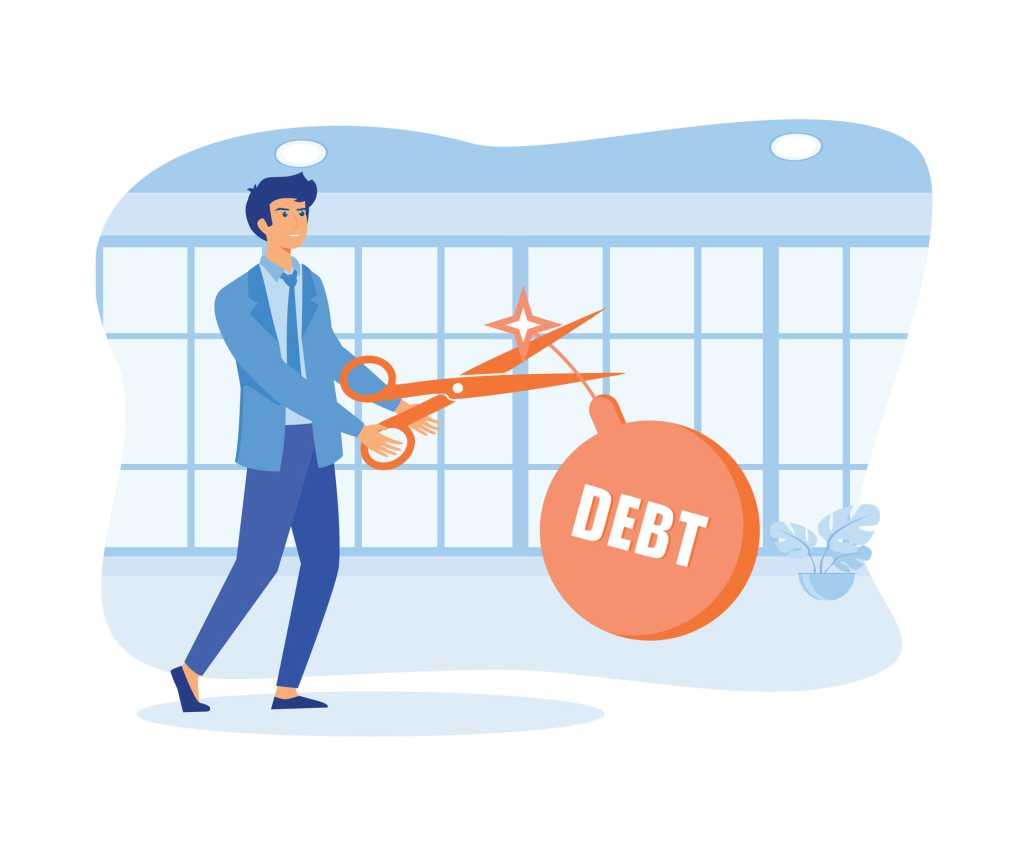
Credit card debt creeps up on people. What starts as a convenient way to pay for necessities can spiral into a financial nightmare. For young Malaysians entering the world of credit, understanding how to manage debt is crucial. With the right strategy, even substantial debt can be conquered.
Why Minimum Payments Are A Trap
Paying only the minimum on your credit card is like trying to empty a sink with the tap running. That’s because a large portion of each minimum payment goes toward covering interest charges rather than reducing your actual debt. For example, if you carry a RM5,000 balance at an 18% annual interest rate and pay only the minimum (typically 5% of the balance), it could take nearly six years (about 70 months) to fully clear the debt. Over that time, you’d pay around RM1,900 in interest on top of the original RM5,000. And that’s assuming no new charges.
If you make only the absolute minimum payment allowed (e.g., RM50/month), or incur additional fees or missed payments (which may trigger higher penalty rates), your repayment could stretch to seven or eight years, with total interest charges easily exceeding RM2,000–RM3,000. In short, minimum payments prolong your debt and dramatically increase the total cost of borrowing.
Credit card interest compounds daily. Each day you carry a balance, interest accumulates on both your original debt and previously charged interest. The numbers reveal a harsh truth. If you owe RM3,000 and make only the minimum payment of RM150 monthly, roughly RM45 goes directly to interest while the remaining RM105 reduces your actual debt. This means by next month, although you’ve paid RM150, your balance has only dropped to RM2,895, much higher than it would be if all your payment went towards the original amount owed. Progress is painfully slow.
Banks must show this long-term cost on your statements. This “minimum payment warning” reveals the true cost of carrying debt and serves as a wake-up call for many young Malaysians who assumed minimum payments were an acceptable long-term strategy.
High balances also damage your credit utilisation ratio, signalling to future lenders that you may be financially overextended. Poor debt management can lead to a damaged credit score, hindering your ability to obtain loans for major assets like cars and homes, and even impacting access to services such as mobile phone contracts.
Know Your Numbers
Before crafting a repayment strategy, you need a clear picture of your debt landscape. Gather all your credit card statements and list each card’s outstanding balance and Annual Percentage Rate (APR). Add up all balances to determine your total debt, then calculate your credit utilisation ratio by dividing this total by your combined credit limits. Keeping this ratio below 30% is advisable for maintaining a healthy credit score.
For a comprehensive view of your creditworthiness, check your credit report through Bank Negara Malaysia’s eCCRIS service or credit agencies like CTOS. This baseline understanding will inform every decision you make moving forward.
Two Proven Repayment Strategies
The debt avalanche method prioritises mathematical efficiency. List all debts from highest to lowest interest rate, make minimum payments on everything, then throw every extra ringgit at the highest-interest debt. Once eliminated, roll that entire payment amount to the next highest-interest debt. This approach minimises total interest paid and gets you debt-free fastest.
Imagine you have three credit cards with Card A with a balance of RM2,000 at 18% interest, Card B with RM4,000 at 17% interest, and Card C with RM1,500 at 15% interest. Even though Card C has the smallest balance, your smartest strategy would still be to prioritise paying off Card A first due to its highest interest rate of 18%. This is aligned with the ‘debt avalanche’ method, where the mathematical logic is sound as systematically eliminating high-interest debt saves you the most money over time by reducing the overall interest accrued.
The debt snowball method prioritises psychology over mathematics. Target your smallest balance first while making minimum payments elsewhere. Once the smallest debt disappears, apply its payment to the next smallest balance. Though you’ll pay more interest overall, the quick wins provide motivation that keeps many people committed to their plan.
Using the same example, you’d eliminate Card C first despite its lower interest rate. The psychological boost of clearing a debt within a few months often provides the momentum needed to tackle larger balances. For many young people, this emotional component proves crucial for long-term success.
Neither method is superior. The best strategy is the one you’ll follow through to completion. Consider your personality, and whether you respond better to logical efficiency or emotional victories.
Building A Debt-Fighting Budget
Debt elimination requires a budget that treats debt payments as non-negotiable expenses, like rent or utilities. Start by calculating your after-tax monthly income, then list all fixed expenses. Track variable spending meticulously for at least a month to identify where your money goes.
The popular 50/30/20 rule allocates 50% of income to needs, 30% to wants, and 20% to savings and debt repayment. This provides a framework, though debt situations may require temporarily shifting more toward the 20% category. Look for cuts by cooking at home more often, reviewing subscriptions, or finding cheaper alternatives for daily necessities. Every ringgit saved should go directly toward debt elimination.
Consider automating transfers to your debt payment fund each payday. This removes the temptation to spend that money elsewhere and ensures consistent progress.
Understanding Interest And Smart Alternatives
Most Malaysian credit cards offer 20-30 day interest-free periods on new purchases, but only if you pay the full balance monthly. Carry any balance forward, and interest begins accumulating from the purchase date, not from the statement due date. This retroactive interest catches many young cardholders off guard.
Credit card companies use the “average daily balance” method to calculate interest, meaning higher balances throughout the month result in higher interest charges. If you’re carrying RM3,000 and make a RM1,000 payment early in the billing cycle, you’ll pay less interest than if you made the same payment just before the due date.
Cash advances are expensive and should be avoided except in genuine emergencies. ATM withdrawals using your credit card might seem convenient, but they immediately begin accumulating interest, typically at the highest rate of 18% per annum. On top of that, you’ll also be charged a one-time cash advance fee, which is often 5% of the withdrawn amount or a minimum of RM15 to RM50, whichever is higher. This combination makes them a very costly way to borrow.
Balance transfers can provide temporary relief by moving high-interest debt to cards offering promotional rates, sometimes 0% for 6-18 months. However, these usually involve upfront fees of 1-3% of the transferred amount. A RM5,000 balance transfer with a 3% fee costs RM150 upfront, but could save hundreds in interest if used strategically.
The key is having a concrete repayment plan that eliminates the entire transferred balance before promotional rates expire. Without this discipline, you’ll find yourself paying standard rates (often higher than your original cards) on any remaining balance.
For those overwhelmed by multiple debts, Malaysia offers two main consolidation paths. Banks provide debt consolidation loans that combine multiple payments into a single, hopefully lower-interest instalment. These work best for borrowers with stable incomes and good credit scores who can secure favourable terms.
Alternatively, the government-backed Credit Counselling and Debt Management Agency (AKPK) offers free counselling and can negotiate with creditors for more manageable payment plans. AKPK’s Debt Management Programme creates structured repayment schedules and often secures reduced interest rates, though participating may temporarily affect your credit rating and loss of existing credit facilities through enforced cancellation requirements as part of the Debt Management Programme.
Boosting Income And Building Defences
While cutting expenses helps, increasing income accelerates debt elimination dramatically. The gig economy offers numerous opportunities for young Malaysians, including food delivery services like Grab and Foodpanda, freelance writing or graphic design, tutoring younger students, or selling handmade items online through platforms like Shopee or Carousell.
The key is directing every extra ringgit toward debt rather than lifestyle inflation. It’s tempting to treat additional income as “fun money,” but this mindset prolongs your debt journey. Consider opening a separate account for debt payments and automatically transferring any additional earnings there.
Some young people find success in temporary lifestyle adjustments that free up substantial funds. Moving back with parents for six months, taking public transport instead of driving, or cancelling streaming subscriptions might seem drastic, but these sacrifices can shave years off your debt timeline.
Build a small emergency fund of RM1,000-2,000. This prevents unexpected expenses (car repairs, medical bills, or family emergencies) from derailing your progress by forcing new debt. The fund should be easily accessible but separate from everyday spending accounts to avoid temptation.
Whether to build an emergency fund before tackling debt depends on your safety net. If parents can cover genuine emergencies, focus entirely on debt elimination. If you’re on your own, build the small fund first. It’s cheaper than accumulating new debt when emergencies strike.
The Discipline of Restriction
Stop using credit cards entirely during debt elimination. This single decision prevents new debt accumulation and helps break problematic spending habits. However, avoid closing accounts entirely, as this can harm your credit score by reducing available credit and shortening account history.
Instead, store cards away from temptation. Remove saved payment details from online platforms. If you must keep one active, use it only for a small recurring bill that’s automatically paid in full monthly.
Life After Debt
Eliminating credit card debt represents an achievement, but maintaining financial health requires ongoing discipline. Continue budgeting as a permanent habit. The skills developed during debt repayment remain valuable for preventing future problems.
Expand your emergency fund to cover three to six months of essential expenses, providing robust protection against job loss or major unexpected costs. Redirect former debt payments toward long-term goals like retirement savings or homeownership.
If you resume credit card use, pay statement balances in full monthly. Use cards for convenience and rewards, not to extend your spending power beyond your income. Regular credit monitoring helps maintain awareness of your financial standing.
The path from debt to financial freedom requires patience and discipline, but thousands of Malaysians navigate this journey each year. With clear strategies and consistent execution, you can join their ranks and build lasting financial security.
For more comprehensive guides, tips, and the latest financial product comparisons to help you navigate your financial journey in Malaysia, explore the RinggitPlus blog.
Want smarter financial tips straight to your phone? Join our WhatsApp Channel.
Iman writes about personal finance with curiosity. She is interested in the stories behind money, the hesitation around big decisions, and the small habits that shape financial futures. Off the clock, she is either dissecting a film or climbing her way up the leaderboard in her favourite games.
Iman writes about personal finance with curiosity. She is interested in the stories behind money, the hesitation around big decisions, and the small habits that shape financial futures. Off the clock, she is either dissecting a film or climbing her way up the leaderboard in her favourite games.






Comments (0)