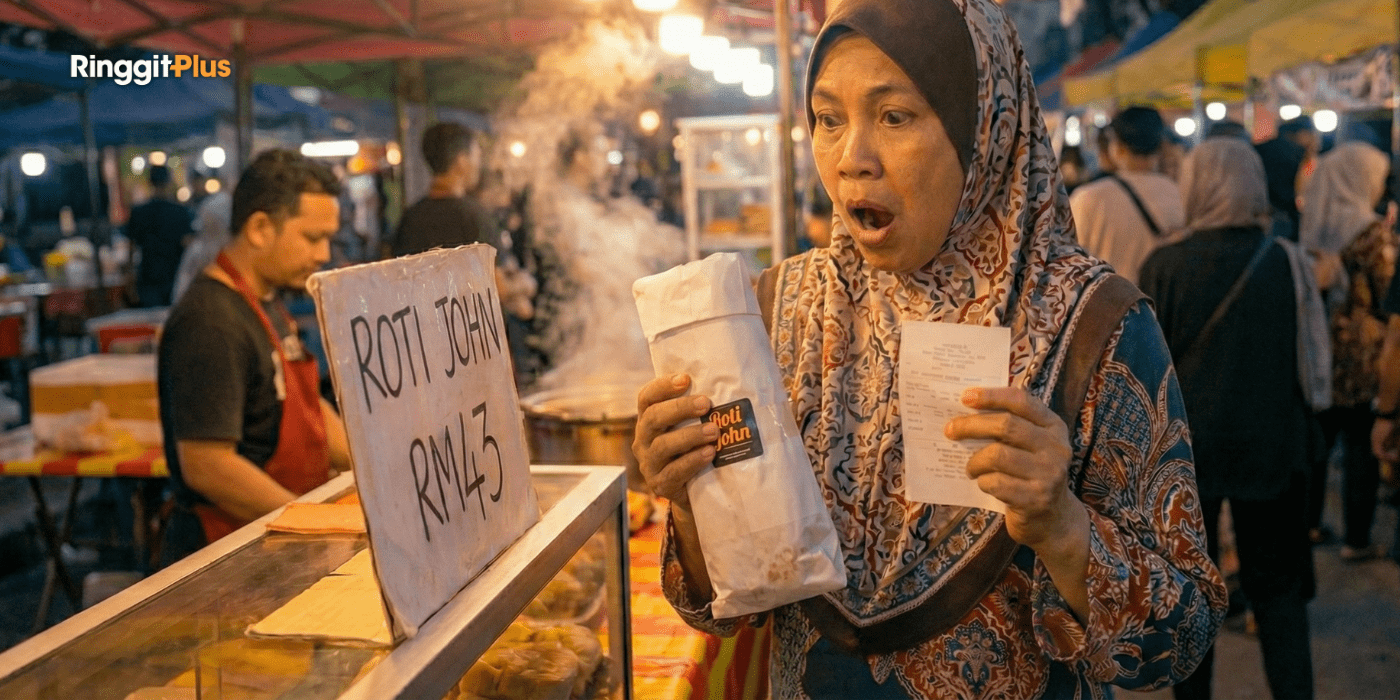
Every Ramadan, the plan is the same. One Roti John. One Air Balang. Maybe a kuih or two. In and out, RM10 tops. You might even say it out loud in the car, like some kind of pre-bazaar affirmation.
By 6:30 PM, the plan has been abandoned entirely. There are now three types of murtabak in the passenger seat, a whole ayam percik balanced on top of a nasi kerabu, six kuih muih (at least two of which are unidentifiable), and two drinks because the air bandung stall was right next to the air balang stall. You also bought a bag of popiah for your mother, even though she didn’t ask for any, because it was right there and you felt generous. RM43 gone, and it’s not even a weekend.
Anyone who has fasted and then walked into a bazaar at 5 PM on an empty stomach knows how this happens. Everything smells incredible, the portions look bigger than they actually are, and the stall uncle is making eye contact like he cooked that lamb shoulder personally for you. You start telling yourself that buying extra is fine because you “deserve it after a long day.” By the time you reach the car, you’ve spent four times what you planned.
The Maths Nobody Wants to Do
Spending RM40 a day at the bazaar for 30 days comes to RM1,200. That’s duit raya for all the nieces and nephews, a return flight to Langkawi, or nearly two months of car insurance gone into murtabak.
It adds up fast on a typical evening:
Bazaar Item
Typical Price Range
Nasi campur / nasi kerabu
RM8 – RM12
Murtabak (per piece)
RM6 – RM10
Roti John
RM7 – RM12
Ayam percik (whole)
RM15 – RM20
Satay (10 sticks + kuah kacang)
RM8 – RM12
Drinks (air balang, air bandung, etc.)
RM3 – RM8
Kuih muih (3-5 pieces)
RM3 – RM5
Prices vary by location (bazaars in Putrajaya and KL tend to run higher than suburban ones), but even at the lower end, two people buying dinner at a bazaar can hit RM40 without trying particularly hard.
Then there’s the food waste, which is arguably the worse part. Four packets of nasi bought at 5:15 PM with great enthusiasm, one and a half eaten by 8 PM, the rest sitting in the fridge getting sad. By Thursday, it goes in the bin.
This isn’t just a personal guilt thing. Food waste in Malaysia reportedly spikes by 15-20% during Ramadan, and a big part of that comes from exactly this pattern. Overbuying at bazaars because everything looks good when you’re hungry and then not being able to finish it. Malaysians are estimated to generate over 4,000 tonnes of food waste daily during Ramadan, up from the usual average of around 3,000 tonnes. That’s roughly a thousand extra tonnes of food going to landfill every day for a month.
Nobody’s saying don’t treat yourself. A day of fasting absolutely earns you that ayam percik. But there’s a difference between treating yourself and buying enough food to cater a kenduri every evening for a month.
Set A Limit Before You Leave The House
The simplest version of this: take RM20-25 in cash and leave the cards at home. When physical money is all you’ve got, you make decisions differently. Nobody has ever stood at a bazaar stall agonising over a RM7 murtabak when they’re paying by e-wallet. Hand over your second-last RM5 note, though, and suddenly you’re thinking about whether you really need that extra kuih.
If cash feels too old-school, several banking apps now let you create savings pockets or separate sub-accounts you can label for specific purposes. GXBank, AEON Bank, Ryt Bank, and Maybank’s MAE app all offer some version of this. Move RM20 into a “Bazaar Ramadan” pocket before you leave, and spend only from that. The rest of your balance stays out of sight and out of reach. It works on the same principle as the cash envelope method, just without the envelope.
RM20-25 a day is enough for a proper buka puasa. A Roti John (RM7-10), a drink (RM3-5), and a couple of kuih (RM3-5) come comfortably under RM25. Over 30 days, that’s RM600-750 instead of RM1,200. The difference is enough for a decent Raya angpow fund or a head start on the emergency savings you keep meaning to build.
Walk First, Buy Later
Most people buy from the first stall they see. Most people also walk past a better and cheaper version of the same thing three stalls later and feel a small, quiet regret they’ll carry for the rest of the evening.
A full lap of the bazaar before spending anything takes about 15 minutes. By the end of it, the initial “I need everything” panic has worn off a bit, and actual decision-making becomes possible. It also helps to keep a short list on the phone, “one protein, one drink, one kuih”, which sounds absurd for a bazaar but works the same way a grocery list works at Lotus. Without one, you come home with things you never planned to buy.
Cook Your Rice At Home
Easily the most underrated move. A pot of rice in the rice cooker before heading to the bazaar takes ten minutes and costs almost nothing.
Without home-cooked rice, a full nasi campur runs RM8-12 and a nasi kerabu RM7-10. With it, you only need lauk. Rendang goes for RM5-7, ikan bakar RM8-10, and satay with kuah kacang RM5-8. Pair that with rice from home, and dinner costs about half what a complete bazaar meal would.
It also solves the food waste problem. Three nasi packets from three stalls means three portions of rice competing for stomach space. Nobody finishes all of it. Cook one pot, buy lauk for what you’ll actually eat, and the fridge doesn’t turn into a guilt museum by Wednesday.
For a family of four, cooking your own rice saves roughly RM15-20 a day. Over the month, that’s RM450-600.
The Bazaar Is Still The Bazaar
None of this means skipping the bazaar or turning buka puasa into a joyless, calorie-counted affair. Bazaar Ramadan is one of the best parts of the fasting month, and nobody should feel bad about going.
Set a limit, do a lap, and cook the rice first. That’s the whole system. It cuts bazaar spending roughly in half without actually changing what ends up on the table.
That ayam percik tastes the same whether you spent RM40 getting there or RM20. Possibly better, actually, when you picked it with calm, well-rested intention instead of in a 6:47 PM hunger haze while three different stalls were fanning smoke directly into your soul.
Follow us on our official WhatsApp channel for the latest money tips and updates.
As a creative content writer, Eloise has covered finance, business, lifestyle topics, and even moonlights as a singer-songwriter outside of RinggitPlus. Her current interests are learning the best ways to optimise spending and credit card hacks to gain more airline miles.
00votes
Article Rating
SHARE
About THE AUTHOR
Eloise Lau
Eloise Lau
As a creative content writer, Eloise has covered finance, business, lifestyle topics, and even moonlights as a singer-songwriter outside of RinggitPlus. Her current interests are learning the best ways to optimise spending and credit card hacks to gain more airline miles.








Comments (0)