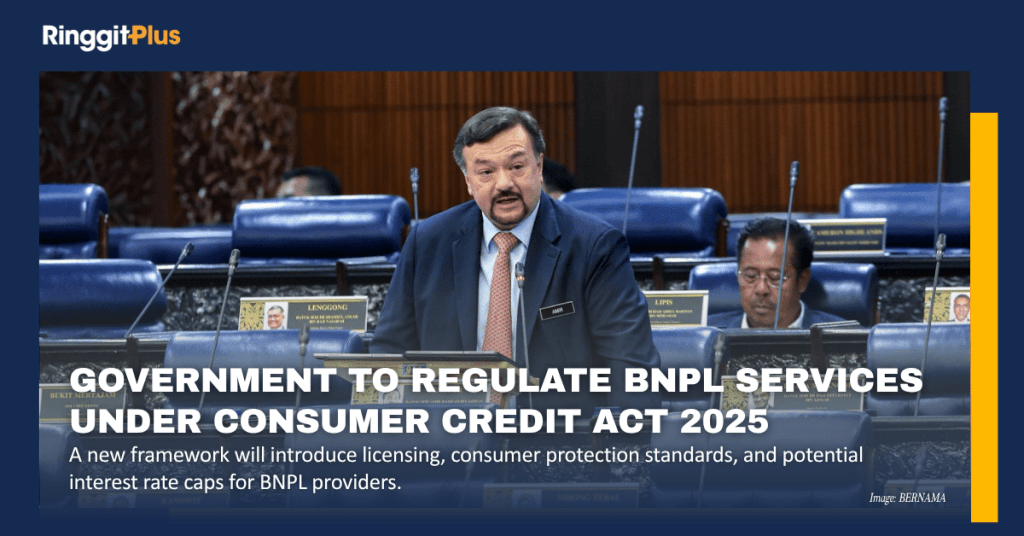
Malaysia is set to bring its rapidly expanding Buy Now Pay Later (BNPL) industry under comprehensive regulation through the upcoming Consumer Credit Act 2025, Finance Minister II Datuk Seri Amir Hamzah Azizan announced in Parliament on Monday.
The move comes as the BNPL sector continues its explosive growth, with transaction values now reaching RM9.3 billion in 1H (first half) 2025. Speaking in response to a parliamentary question from Bentong MP Young Syefura Othman, the Finance Minister outlined how the new regulatory framework will transform oversight of this increasingly popular payment method.
New Regulatory Body to Oversee BNPL Providers
Under the proposed legislation, a new Consumer Credit Commission (Suruhanjaya Kredit Pengguna, SKP) will be established to regulate BNPL providers. All operators in this space will need to obtain proper licensing and comply with stringent consumer protection standards.
“The Federal Government is fully aware of the need and concern raised over the unchecked growth of BNPL, which has now reached a transaction value of RM7.1 billion [in 2H 2024],” Amir said. “Under the new law, BNPL providers will be required to comply with responsible lending standards to protect credit users.”
Key Consumer Protections Coming
The regulatory framework will introduce several critical safeguards designed to protect Malaysian consumers:
Mandatory Affordability Assessments: Before approving any credit, BNPL providers must conduct thorough assessments to ensure borrowers can manage the payments without falling into financial difficulty.
Transparent Fee Structures: All costs and charges must be clearly disclosed to consumers upfront, eliminating hidden fees that could catch borrowers off guard.
Fair Contractual Terms: Standard contracts will need to meet fairness criteria to prevent exploitative terms and conditions.
Professional Debt Recovery: Debt collection practices will be regulated to ensure they follow professional standards and don’t harass consumers.
The Finance Minister emphasised the particular importance of affordability assessments, stating: “Affordability assessment is a key requirement BNPL providers must comply with before offering credit. This is essential to ensure that borrowers—particularly young consumers—are not pushed into financial hardship or trapped in unmanageable debt.”
Strong Enforcement Powers
The newly established SKP won’t just be a paper tiger – it will have substantial enforcement capabilities. The commission will have the authority to take action against non-compliant providers through administrative sanctions, civil enforcement measures, and even criminal prosecution when necessary.
BNPL providers seeking licenses will need to demonstrate they meet minimum standards for governance, financial stability, and fit-and-proper criteria for key personnel.
Interest Rate Caps Under Consideration
When pressed by MP Young Syefura about whether the government would cap interest rates charged by BNPL providers, the Finance Ministry revealed this issue is currently being examined by the Consumer Credit Oversight Board Task Force.
The ministry noted that “interest charges imposed by BNPL players typically range from 15% to 30% annually, though some providers impose no interest at all.” Any future conduct standards would be “balanced and proportionate”, taking into account both borrowers’ debt situations and the operating costs of credit providers.
Focus on Financial Literacy
Beyond regulation, the government is also prioritising financial education as a key tool in preventing excessive credit usage. “The government is committed to ensuring that citizens are equipped to make informed financial decisions and understand the risks of overusing BNPL,” the ministry stated.
This educational component recognises that regulation alone isn’t sufficient – consumers need to understand the implications of their financial choices, particularly younger users who are the primary demographic for BNPL services.
Global Trend Toward BNPL Regulation
Malaysia’s move aligns with growing international concerns about the BNPL model. While these services have gained significant popularity among younger consumers for their convenience and perceived accessibility, regulators worldwide have raised concerns about weak oversight and the potential for these products to worsen personal debt problems.
The Consumer Credit Act 2025 represents Malaysia’s proactive approach to balancing innovation in financial services with robust consumer protection. By establishing clear rules before problems become widespread, the government aims to ensure the BNPL sector can continue growing while operating responsibly.
For Malaysian consumers, these changes should provide greater confidence when using BNPL services, knowing that providers will be held to higher standards and that there are proper safeguards in place to prevent exploitation.
Follow us on our official WhatsApp channel for the latest money tips and updates.
Iman writes about personal finance with curiosity. She is interested in the stories behind money, the hesitation around big decisions, and the small habits that shape financial futures. Off the clock, she is either dissecting a film or climbing her way up the leaderboard in her favourite games.
Iman writes about personal finance with curiosity. She is interested in the stories behind money, the hesitation around big decisions, and the small habits that shape financial futures. Off the clock, she is either dissecting a film or climbing her way up the leaderboard in her favourite games.
We provide weekly updates on every Friday at 5pm on the prices of RON95, RON97 and Diesel in Malaysia and a chart that shows the movement of fuel prices across a 6-week period. Bookmark this page now!







Comments (0)