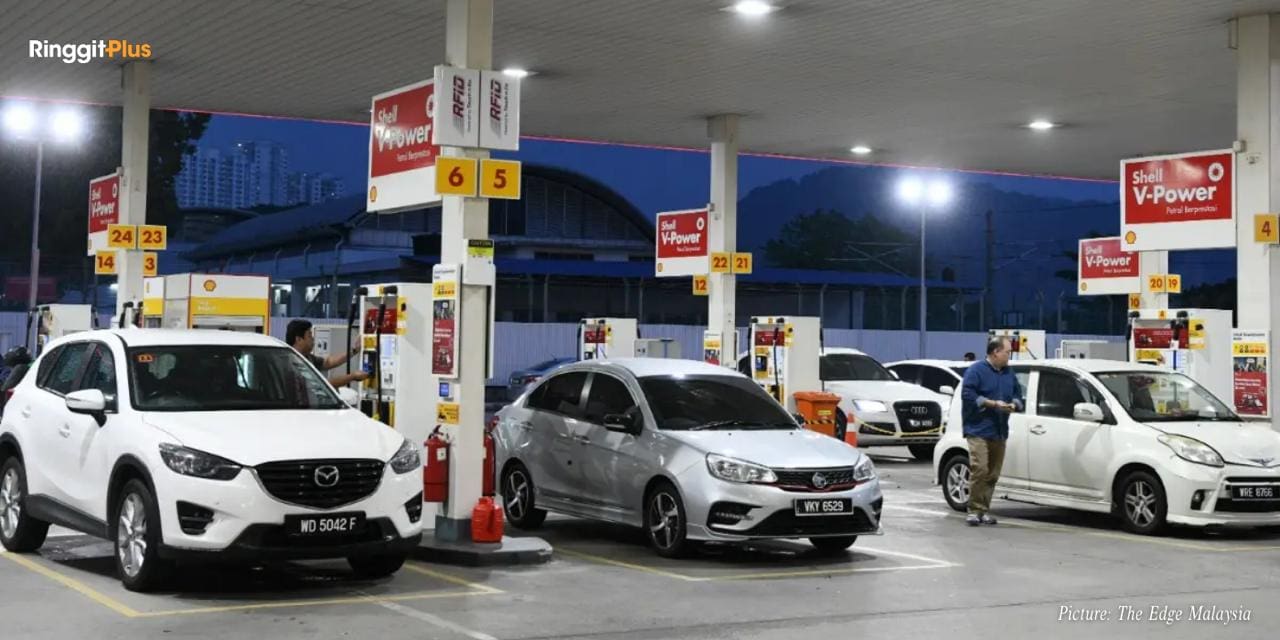
The government’s new Budi95 targeted fuel subsidy, set to launch on 30 September 2025, is poised to change how RON95 petrol is subsidised. While this affects the wallets of Malaysian motorists, financial analysts are closely watching its impact on the automotive sector, particularly on car sales and the adoption of electric vehicles (EVs).
Here’s a closer look at what the Budi95 scheme means for the Malaysian car market.
Car Demand Expected To Remain Steady
According to several research houses, the Budi95 fuel subsidy is not expected to cause any major disruptions to the car market. Analysts predict that vehicle demand will likely remain stable in the near term.
The main reason for this outlook is the subsidy’s structure. It provides a quota of 300 litres of RON95 petrol per month at a subsidised rate. A study by the Department of Statistics Malaysia (DOSM) found that over 99% of private vehicle owners consume less than this amount monthly. As a result, the vast majority of motorists will not experience a significant change in their fuel expenses, meaning there is little immediate financial pressure to change their current vehicles or purchasing habits.
No Immediate Widespread Push For Electric Vehicles
A key question surrounding any fuel subsidy change is whether it will accelerate the switch to electric vehicles. In the case of Budi95, analysts believe a major, near-term shift to EVs is unlikely.
Because the 300-litre quota comfortably covers the needs of most drivers, the financial incentive to abandon internal combustion engine (ICE) cars for EVs remains largely unchanged for the average consumer. The policy effectively maintains the status quo for most households, keeping the existing cost-benefit analysis of EV ownership stable.
The Long-Term Shift To Fuel-Efficient Cars
While the short-term impact may be minimal, the Budi95 policy could encourage a more gradual, long-term shift in the market. The policy will primarily affect heavy fuel users who consistently exceed the 300-litre monthly quota. This group includes long-distance commuters, logistics players, and owners of premium cars with less efficient engines.
For these individuals, the higher cost of fuel beyond the subsidised limit may encourage a move towards more fuel-efficient vehicles, hybrids, and eventually, EVs. This could benefit automakers that offer a strong line-up of cleaner mobility options. Analysts note that national carmakers like Perodua, with a high market share in affordable and efficient cars, are also well-positioned to meet consumer needs in this stable market environment.
A Quick Guide To The Budi95 Subsidy And MyKad Requirement
The Budi95 programme entitles all Malaysians aged 16 and above with a valid MyKad and driving licence to 300 litres of RON95 petrol per month at RM1.99 per litre. Any usage beyond this limit, or by non-citizens and corporations, will be at the market price.
As a creative content writer, Eloise has covered finance, business, lifestyle topics, and even moonlights as a singer-songwriter outside of RinggitPlus. Her current interests are learning the best ways to optimise spending and credit card hacks to gain more airline miles.
As a creative content writer, Eloise has covered finance, business, lifestyle topics, and even moonlights as a singer-songwriter outside of RinggitPlus. Her current interests are learning the best ways to optimise spending and credit card hacks to gain more airline miles.
We provide weekly updates on every Friday at 5pm on the prices of RON95, RON97 and Diesel in Malaysia and a chart that shows the movement of fuel prices across a 6-week period. Bookmark this page now!






Comments (0)