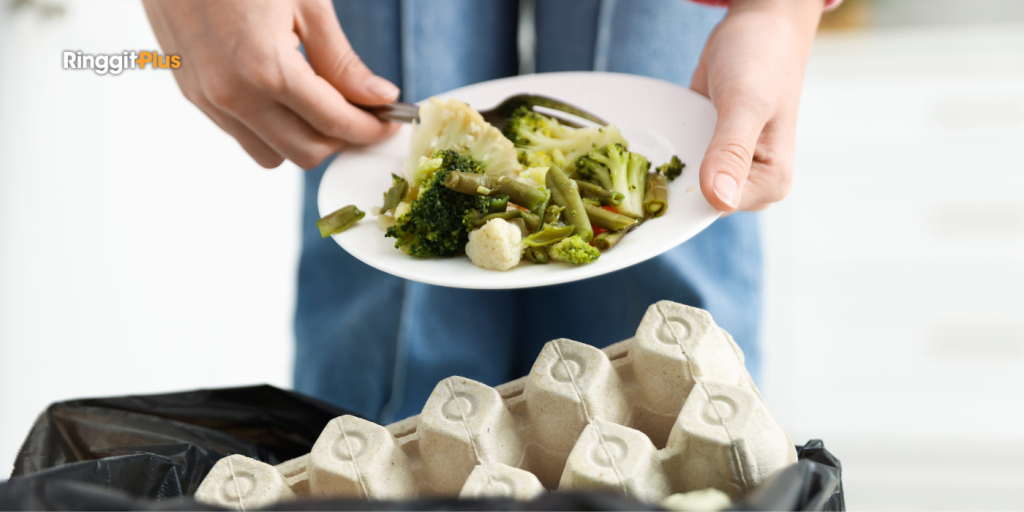
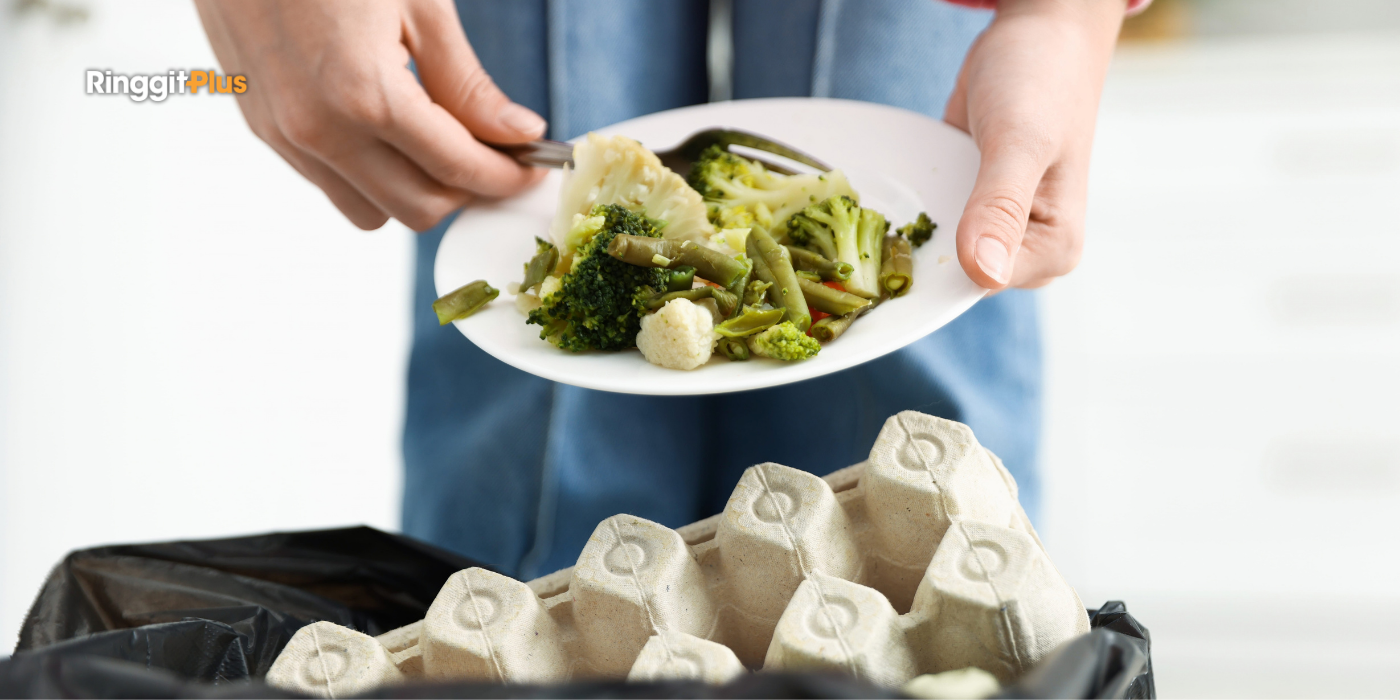
Malaysia produces about 40,000 metric tonnes of solid waste every day, and nearly 40% of that is food, according to Housing and Local Government Minister Nga Kor Ming in Parliament. That’s close to 16,000 tonnes of food going to waste every day.
Wasting Even 5% Of Your Food Costs RM526 A Year
Households spent an average of RM876 a month on food and beverages in 2024, which made up 15.7% of household spending, according to recently released statistics from the Department of Statistics Malaysia (DOSM). Restaurants are counted separately, so this figure covers what you spend on food and drinks before eating out.
DOSM doesn’t track how much of that spending ends up in the bin. But if you threw away 10% of what you bought, that’s about RM88 a month, or RM1,051 a year.
Share of food bill wasted
Per month
Per year
5%
RM44
RM526
10%
RM88
RM1,051
20%
RM175
RM2,102
Expired Food Is The Top Cause Of Waste
In its 2025 food waste survey, DOSM estimates that household food waste ranges from 31.9kg to 97.3kg per person a year. The biggest reason is food expiring before it gets used, at 19.3%.
Leftovers that stay in the fridge or freezer too long come next at 18.1%. Overbuying is 15.2% and cooking more than you need is 15.1%.
Vegetables top the list of raw food wasted, at 29.1%, followed by fruit at 22.4%. For cooked food, rice comes first at 16.7%.
Small Habits Cut Waste When You Cook At Home
A few habits can help you use up the food you buy before it spoils. When you get home from the supermarket, check the dates and move anything that needs to be eaten soon to the front of the fridge. And before buying more groceries, take a quick look at what you already have.
It also helps to plan a few meals for the week instead of deciding what to cook every day. You don’t need a detailed meal plan. Knowing which vegetables, meat, or other ingredients need to be used first can stop them from being forgotten at the back of the fridge.
For fruit and vegetables, buy loose items where you can, or choose the smallest pack available. You can always buy more later. Frozen vegetables are another useful option for days when you don’t feel like cooking, since you can take out only what you need.
Rice is the cooked food wasted most, so measure out enough uncooked rice for a meal rather than cooking by eye. If you do make too much, cool it quickly and freeze it in single portions. The same approach works for other leftovers. Portion them and freeze them before they become something you have to eat because they’re about to spoil.
Buy Unsold Food For Less
You can also cut waste before the food even reaches your kitchen. Value Food (App Store | Google Play) sells surplus food from restaurants, bakeries, and cafes at 50% to 70% off.
Just collect it yourself during the time stated by the merchant, and what’s available depends on what they have left that day. This can be a practical way to get a meal without buying more food than you need.
Iman writes about personal finance with curiosity. She is interested in the stories behind money, the hesitation around big decisions, and the small habits that shape financial futures. Off the clock, she is either dissecting a film or climbing her way up the leaderboard in her favourite games.
00votes
Article Rating
SHARE
About THE AUTHOR
Iman Aminuddin
Iman Aminuddin
Iman writes about personal finance with curiosity. She is interested in the stories behind money, the hesitation around big decisions, and the small habits that shape financial futures. Off the clock, she is either dissecting a film or climbing her way up the leaderboard in her favourite games.
We provide weekly updates on every Friday at 5pm on the prices of RON95, RON97 and Diesel in Malaysia and a chart that shows the movement of fuel prices across a 6-week period. Bookmark this page now!




Comments (0)