Alex Cheong Pui Yin
Previously covered recruitment-related stories and had a short stint as a copywriter for the property industry. She subsequently developed an interest in investment and robo-advisors.

15th June 2023 - 2 min read
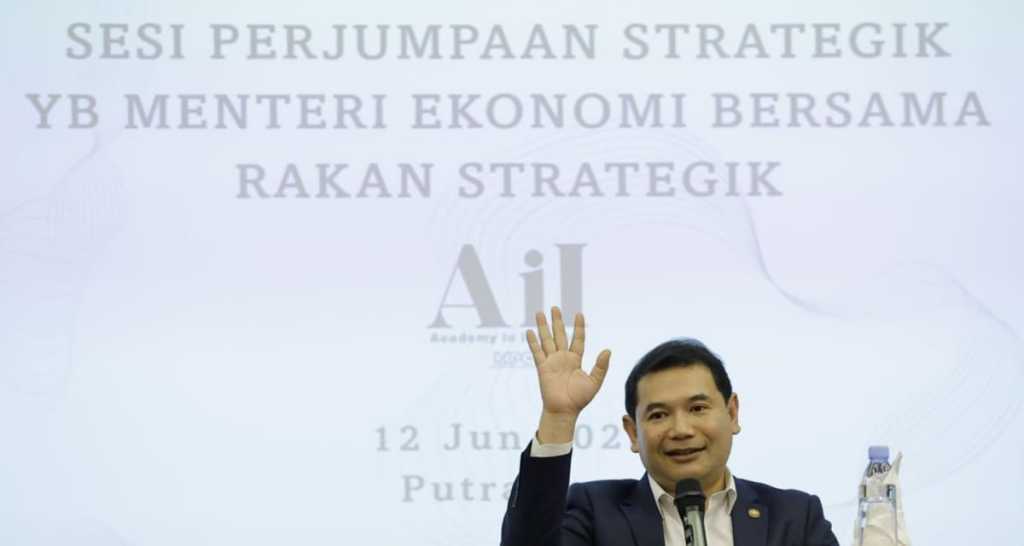
Economic Affairs Minister Rafizi Ramli has said that the government’s new approach towards targeted subsidies will rely on net disposable household income, as opposed to the current static income-based approach. Consequently, this will see the current B40 and M40 categorisations being gradually phased out by next year.
“The new approach will consider factors such as monthly financial commitments in determining disposable household income rather than the previous approach, which was based solely on household income,” said Rafizi, adding that the static household income approach may be “unfair” as some in the lower T20 threshold could be left out of aid programmes despite needing them.
To illustrate, Rafizi gave an example of some families that have a monthly household income of RM10,500, which puts them in the upper M40 or lower T20 income group. However, they live in the Klang Valley and have five children. “If you consider all their commitments, their net income may be the same as those in the B40 category. Under the previous approach, these people were cut off from any assistance, and we want to minimise this sort of exclusion,” explained Rafizi.

Currently, the T20 group refers to 20% of Malaysians whose monthly household income is above RM10,960. Meanwhile, the B40 and M40 groups each represent another 40% of households with monthly incomes of less than RM4,850, and between RM4,850 and RM10,960 – respectively.
Rafizi further said that the implementation of this new approach based on net disposable household income by next year will resolve any talks of removing subsidies for those in the T20 category.
“We have started discussions with the National Economic Action Council on who should get what. For example, whether the aid is going to be universal child assistance, or by way of an income top-up. By next year, we will see a transition where the B40 and M40 groups will be gradually phased out once we roll out a more consolidated social assistance based on net disposable income,” Rafizi commented.
The minister highlighted as well that the new approach will tap into data collected under the Central Database Hub (Padu), which is still being constructed. For context, Padu is developed to collect and combine socio-economic information so that the government can obtain real-time data on disposable household income to help improve its policy and decision-making process.
(Source: The Star)
Previously covered recruitment-related stories and had a short stint as a copywriter for the property industry. She subsequently developed an interest in investment and robo-advisors.








Comments (0)