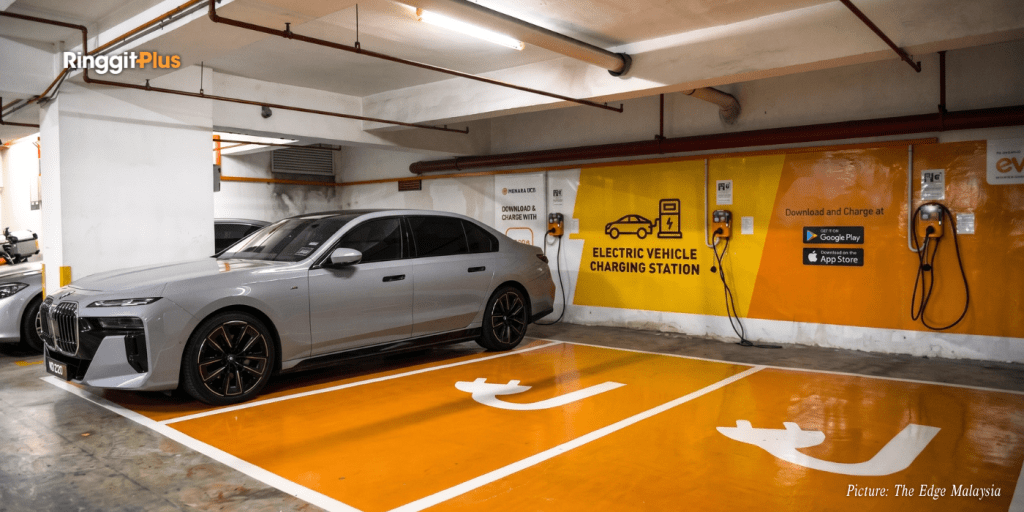
Fully imported electric vehicles in Malaysia will need to meet a minimum cost, insurance, and freight (CIF) value of RM200,000 and a minimum motor power of 180 kilowatts (kW) from 1 July, 2026, the Ministry of Investment, Trade and Industry (MITI) confirmed on May 6.
Once taxes are factored in, most imported EVs will retail above RM300,000. If you’ve been considering an imported EV in the RM100,000 to RM200,000 range, those options will not be available.
What The New Rules Require
From 1 July, all fully imported EVs must meet two conditions. The first is a minimum pre-tax value of RM200,000, up from the RM100,000 floor that applied during the previous exemption period. The second is a minimum motor power of 180kW (equivalent to about 245 PS), slightly lowered from the 200kW threshold that was set at the start of 2026. MITI communicated the new requirements to franchise approved permit (AP) holders during an engagement session on April 30.
The changes follow the expiry of a four-year special exemption period under the franchise AP scheme, which ran from 1 January 2022 to 31 December 2025. During that window, fully imported EVs priced above RM100,000 enjoyed full exemptions from import duty, excise duty, and sales tax. That exemption was introduced under Budget 2022 and extended twice before lapsing at the end of 2025.
Taxes Add Up Quickly Without The Exemption
Without the exemption, fully imported EVs are now subject to a 30% import duty, 10% excise duty, and 10% sales and service tax (SST), applied sequentially on top of the vehicle’s pre-tax value.
For an EV at the minimum pre-tax value of RM200,000, the total comes to roughly RM286,000 before distributor margins, logistics, and other charges. Industry estimates suggest that retail prices for non-FTA imports could start between RM300,000 and RM350,000.
EVs imported from countries with free trade agreements, such as China under the ASEAN-China Free Trade Agreement (ACFTA), benefit from a lower 5% import duty. Even so, the RM200,000 minimum value means you’re unlikely to see showroom prices below RM250,000 for these models.
What Happens To Cars Already In The Country
If you’ve already placed an order for a fully imported EV or if a dealer still has stock from the exemption period, those units can still be sold. MITI confirmed that companies will be allowed to clear remaining inventory, including units already in showrooms, at ports, and in transit, under the previous tax-free terms until those stocks run out.
Once those units are gone, however, any new imported EV shipments will fall under the new framework.
Most Imported EVs No Longer Qualify
Of the top-selling imported EVs on the market today, only a handful meet both the RM200,000 minimum value and the 180kW power requirement. The BYD Atto 3, one of Malaysia’s most popular EVs, falls short on both counts. The same applies to the Mini Electric Cooper and several other mid-range offerings.
The models that remain eligible are already in the premium segment, where prices start above RM300,000. For buyers looking at the RM100,000 to RM200,000 range, the options are now limited to locally assembled EVs, which continue to enjoy tax exemptions until December 31, 2027.
Locally Assembled EVs Become The Main Affordable Option
If you want an EV under RM250,000, your choices are now limited to locally assembled models. Brands with local assembly operations, including Proton, Perodua, Volvo, Chery, and TQ Wuling, can continue to offer tax-exempt pricing until the end of 2027, and more options are expected over the coming months as manufacturers like BYD, Xpeng, and Leapmotor ramp up local production.
If you’re in the market for an EV, it’s worth looking at what’s already available from local manufacturers rather than waiting on imported models that may no longer arrive at their current prices.
Follow us on our official WhatsApp channel for the latest money tips and updates.
As a creative content writer, Eloise has covered finance, business, lifestyle topics, and even moonlights as a singer-songwriter outside of RinggitPlus. Her current interests are learning the best ways to optimise spending and credit card hacks to gain more airline miles.
51vote
Article Rating
SHARE
About THE AUTHOR
Eloise Lau
Eloise Lau
As a creative content writer, Eloise has covered finance, business, lifestyle topics, and even moonlights as a singer-songwriter outside of RinggitPlus. Her current interests are learning the best ways to optimise spending and credit card hacks to gain more airline miles.
We provide weekly updates on every Friday at 5pm on the prices of RON95, RON97 and Diesel in Malaysia and a chart that shows the movement of fuel prices across a 6-week period. Bookmark this page now!




Comments (0)