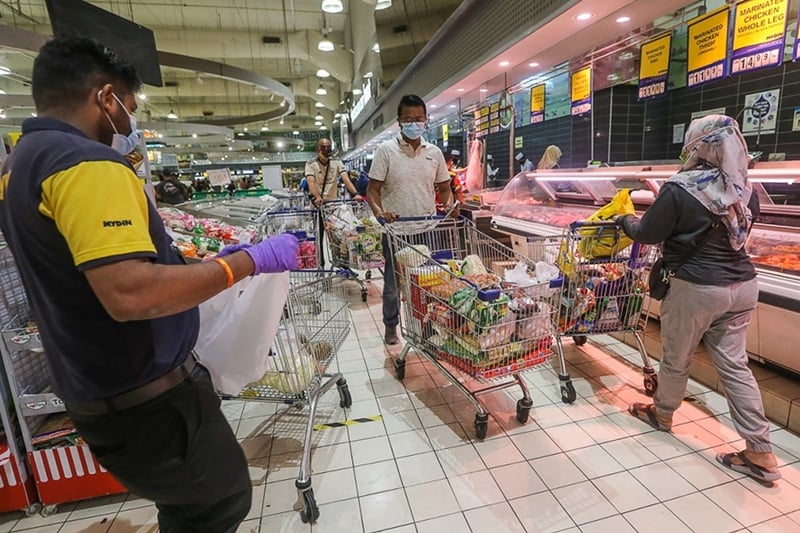
(Image: Malay Mail/Shafwan Zaidon & Yusof Mat Isa)
The cost of living is anticipated to remain a significant concern and a considerable challenge for Malaysians as 2025 approaches, largely influenced by several policy changes.
Bank Muamalat Malaysia Bhd’s chief economist, Dr Mohd Afzanizam Abdul Rashid, highlighted that fuel subsidy rationalisation, tax increases, and minimum wage adjustments are expected to present substantial difficulties.
He noted that the cost of living would play a pivotal role in shaping spending habits and consumer behaviour in the coming year. According to Mohd Afzanizam, policy changes, such as the rationalisation of fuel subsidies and the expansion of the Sales and Services Tax (SST) scope, are key drivers of the rising cost of living.
“However, each of these measures is aimed at improving the government’s financial position, allowing for more targeted and efficient spending to benefit the rakyat,” he told Utusan Malaysia.
(Image: Focus Malaysia)
Mohd Afzanizam also emphasised that mitigation efforts, including cash assistance and targeted subsidies, are expected to alleviate the burden on Malaysians. However, he said long-term strategies focusing on education, healthcare, and infrastructure would be more effective in enhancing individual competitiveness and improving living standards in a meaningful way.
Yesterday, Utusan Malaysia reported that Malaysia is likely to face a challenging global economic environment in 2025, with the national economy forecast to grow by 4.9% in 2024 and 4.7% in 2025. Geopolitical instability in Europe and the Middle East, coupled with persistent global trade tensions, continues to weigh heavily on the economy.
In response to these challenges, economic analyst Associate Professor Dr Abu Sofian Yaacob said Malaysia should continue to expand into new markets to maintain economic stability amidst global uncertainties.
He emphasised the advantages of fully utilising the BRICS market network to ensure the country’s competitiveness. “The broad market offered by BRICS can reduce dependence on exports, particularly raw commodities. Trade conducted in local currencies among these nations could also help stabilise the economy,” he said.
Abu Sofian also suggested that promoting locally made products could mitigate external economic pressures. He said reliance on domestically produced goods not only lessens the impact of global economic downturns but also bolsters the local economy. He also urged manufacturers to lower prices as a cost-saving strategy to ensure continued consumer spending.
Meanwhile, economic analyst Professor Emeritus Dr Barjoyai Bardai said the current cost of living in Malaysia is already high, with many Malaysians finding life increasingly difficult. He cautioned that inflation is expected to rise further, leading to a sharp increase in the prices of essential goods and services, which will exert significant pressure on households, particularly those in the low- and middle-income brackets.
“Although the minimum wage has been raised, the amount is still insufficient to sustain a comfortable life, especially in major urban areas,” he added.
Early reports have suggested that inflation for 2025 is projected to rise to between 3% and 3.5%, compared to the previous forecast of 2.5% to 3.0%, following the planned rationalisation of RON95 petrol subsidies set to take effect next year.
Samuel writes about personal finance and financial news, focusing on how banking updates, policies, and promotions affect everyday money decisions. He enjoys making complicated financial topics easier to follow. Outside of writing, he spends his time watching TV shows and occasionally convincing himself he will only watch one episode.
Samuel writes about personal finance and financial news, focusing on how banking updates, policies, and promotions affect everyday money decisions. He enjoys making complicated financial topics easier to follow. Outside of writing, he spends his time watching TV shows and occasionally convincing himself he will only watch one episode.
We provide weekly updates on every Friday at 5pm on the prices of RON95, RON97 and Diesel in Malaysia and a chart that shows the movement of fuel prices across a 6-week period. Bookmark this page now!










Comments (0)