The government has tabled the 13th Malaysia Plan (RMK13), covering the years 2026 to 2030, with a total investment commitment of RM611 billion.
This five-year plan sets the national direction for economic, social, and environmental development. It includes RM430 billion in federal development spending, supported by RM120 billion from government-linked companies (GLCs) and investment institutions (GLICs), alongside RM61 billion through public–private partnerships.
While RMK13 covers a wide range of structural reforms and national priorities, several measures directly affect individual Malaysians. From wages and retirement to education and home ownership, here are seven personal finance developments to watch.
Mandatory Retirement Age Likely to Be Reviewed
The government has signalled its intention to review the country’s mandatory retirement age in light of Malaysia’s ageing population. Although no revised age has been proposed, this policy review is part of a broader framework to prepare for the country’s transition to a “super-aged nation” by 2043.
This development is relevant for long-term financial planning, especially for individuals managing retirement savings, insurance, or pensions. A revised retirement policy could affect both private and public sector employment terms.
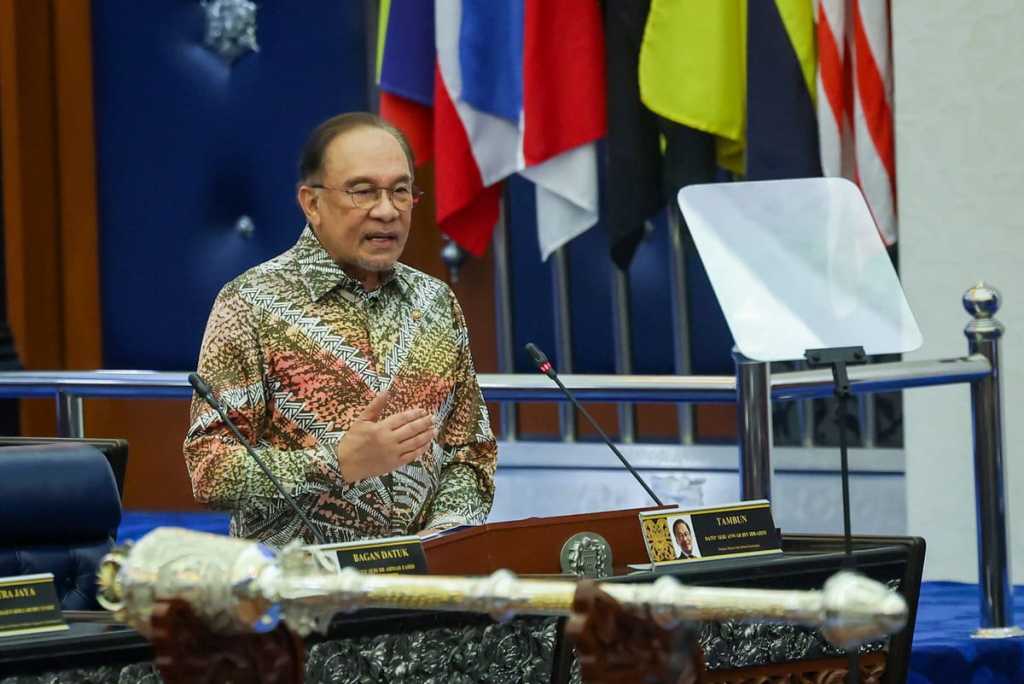
“The transition to an ageing nation demands not only financial commitment, but also a robust ecosystem of care that is accessible and affordable,” Prime Minister Datuk Seri Anwar Ibrahim said.
Any legislative changes will require formal tabling and gazettement. The review is still in its early stages.
EPF May Offer Monthly Pension Payments Alongside Lump Sum Withdrawals
According to the RMK13 main report, the government is exploring a new option under the Employees Provident Fund (EPF) that would allow retirees to receive monthly pension payments alongside the current lump-sum withdrawal.
Under this proposal, EPF contributions would be divided into two parts, one allocated for long-term retirement savings and the other structured to provide monthly payouts after retirement. This dual system is intended to offer a more stable income stream and reduce the likelihood of retirees exhausting their savings too early.
The plan is still in the exploratory stage, and any implementation would require further regulatory development and formal approval.
Minimum Wage to Extend to Graduates and Semi-Skilled Workers
RMK13 introduces a wage strategy that aims to ensure fairer compensation across skill and education levels. The plan outlines an expansion of minimum wage protections to cover graduates and semi-skilled workers, including those in Technical and Vocational Education and Training (TVET) pathways.
Currently, the minimum wage has increased to RM1,700 under the MADANI administration. Under RMK13, a benchmark living wage of RM3,100 per month will also be applied to employees in GLCs and GLICs.
“We will ensure wages reflect both qualifications and the realities of living costs, not just minimum thresholds,” Anwar said.
The implementation will be supported by a strengthened National Wages Consultative Council and is expected to be phased in alongside a progressive wage policy framework. Full regulatory details have yet to be released.
Significant Job Creation in Manufacturing and Digital Sectors
RMK13 sets ambitious employment targets, with the government aiming to create 700,000 new job opportunities in the manufacturing sector and 500,000 digital careers by 2030.
This will be supported by expanded upskilling and reskilling initiatives, including training in high-tech fields such as artificial intelligence (AI). These efforts are designed to boost income opportunities while preparing the local workforce for future job demands.
The job creation strategy is also linked to the goal of reducing foreign worker dependency from 15% to 10%, encouraging greater use of automation and local talent.
The foreign labour ceiling may be further reduced to 5% by 2035 for some sectors.
RM40 Billion Committed to Public Healthcare Development
Healthcare access and affordability are core themes in RMK13, which allocates RM40 billion to strengthen Malaysia’s public health system.
The investment covers the construction of new hospitals and clinics, upgrades to existing infrastructure, and the expansion of digital health services. The government also plans to reduce out-of-pocket medical expenses by promoting the use of generic medicines and expanding local pharmaceutical production.
Pro-health taxes will be expanded to vape, tobacco, and alcohol, beyond just sugary drinks. Workforce measures include a national health workforce development framework, covering training, licensing, and career progression.
Major projects under this allocation include Tuanku Ja’afar 2 Hospital in Negeri Sembilan, a new cancer centre in Kedah, and enhanced cardiac services in Sabah and Sarawak.
Government to Deliver One Million Affordable Homes by 2035
Housing affordability remains a national focus under RMK13. The government aims to build one million affordable homes between 2026 and 2035 through a mix of federal, state, and private sector efforts.
New housing initiatives will include Residensi MADANI, rent-to-own schemes, and credit guarantee options to assist first-time buyers. As of 2025, 180,000 units have been completed and another 235,000 are under construction.
To improve delivery and reduce costs, modern construction methods such as the Industrialised Building System (IBS) will be adopted. Integrated townships like Kota MADANI are also being developed to offer liveable, connected communities.
“Every Malaysian deserves a safe, affordable place to call home. We are making this a national priority,” Anwar said.
This initiative is designed to bridge the housing affordability gap, particularly for lower- and middle-income households.
Education Receives RM67 Billion in RMK13 Funding
Education will receive RM67 billion in development funding under RMK13, with a focus on quality, access, and equity. The plan includes upgrades to existing schools, construction of new facilities, and the expansion of higher education capacity.
Preschool education will be made compulsory for children aged five and above. The government also aims to achieve a 98% enrolment rate at the preschool and secondary school levels.
TVET programmes will be enhanced with new certification levels equivalent to university degrees, helping to improve employment prospects for technical graduates. Additional funding will also support special education for children with learning difficulties and autism.
“Education is the foundation of an inclusive and just society. We are investing to ensure no child is left behind,” Anwar said.
Higher education institutions will be given more autonomy, and public universities are expected to play a stronger role in talent development and innovation.
Stay tuned for more coverage as we continue to explore how the 13th Malaysia Plan will influence policies, prices, and your personal finances in the years to come.
Follow us on our official WhatsApp channel for the latest money tips and updates.
Samuel writes about personal finance and financial news, focusing on how banking updates, policies, and promotions affect everyday money decisions. He enjoys making complicated financial topics easier to follow. Outside of writing, he spends his time watching TV shows and occasionally convincing himself he will only watch one episode.
Samuel writes about personal finance and financial news, focusing on how banking updates, policies, and promotions affect everyday money decisions. He enjoys making complicated financial topics easier to follow. Outside of writing, he spends his time watching TV shows and occasionally convincing himself he will only watch one episode.
We provide weekly updates on every Friday at 5pm on the prices of RON95, RON97 and Diesel in Malaysia and a chart that shows the movement of fuel prices across a 6-week period. Bookmark this page now!









Comments (0)