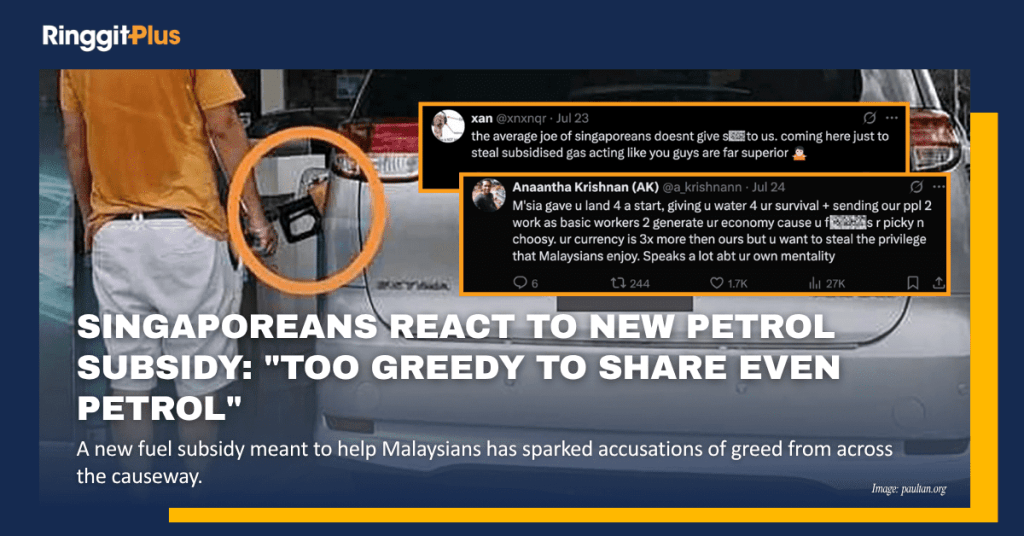
The Malaysian government has announced a new targeted fuel subsidy for RON95 petrol, a move designed to provide financial relief to citizens. The initiative, however, has ignited a fiery online debate, particularly with social media users from neighbouring Singapore.
This new policy highlights the ongoing efforts to manage the cost of living in Malaysia, while also raising questions about the nature and beneficiaries of national subsidies.
According to the government, this measure aims to ensure that subsidies directly benefit Malaysians and reduce financial leakages. By targeting the subsidy, the government intends to prevent funds from being spent on non-citizens or used in commercial smuggling activities. Foreign-registered vehicles will continue to pay the unsubsidised market price for fuel.
Online Discussions Arise Following The Announcement
While the policy was largely seen as a positive development within Malaysia, it prompted a variety of reactions online. Some social media users from Singapore expressed their disappointment with the new rule.
The sentiment was captured in a widely circulated post from one user on the social media platform X, who stated: “We Singaporeans give you Malaysians jobs, but you’re too greedy to share even petrol. Speaks a lot about the Malaysian mentality, which is why you are far behind us.” This comment, among others, quickly gained attention and led to a broader discussion between netizens from both nations.
How Malaysians Responded To The Criticism
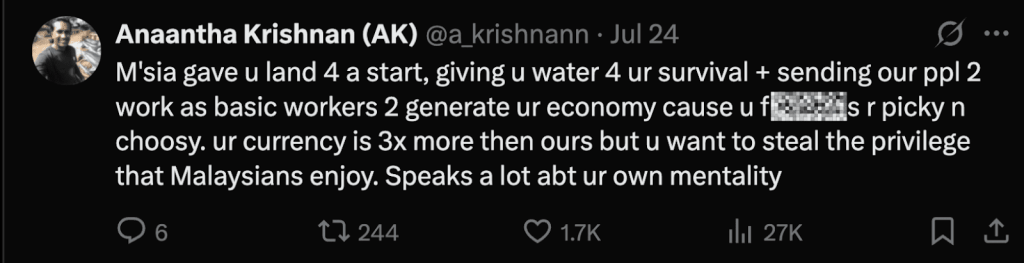
In response, many Malaysians took to social media to share their perspective and defend the government’s policy. One user replied directly to the criticism, writing, “Malaysia gave you land to start with, supplies your water, and our people work basic jobs in your economy because yours are too picky. Your currency is three times stronger, and you still want our subsidies? That says a lot about your mentality.”
Another common theme was the perception of attitudes towards Malaysians, with a different commenter adding, “The average Singaporean doesn’t care about us. They just come here for cheap petrol and act superior.” These comments reflect the view that subsidies funded by local taxpayers should be reserved for citizens managing their own cost of living.
Understanding The Goal Of Targeted Subsidies
This new policy is an example of a targeted subsidy, which is different from a blanket subsidy. While a blanket subsidy applies to everyone, regardless of their nationality or income level, a targeted subsidy is directed at a specific group of people.
The main purpose of subsidy rationalisation is to make government spending more efficient and to ensure that financial aid reaches those who need it most. According to economists, blanket subsidies are often regressive, meaning they benefit higher-income households more than the intended lower-income groups. For instance, a study by Bank Negara Malaysia noted that the wealthiest 20% of households received 42% of fuel subsidy benefits, while the poorest 20% of households received only 4%. This is because wealthier households tend to own more or larger vehicles and thus consume more fuel.
By shifting to a targeted model, the government aims to reduce this type of leakage and prevent subsidies from being used in smuggling operations or by non-citizens. As announced by the Prime Minister’s Office, the savings from this rationalisation can then be reinvested into other areas of the economy, such as cash assistance programmes, healthcare, and education. This approach is a key component of managing national expenses, a topic that has significant implications for your personal budget and the broader national economy.
As the government continues to refine its subsidy policies, staying informed is key to managing your budget. Follow RinggitPlus for the latest updates and analysis on how these changes affect your personal finances.
As a creative content writer, Eloise has covered finance, business, lifestyle topics, and even moonlights as a singer-songwriter outside of RinggitPlus. Her current interests are learning the best ways to optimise spending and credit card hacks to gain more airline miles.
As a creative content writer, Eloise has covered finance, business, lifestyle topics, and even moonlights as a singer-songwriter outside of RinggitPlus. Her current interests are learning the best ways to optimise spending and credit card hacks to gain more airline miles.








Comments (0)