Just as everyone in Malaysia is getting used to the expanded Sales and Service Tax (SST), which now includes a new 8% rate for many services, you might have started hearing talk about the Goods and Services Tax, or GST, again. It can feel a bit confusing, like a story that keeps changing.
While the government has said no changes are happening right now, the conversation has started. So, let’s break down what each of these tax systems really is, using specific examples to see what is good about them, and what is not so good.
Our Current System: The Sales and Service Tax (SST)
SST is a tax that mostly happens behind the scenes. It’s called a single-stage tax because the government only collects it once. The Sales Tax is charged on things made or imported into Malaysia. The rate is usually 5% or 10%. The Service Tax, which you see when you pay your bill, is 6% or 8% for certain services like eating at restaurants or staying in hotels.
(Image: MySST)
For example, if you eat at a café and your meal costs RM20, you might pay an extra RM1.20 if the Service Tax rate is 6%. You only see this extra charge on some services, like food and hotel stays, but not on most products you buy in shops.
The Other System: The Goods and Services Tax (GST)
GST works differently. It’s a multi-stage tax that is more open and easy to see. When it was used in Malaysia before, it charged 6% on almost everything you bought or used, and it was added at every step from the factory to you.
For instance, if a baker buys flour from a supplier, they pay GST on that flour. When the baker sells you a cake, they charge you GST on the final price of the cake. But the baker can claim back the GST they paid on the flour, so they only send the difference to the government. This system helps avoid double-taxing the same item along the supply chain.
The Pros and Cons of GST
One of the biggest strengths of GST is that it is comprehensive and transparent. Because it captures tax at every level of the supply chain, it helps reduce hidden costs. For example, when you buy a new laptop, you can clearly see the 6% GST added to your receipt, so you know exactly how much tax you are paying.
Another good thing is that GST encourages businesses to report their sales properly since they can claim back the GST they paid on supplies. A furniture shop buying wood pays GST but claims it back when they sell the finished furniture, so they only pass on the right amount of tax. This makes tax evasion less likely.
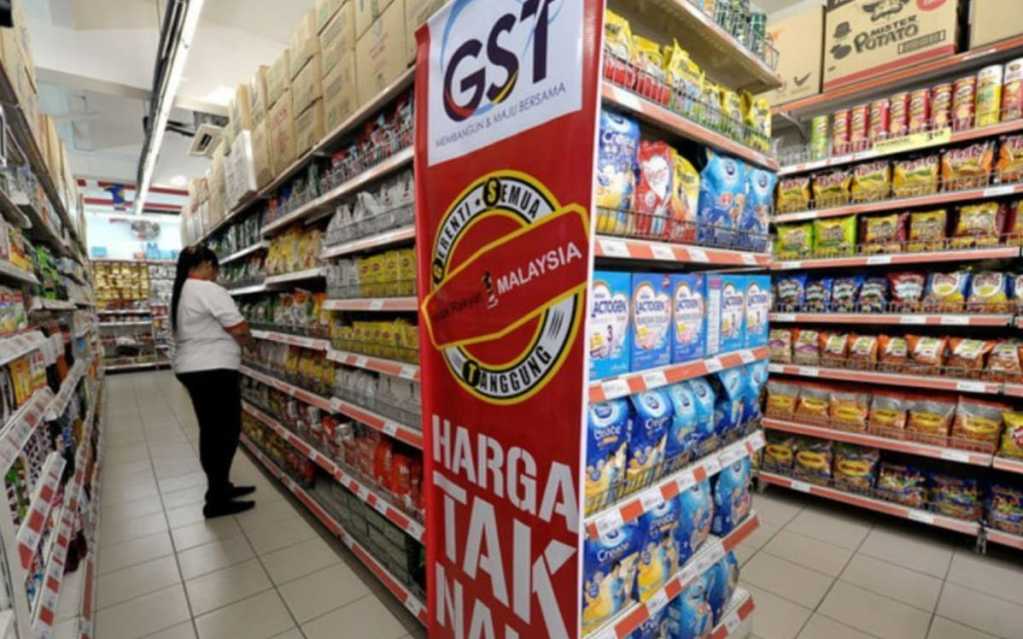
(Image: Bernama)
GST also helps the government collect more money. Because it covers so many goods and services, it brings in higher revenue that can be used for things like schools, roads, and hospitals. On top of that, using GST makes Malaysia’s tax system similar to many developed countries, which can be good for international trade and investment.
But GST has its downsides. Many people felt it was burdensome because it applied to almost everything they bought, including many essentials like rice cookers, cleaning products, and school supplies, which made them feel the pinch. When GST was introduced, prices of many items rose quickly, which caused concern about inflation, especially for lower-income families.
For businesses, GST created a lot of extra work. Small and medium-sized businesses had to spend time and money to keep detailed records and file regular tax returns. For example, a small grocer selling many different products needed to track GST on every sale, which took a lot of effort and extra costs. Another problem was public distrust. Many Malaysians opposed GST because they felt the government did not explain it well or prepare people for the changes.
The Pros and Cons of SST
The best thing about SST is that it is simpler to understand. Because it only applies at one stage, it is easier for both businesses and customers to follow. For instance, if a restaurant charges you Service Tax on your bill, you only see it once, and businesses do not need to claim anything back.
Many people also feel SST puts less pressure on them because the tax is less visible in their everyday purchases. When you buy groceries at a supermarket, you usually do not see any tax added at checkout under SST, so it feels like you pay less.
For small businesses, SST is easier to handle. Many small shops or traders do not need to register for SST if they do not earn above a certain amount each year, which reduces their paperwork and costs.
However, SST has clear weaknesses. One problem is the cascading tax effect, where tax can be charged on tax because there is no system for claiming back taxes paid on supplies. For example, a furniture maker pays tax on wood, then the shop selling the furniture adds its own markup on top of the cost that already includes tax, leading to higher prices for customers without them realising it.
SST also brings in less money for the government compared to GST, which can limit how much the government can spend on public services. Another issue is that SST is less transparent. Because the tax is often included in the final price of goods, customers cannot easily see how much tax they are paying. SST can also make it easier for some businesses to avoid paying tax altogether, as there are fewer checkpoints along the supply chain.
So, What Does This All Mean for You?
At the end of the day, both systems have their trade-offs. SST is simpler for businesses, but the final cost to you can include hidden, compounded taxes. GST is more transparent and fairer in its calculation but is more work for businesses and can feel like a bigger pinch across more items.
The government has made it clear that its priority is to not burden the people, but it remains a hot topic. Economists generally agree that a well-implemented GST system would strengthen Malaysia’s fiscal position. However, public perception and timing remain major hurdles. So, for now, nothing is changing. But understanding these specific differences helps you make sense of the news and be a part of the conversation about what is best for Malaysia’s future.
Both GST and SST come with trade-offs. While GST is more efficient and transparent, it has faced backlash for increasing living costs. On the other hand, SST is simpler and less intrusive, but it’s less efficient and prone to hidden charges.
Whether you’re a business owner, employee, or student, understanding these systems is key to making informed decisions, and to holding policy-makers accountable for the tax reforms that shape your wallet.
Have you felt a difference in your cost of living between GST and SST? Share your experience in the comments. We’d love to hear from you!
Samuel writes about personal finance and financial news, focusing on how banking updates, policies, and promotions affect everyday money decisions. He enjoys making complicated financial topics easier to follow. Outside of writing, he spends his time watching TV shows and occasionally convincing himself he will only watch one episode.
Samuel writes about personal finance and financial news, focusing on how banking updates, policies, and promotions affect everyday money decisions. He enjoys making complicated financial topics easier to follow. Outside of writing, he spends his time watching TV shows and occasionally convincing himself he will only watch one episode.
I’m able to understand this so much better now!! No big words are very straightforward. Thank you so much for writing this! Can’t wait to read more of your works!
We provide weekly updates on every Friday at 5pm on the prices of RON95, RON97 and Diesel in Malaysia and a chart that shows the movement of fuel prices across a 6-week period. Bookmark this page now!











Comments (1)
I’m able to understand this so much better now!! No big words are very straightforward. Thank you so much for writing this! Can’t wait to read more of your works!